
A UTV shocks supplier audit is a process check, not a product test. What you establish during a factory visit is whether the plant can repeat a damping specification you have already approved, and whether its records would tell you when it did not. The visit fails its purpose when the team spends a day photographing finished shocks and leaves with no damping curve, no valving sheet, and no answer to what changes when a shim stack is swapped. Treat it as three separate decisions: can this supplier be screened out on paper, can it hold a specification on the line, and can it show you the evidence afterwards.
What a Factory Visit Can and Cannot Prove
A visit produces three kinds of evidence, and they are not interchangeable. Identification evidence tells you what the plant is: buildings, machinery, headcount, product range. Capability evidence tells you what it can repeat: a controlled bore dimension, a logged gas charge, a damping curve compared against a reference. Acceptance evidence tells you whether a specific shipment meets your requirement, and that comes from parts measured against your drawing, not from a walk through the workshop.
Buyers run into trouble when they upgrade identification evidence into acceptance evidence. A clean line and a wall of certificates do not establish that the unit arriving next quarter will damp like the one you approved. The visit earns its cost when it is planned around retrievable records: a dynamometer file for a shipped lot, an inspection sheet for a bore diameter, a valving sheet carrying a revision number.
Screening Checks Worth Finishing Before You Book the Flight
Certificate scope is the first filter. A quality management certificate covers what its scope statement says it covers. If that scope names trade and distribution rather than design and manufacture of shock absorbers, your audit plan should shift toward the actual production site and toward any subcontractor used for plating, welding, or machining.
The second filter is process ownership. Ask which operations happen inside the walls: tube cutting, machining of rod and body, welding of mounts, honing, plating, assembly, gas charging, and dynamometer testing. Chrome plating and heat treatment are commonly subcontracted, which is not disqualifying by itself, but it moves part of your audit to a second site and puts more weight on incoming inspection.
The third filter is test capability. A plant that assembles dampers without a dynamometer can still deliver a workable product, but it cannot show you a damping curve, so your own vehicle testing becomes the only control you have over the result.
Replace vague request lines before they reach the supplier.
Reject this line: “Send your best UTV shock absorber and your ISO certificate.”
Replace it with: “Confirm the scope statement of your quality certificate, which of the body, rod, piston, and valving operations are performed in house, the dynamometer model used for force-velocity records, and the lot marking format supplied with each shipment.”
Reading the Assembly Line for Process Control
Every station on a damper line has one output worth measuring. Watch what is written down, not what is displayed on a wall.
- Tube and body preparation. Burrs and chips left inside a body damage the seal before the unit ever runs. Look for a deburring step followed by a rinse or blow-off, and a bore check recorded per lot.
- Welding of body, reservoir, and mounts. Weld quality on a shock absorber is a fatigue question rather than a cosmetic one, because mounts see repeated full-droop loads. Ask for welding parameters recorded per shift and a sectioned production sample.
- Honing of the working bore. The bore carries the seal, and a bore that polishes in service changes damping. Cross-hatch pattern, measured diameter, and roundness should appear on one inspection sheet.
- Rod and plating inspection. Plating thickness and surface roughness affect seal life as much as the seal compound does. Incoming checks on a plated rod usually indicate a plant that has already paid for this lesson.
- Seal and guide assembly. Cleanliness here is easier to observe than to document. Watch how seals are handled, whether they sit in open bins, and whether assembly benches are separated from machining.
- Oil fill and de-aeration. Foamed oil damps poorly. Ask how fill volume is set per model and how long the oil rests under vacuum before the unit is closed.
- Gas charge and dynamometer test. Charge pressure and the measured curve should be recorded against a serial or lot number rather than checked and released without a trace.
| Station | What to inspect | Record to ask for | Failure it prevents |
|---|---|---|---|
| Bore honing | Cross-hatch uniformity and measured diameter on a production sample | Inspection sheet per lot with the gauge identified | Seal wear and a damping shift as the bore polishes |
| Rod plating | Plating thickness, surface roughness, straightness | Plating certificate plus incoming check result | Seal abrasion and oil seepage at the rod |
| Welding | Penetration at body, reservoir, and mount joints | Weld parameters per shift and a sectioned sample | Cracking under repeated full-droop loads |
| Oil fill | Fill volume for the model and de-aeration time | Fill log tied to a lot or serial number | Aeration and damping fade under continuous work |
| Gas charge | Charge pressure for the model and the verification method | Charge record per unit or lot | Cavitation and inconsistent small-bump response |
| Dynamometer | Curve against the reference at stated velocities | Dyno file per lot with test conditions noted | Shipping units whose damping nobody compared |
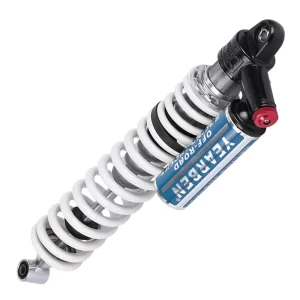
Weld quality on a coilover body and its mount decides whether the unit survives repeated full-droop loads. <Off-Road-Coil-Over-Shocks-Manufacturer> covers off-road coil over shock manufacturing.
How to Judge the Damping Data You Are Shown
A damper produces force as a function of shaft velocity, so a single force figure says almost nothing on its own. A curve plotted across a stated velocity range, with oil temperature and conditioning cycles noted, tells you whether the shim stack and gas charge match the valving sheet.
Ask four questions before you read the chart: which velocities were tested, at what oil temperature, whether the unit was cycled before recording, and whether the trace belongs to one unit or to a sample from the lot. Then ask what tolerance band the plant applies and who signs off a unit that falls outside it. A supplier that cannot state a band is producing a picture, not a measurement.
| Record | Conditions it was taken under | What it can support | What it does not establish |
|---|---|---|---|
| Force-velocity trace | Single unit, stated oil temperature, short conditioning cycle | The unit was assembled with the intended stack and charge | That the rest of the lot matches |
| Peak force at one shaft velocity | Bench condition, no vehicle motion ratio | A comparison against your approved reference unit | Ride quality on your terrain |
| Gas charge log | Fill station reading, one entry per unit | The charging step ran and the setting matched the model sheet | Pressure retention after months in service |
| Rebound and compression balance | Same bench, same temperature, same speed steps | A stack fitted in the wrong direction or a swapped shim | Suitability for a different vehicle weight |
| Cycle test after a stated count | Bench fixture with fixed stroke and frequency | Whether damping shifted inside that fixture | Field durability on rough ground |
None of these records says the damper will feel right on your vehicle. Ride quality depends on spring rate, motion ratio, unsprung mass, and the ground you actually drive, and a bench measures none of them. Use the bench file to decide which unit deserves a vehicle test, then run the vehicle test.
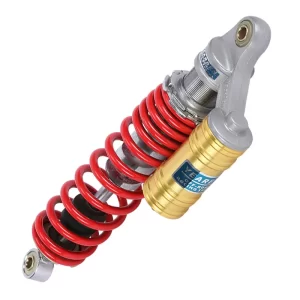
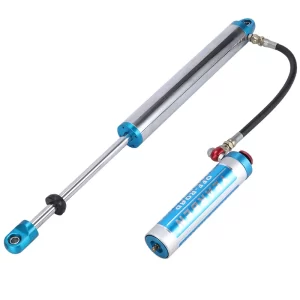
Bore finish and gas charge are the two records that most often explain a damping difference between lots. <Monotube-Shock-For-Off-Road> covers monotube shock absorbers for off-road use.
Valving, Oil, and Nitrogen Settings That Decide Consistency
Valving is a document before it is a part. Ask whether each model carries a valving sheet with a stack specification, a piston part number, an oil grade, and a revision number. A shim substitution made quietly during production is the most common way an approved curve drifts, and a revision-controlled sheet is the cheapest defense you have.
Oil is where quiet substitutions happen. A named grade from a named supplier, with a stated viscosity index and a rule for notification if that grade changes, is a more useful commitment than a generic promise of quality oil. In our own plant, an oil change on an approved model is treated as a new revision rather than a running correction, because the damping curve moves with it.
Nitrogen charge and emulsion design set how the damper behaves when it works hard. A pressurized gas chamber reduces cavitation and keeps small-bump response consistent; an emulsion unit without separation depends more on oil condition and fill discipline. Neither is automatically better, because the pressurized design costs more and asks more of the seal and the charging station.
An adjuster deserves the same scrutiny. An adjuster that changes bleed and an adjuster that changes spring preload respond to the same click and do different things. Confirm which one you are buying before you sign the drawing, since a preload adjuster changes ride height while a bleed adjuster changes damping. A detented click that repeats is worth more than a wide click count that drifts between units.
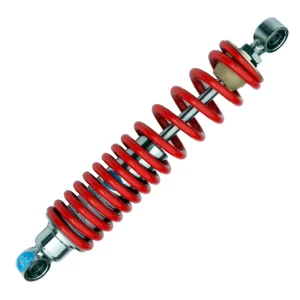
A UTV damper is only as repeatable as the valving document behind it. <Utv-Shocks-For-Off-Road> covers UTV shock absorbers built for off-road use.
Traceability and Change Control Records That Protect Repeat Orders
Traceability answers a simple question: when a unit disappoints, can the plant find the run that produced it? Serial or lot marking on the body, a fill log, a charge record, and a dyno file should join up without guesswork. A plant that marks nothing can still build a good first order; it cannot help you contain a problem in the fifth.
Change control is the other half. Ask what the supplier must tell you before substituting an oil, a seal supplier, a plating source, or a shim material, and how many days before shipment that notice arrives. Ask how long records are retained, because a field failure at eighteen months is only diagnosable if the file still exists.
| Record | What it establishes | Decision it supports |
|---|---|---|
| Lot or serial marking on the unit | Which production run a damper came from | Whether a complaint maps to one lot or to the whole model |
| Material certificate for rod and spring steel | Grade and heat number of the input metal | Whether a strength change came from material or from process |
| Valving sheet with revision number | The stack, oil, and charge the unit was built to | Whether a damping change was approved or drifted |
| Nonconformance log with sign-off | How the plant handled a rejected unit | Whether defects are contained or shipped |
| Change notification clause | What the plant must disclose before a substitution | Whether a supplier change reaches you before the parts do |
What a Sample Order Proves and What It Leaves Open
A trial lot proves that the plant can build to your drawing, that the damping curve matches on the sampled units, that packaging survives freight, and that the people answering email understand your requirement. Those are real results and they justify moving to volume.
A trial lot does not prove lot-to-lot consistency across a season, durability on your terrain, behavior after field service, or capacity under a demand spike. Write the acceptance criteria before you order: how many units are measured, the tolerance band around the reference curve, the visual and marking criteria, the document package that ships with the lot, and the condition that triggers rejection. A sample order without written criteria becomes an argument about impressions.
Send Your Specification Before the Visit
An audit is easier to plan when the supplier already knows what it will be measured against. Send the vehicle model and intended use, the eye-to-eye length and stroke, the mounting type, the spring rate or target wheel rate, the damping curve or reference unit you want matched, the adjuster function you need, and the acceptance criteria you plan to apply to the first lot. With that package in hand, Taizhou Yearben Shock Absorber Technology Co., Ltd. can return the valving sheet format, a sample dynamometer record, and the audit documents in advance, so the visit is spent on verification rather than introductions.
Email info@yearbenshocks.com or call +86-523-86566899 to arrange a factory visit.
FAQ
How many days should we plan for a UTV shock absorber factory audit?
Two working days cover most plants: one day on the line and at the test bench, half a day on records, and half a day for the commercial conversation. Compress that only if documents were reviewed remotely in advance. The line walk needs to happen while production is running, so confirm the shift schedule before booking travel. If plating, welding, or heat treatment is subcontracted and you intend to audit those processes too, add a day for travel between sites. A half-day visit usually produces photographs and no damping records.
Should we audit the factory before or after the sample order?
Audit before you commit to tooling, then place the sample order while the process details are still fresh. The visit tells you whether the plant can hold your specification; the sample order tells you whether the specification itself suits the vehicle. Running both at once confuses two different questions. A workable sequence: screen the documents, visit, approve the valving sheet, order a small lot with written acceptance criteria, then test on the vehicle before discussing volume.
What should we record during the visit?
Record what you can retrieve later: the certificate scope statement, the valving sheet revision number, one complete dynamometer file, an inspection sheet for the working bore, the gas charge log format, the lot marking method, and the name of the person who signs a nonconformance. Photographs of machinery lose value within a year. Ask for the record of a unit shipped last month rather than a demonstration unit prepared for visitors, because the retrieval test says more about the quality system than the document itself.
Is an ISO 9001 certificate enough to qualify a shock absorber supplier?
No. A certificate tells you that a management system has been assessed against a standard within a stated scope. It does not tell you whether the plant hones its own bores, records gas charge pressure, or matches your reference damping curve. Use the certificate as a screening filter, then verify the specific controls yourself. The scope statement matters as much as the certificate, since a scope covering trade and distribution points to a different audit than one covering design and manufacture of shock absorbers.
Can a supplier’s dyno report replace our own vehicle testing?
No. A bench measures force against shaft velocity under controlled conditions. Your vehicle adds spring rate, motion ratio, unsprung mass, tire behavior, and terrain. A dynamometer report confirms that a unit was built to the intended valving and gas charge, which is a manufacturing question. Ride quality, bottoming resistance, and durability on your ground are vehicle questions and need a vehicle test. Use the bench record to decide which unit deserves that test.
If you’re interested, check out these related articles:
Gas Charged Dual Rate Coilover Shock Absorber
Ride-on Mower Shock Absorbers 38mm, Shock Absorber Manufacturer
4X4-Shock-Absorber-Supplier