A monotube shock manufacturer should be judged first by how it controls cylinder bore finish, rod alignment, valving, and gas charge, not only by its published MOQ. The MOQ is a commercial starting point. It changes with catalog versus custom parts, existing tooling, surface treatment, and test documentation. For OEM, off-road, UTV, and specialty vehicle buyers, the more important question is whether the factory can produce the same damping curve and leak-free service life across the order.
Why Monotube Shock Build Quality Starts With the Tube and Gas Charge
A monotube shock uses one cylinder body for the working piston, oil, and gas charge. There is no outer reserve tube to hide assembly problems, so the factory must control the relationship between the piston, cylinder bore, floating separator piston, and gas chamber. The gas charge is separated from the oil to reduce aeration and support consistent damping when the shock cycles rapidly.
From a suspension review perspective, the two areas I look at first are the bore finish and the gas charge path. A poor bore finish shortens seal life even if the piston looks correct. Gas charge problems are harder to see because they appear later as fading, cavitation, or a dead spot near full compression. A capable monotube shock manufacturer should be able to explain how it measures both, not only show a finished product photo.
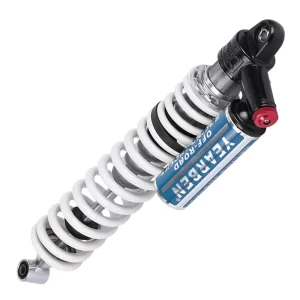
Monotube construction is often positioned as a performance upgrade, but the benefit depends on valving, gas pressure, and the platform it is fitted to. <Monotube-Shock-For-Off-Road> covers how monotube shocks are applied to off-road vehicle requirements.
What a Monotube Shock Manufacturer Should Control in House
A serious monotube shock program needs control over more than final assembly. Buyers should check whether the factory directly manages the processes that create consistency.
| Review area | What to confirm | Why it matters |
|---|---|---|
| Body tube | Bore straightness, roundness, and surface finish | Prevents internal wear and seal damage |
| Piston and shim stack | Valve layout and compression/rebound setup | Determines the damping curve and adjustment range |
| Separator piston and seal | Gas chamber seal and fill process | Protects against gas loss and oil mixing |
| Rod and chrome finish | Hardness, straightness, and coating thickness | Affects seal life and shaft durability |
| Welding and sealing | Weld inspection and pressure retention | Controls leakage and burst safety |
| Dyno testing | Force-velocity graph and test criteria | Confirms that assembled shocks match the target curve |
A factory can outsource plating, welding, or testing, but it should still provide records that show those suppliers are controlled. If a manufacturer cannot share the test method or reject criteria for a monotube shock, the MOQ conversation is premature.
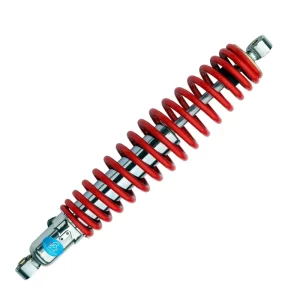
How Catalog and Custom Monotube Shocks Change the MOQ
The MOQ for a monotube shock manufacturer is not a single factory number. It depends on the order type.
A catalog monotube shock that already has finished bodies, pistons, rods, and valving carries less setup work, so the first order can usually be smaller. A custom program is different. Once the buyer changes the compressed length, stroke, end fitting, spring seat, valving, coating, or gas charge, those changes move through tooling, sample assembly, and approval work. The factory needs to recover that setup across enough units to make the project stable.
Custom work should be quoted in layers: first sample batch, pilot production, and repeat production. The initial MOQ may cover only the first approval batch. Buyers who ask for one MOQ without defining which parts are catalog and which are custom often compare quotes that are not describing the same work.
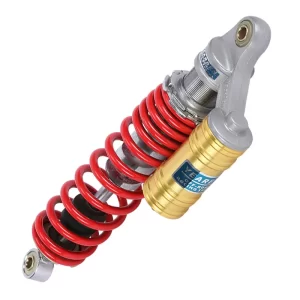
Catalog monotube shocks are only one part of a sourcing program when a vehicle platform needs modified lengths, brackets, or spring seats. <Custom-Shocks-And-Struts> covers how custom shock and strut programs are structured.
Process Checks That Separate a Serious Monotube Shock Factory
Before sampling, ask how the monotube shock manufacturer handles the critical process steps.
The first check is tube preparation and bore finishing. If the bore is not consistent, the piston seal sees uneven contact, and damping force changes as the shock heats up. The second check is gas charging. Nitrogen charging should be completed in a stable process, and the shock should hold pressure after cycling. The third check is leak testing and dyno verification. A visual inspection is not enough. The factory should compare the sample units on a dynamometer and provide force-velocity results across compression and rebound.
A useful question is what the factory rejects. If the production line has no defined rejection limits for gas loss, damping tolerance, or seal leakage, that is a capability gap. The MOQ becomes less important than the risk of approving a sample that later varies in production.
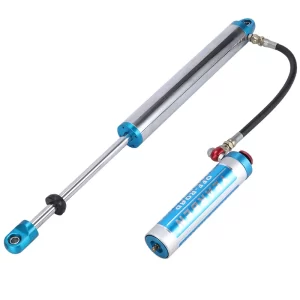
Off-road monotube programs can look very different from light-vehicle or UTV applications, especially when valving and end fittings change. <Utv-Shocks-For-Off-Road> covers how UTV shocks are matched to off-road use.
What to Put in a Monotube Shock RFQ Before Sampling
The RFQ should give the factory enough information to separate catalog coverage from true custom work. Send the extended length, compressed length, stroke, end mount style, body diameter, spring rate or corner weight if the shock carries a spring, damping target, and intended operating environment. For a monotube shock manufacturer, the operating environment is technical information, not marketing context. Desert racing, rock crawling, agricultural equipment, and seat suspension require different valving and heat management.
Also request the sample plan before ordering. Confirm how many samples are built, what curve is targeted, and what test reports accompany the sample. If the shock must meet a specific gas charge, seal material, or surface treatment, list it as required rather than preferred. The clearer the boundary, the easier it is to evaluate whether the MOQ and lead time reflect real engineering work.
Planning Your First Monotube Shock Sample Order
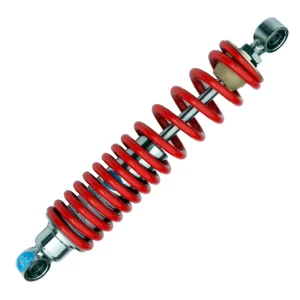
For a first quotation, prepare the stroke, closed and open lengths, end mounts, spring requirements if any, damping objectives, and sample quantity. Send those details to Yearben at info@yearbenshocks.com or +86-523-86566899. A clear sample package is the fastest way to confirm whether a monotube shock manufacturer can support both your target damping curve and your production volume.
FAQ
What is the main difference between a monotube and a twin-tube shock?
A monotube shock places the piston, oil, gas charge, and separator piston in one cylinder body. A twin-tube shock uses an inner working tube and an outer reservoir tube. Monotube construction can help gas stay separated and heat transfer more directly through the body, but it requires tighter bore and seal control. The choice depends on packaging, travel, heat load, and how the shock is valved.
What is a normal MOQ for custom monotube shocks?
There is no universal number. A catalog monotube shock should cost less to sample because the main components already exist. A custom monotube shock may have a separate sample MOQ, pilot MOQ, and repeat production MOQ because dimensions, valving, coatings, and test requirements change. Buyers should compare MOQs only after the same scope and quality requirements are specified.
Can a monotube shock factory support both catalog and custom programs?
A capable factory can often support both, provided it controls the component supply chain and testing process. Catalog programs depend on stable existing tooling and repeatable assembly. Custom programs depend on engineering review, fixture changes, and sample validation. Ask whether the same production line and quality plan are used, and whether separate sample and production records are available.
What reports should accompany a monotube shock sample?
Request a force-velocity dyno graph, dimensional inspection record, gas charge confirmation, and leak test or pressure retention result. If the shock is welded, plating is applied, or a specified seal material is used, ask for the corresponding material or process verification. A photo and a basic dimension check are not enough to approve an OEM monotube shock program.
If you’re interested, check out these related articles:
Twin-Tube-Hydraulic-Seat-Damper-28MM
Customized Steering Dampers 24mm