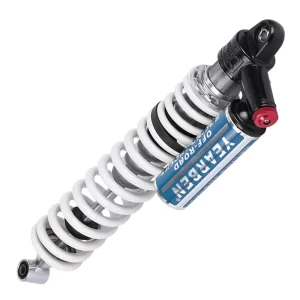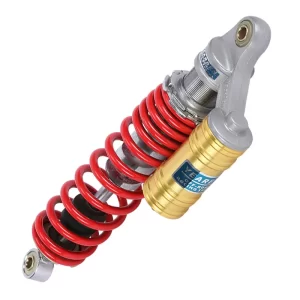
Commercial turf equipment runs longer and over rougher ground than most residential mowers. The shock absorbers fitted to the operator seat, deck suspension, and steering circuit are therefore replaced more often, but they are also specified less precisely in many fleet programs. This guide explains what a lawn mower shock absorber controls on a commercial mower, which dimensions and damping values matter, and how to recognize a damper that is ready for replacement.
What a Lawn Mower Shock Absorber Controls
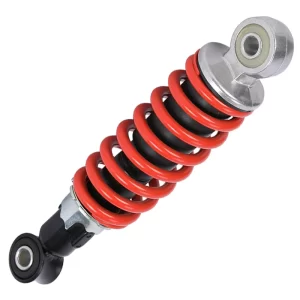
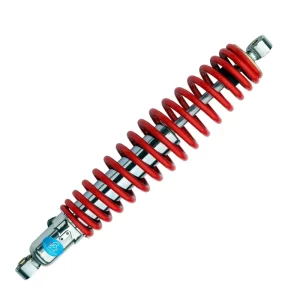
On a commercial mower, “shock absorber” can refer to several damping components. A seat damper controls vertical motion at the operator station, a deck suspension damper controls the suspended deck as it follows ground contour, and a steering damper works in the steering circuit to reduce kickback and rapid directional input. In each case the damper is a velocity-sensitive hydraulic device: it does not support static weight, but resists motion faster when shaft speed increases.
Zero-turn mowers often separate the steering damper from the deck and seat dampers because the valving requirements differ.
On zero-turn and ride-on mowers, steering motion is damped separately from deck and seat movement. <Lawn mower steering damper 18mm> covers the smaller cylinder sizing used in steering circuits.
Key Specifications for a Commercial Mower Fleet
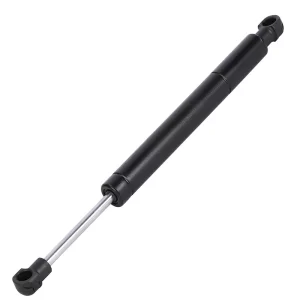
When ordering or validating a lawn mower shock absorber, these measurements matter most:
- Compressed and extended length: measured center-to-center at full compression and full extension.
- Stroke: the difference between the two lengths; it should match the movement allowed by the mount and linkage.
- Mount style: eyelet-to-eyelet, stud mount, bushing, or spherical bearing; bore width and bushing hardness affect fit and noise.
- Cylinder diameter: a key thermal and force capacity factor. Yearben’s mower damper range includes 18 mm, 24 mm, 28 mm, and 38 mm cylinder options for seat, deck, and steering positions.
- Damping force: the measured force at a specified piston velocity, usually checked in rebound and compression.
- Construction type: oil-filled or oil-free, monotube or twin-tube. The choice should follow the original platform; mixing types can change low-speed damping behavior.
Damper placement should remain within the operator station and guarded envelope of the mower platform. Machines validated to ISO 5395 have defined operator station and guard constraints that replacement components must not compromise [1].
Before requesting a commercial mower damper quote, record the closed length, open length, stroke, mount type, bushing width, and cylinder body diameter. Email those values to info@yearbenshocks.com and Yearben’s engineering team will confirm the appropriate damping curve for the seat, deck, or steering position.
Common Failure Modes and What They Indicate
A worn lawn mower shock absorber rarely fails without external signs. In many cases the issue appears first as ride-quality change, slow deck return, or a new noise at the end of travel.
- Oil film at the rod seal: a light film may be service-related, but active webbing or drip tracks after cleaning typically point to a damaged seal or scored rod.
- Top-out or bottoming noise: this can indicate lost damping force, incorrect preload, or a worn mount bushing.
- Uneven deck height: this may be caused by a failed deck damper, spring fatigue, or linkage wear; damper inspection should confirm shaft return before other parts are condemned.
- Steering wander or kickback: if the steering damper is involved, check for free play, oil displacement, and off-center return.
- Seat bounce: increased whole-body vibration at the operator station can follow lost seat damping. Operator vibration exposure may be evaluated against ISO 2631, which defines weighted acceleration limits for whole-body vibration [2].
Oil-free dampers on mower decks are selected in applications where an external oil leak would be difficult to detect.
Hydraulic damping with oil-free construction reduces leak paths on sealed deck mounts. <Oil-free lawn mower shock absorber 24mm> covers the 24 mm cylinder configuration used in light-deck and seat applications.
Fleet inspection should follow the operator manual and applicable ANSI/OPEI B71.4 maintenance requirements [3].
Specifying Replacements Across a Fleet
A replacement lawn mower shock absorber should match the original dimensional envelope and damping force curve, not only the end-to-end length. When building a replacement program across a mixed commercial fleet, group mowers by deck size, operator station, and steering type rather than by model year alone.
For high-hour ride-on mowers, seat suspension dampers require repeated low-speed cycling and consistent return.
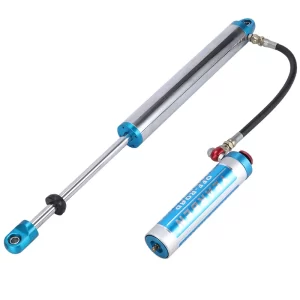
Operator seat suspension on high-hour mowers shares damping geometry with equipment seats. <Twin-Tube Hydraulic Seat Damper 28MM> covers twin-tube damping for repeated seat cycling.
Get a Spec-Shaped Quote for Your Fleet
For commercial replacement programs, Yearben Shock Absorber Technology matches compressed and extended length, mount style, cylinder diameter, and valving to the original platform. Send the mower model or the measured dimensions to info@yearbenshocks.com or call +86-523-86566899. Specify whether the position is seat, deck, or steering, and include annual replacement volume and target delivery window for fleet contracts.
Frequently Asked Questions
What is the difference between a lawn mower shock absorber and a steering damper?
A shock absorber in a lawn mower usually damps vertical or suspension motion at the seat or deck. A steering damper works in the steering circuit to control kickback and rapid directional movement. They share hydraulic principles but use different stroke and valving requirements.
Can an ATV or UTV shock absorber be used on a commercial mower?
In most cases no. ATV and UTV dampers are tuned for higher shaft speeds, longer suspension travel, and different mounting angles. Even if the end lengths are close, the damping force, spring rate, and bushing fit are usually mismatched for mower deck or seat loads.
How do I know when a lawn mower shock absorber needs replacement?
Inspect the damper when the mower develops a new top-out or bottoming noise, delayed return, uneven deck height, steering kickback, or active oil leaking from the rod seal. A failed damper may still look externally intact, so compare the shaft return and damping feel with a known-good unit on the same platform.
What measurements are needed to specify a replacement?
Record compressed length, extended length, stroke, mount type, bushing width, cylinder body diameter, and the position the damper operates in. If available, include the original part number and damping force specification from the parts manual.
References
[1] ISO 5395:2013. Garden equipment — Safety requirements for internal combustion engine powered lawnmowers. International Organization for Standardization.
[2] ISO 2631-1:1997. Mechanical vibration and shock — Evaluation of human exposure to whole-body vibration — Part 1: General requirements. International Organization for Standardization.
[3] ANSI/OPEI B71.4-2017. American National Standard for Commercial Turf Care Equipment — Safety Specifications. Outdoor Power Equipment Institute.
If you’re interested, check out these related articles:
Heavy Equipment Seat Shock Absorber 38mm
Oil-free lawn mower shock absorber 24mm
Damping-Adjustable-Shock-Absorber
Steering-Damper-18MM
Related Guides: Lawn Mower Shocks and Steering Dampers
- Lawn Mower Shock Absorber vs Steering Damper: Key Differences
- Steering Damper Guide for ATV, UTV, and Lawn Mowers
- Lawn Mower Steering Damper: Fixing Stiff Steering Correctly
Explore the lawn mower shock absorber range for related product applications.