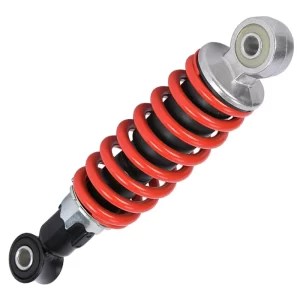
Fleet damping shock absorbers rarely fail because the basic design is wrong. They fail because the sourcing decision stopped too early — at dimensional matching and unit price. A long-term fleet supply program has to be engineered the same way the damper itself is: with defined damping force curves, verified batch consistency, documented test evidence, and a supplier qualification path that can hold those variables steady across years of demand. This guide walks through that sequence for trucks, buses, off-road equipment, agricultural machines, and specialty vehicles.
Why Fleet Damping Shock Absorber Supply Needs an Engineering Model
Fleet managers often treat damping shock absorbers as generic consumables: same outer dimensions, same threaded ends, same “it fits.” But damping attenuation — the rate and shape at which the damper converts kinetic energy into heat — has to match the sprung mass and the duty cycle. A damper valved for a light utility vehicle will behave differently on a loaded mining truck seat, even when the eye-to-eye length is identical. When the specification table is empty, procurement defaults to price, and the fleet absorbs the difference through early replacements and warranty churn.
The reverse is also true. When a fleet fixes damping force curves, stroke, mounting style, gas charge, and batch acceptance limits at the RFQ stage, the supply chain stops guessing. The supplier can quote against a repeatable test program instead of a photograph, and the buyer can audit performance the same way on every delivery. That discipline is the difference between a one-time order and a dependable multi-year program.
A useful first step is to request bench dyno curves plotted at multiple piston velocities rather than a single peak force value, because the shape of the curve predicts how the vehicle behaves during slow body roll versus sharp suspension hits.

The Specification Checklist for Long-Life Fleet Dampers
A workable fleet specification does not need to be enormous, but it has to remove ambiguity on the parameters that drive service life. The following fields belong in every fleet damper RFQ.
| Specification field | What to state | Why it matters |
|---|---|---|
| Bore and stroke | Nominal cylinder bore; total stroke with tolerance | Sets heat capacity and usable travel before bottoming |
| Extended / compressed length | Eye-to-eye or pin-to-pin dimensions | Prevents fitment surprises and seal over-stroke |
| Mounting style | Eye, pin, clevis, or stud with bushing material | Determines load path and noise behavior |
| Damping force curve | Force at multiple reference velocities, not one peak value | The actual tuning signature that controls pitch, roll, and harshness |
| Gas charge | Nitrogen pressure band or hydraulic-only type | Affects cavitation resistance and fade |
| Seal and fluid | Seal material and oil viscosity grade | Tied directly to temperature range and leak-free life |
| Surface treatment | Coating, plating, and salt-spray hours | Dictates corrosion life in fleet duty |
| Acceptance criteria | Dyno tolerance band and sampling plan | Locks batch consistency into the contract |
Bench testing under a recognized method, such as the telescopic shock absorber procedures in QC/T 545, gives both sides a common language for damping force and endurance verification [1]. For the vehicle segments covered here, hydraulic dampers and seat dampers serve most cab and suspension positions, while steering dampers handle front-axle stability on trucks and off-road equipment.
Fleet trucks and buses put continuous, high-cycle loads on cab and driver seating. <Heavy duty seat damper 35mm, Shock Absorber Manufacturer> covers 35 mm cylinder options engineered for sustained seat suspension duty.

Factory Qualification: What to Check Before Signing
Long-term supply is a process-control problem as much as a product problem. Before annual quantities are committed, the factory’s evidence base should be reviewed against four areas: quality system, test capability, batch records, and material traceability.
| Audit area | What to verify | Evidence to request |
|---|---|---|
| Quality management | A valid ISO 9001 system and prior audit history | Current certificate and audit summary [2] |
| Automotive quality | IATF 16949 alignment for OE programs | Certificate plus customer audit result [3] |
| Dyno capability | Force-velocity and endurance rigs for this damper family | First-article test report [1] |
| Corrosion validation | Salt-spray chamber and coating records | Hours per test method and batch coupon results [4] |
| Batch consistency | Serialized damping force records per production lot | Tolerance run chart or capability report |
| Traceability | Material heats, fluid lots, and seal batches | Traceability matrix and reject log |
A qualified supplier should be able to produce the same force-velocity envelope on the first article, the pre-production pilot, and the serial deliveries. The supplier’s documentation set should read like an engineering report, not a shipping list.

Need a qualification pack? Ask for a first-article dyno report, a coated-sample salt-spray record, and a serialized lot traceability sample before you commit annual volume. Send the application type, target damping curve, and expected annual quantity to info@yearbenshocks.com and request a technical review with the engineering team rather than starting from a catalog page alone.
Batch Consistency Is the Real Long-Term Cost Driver
The purchase price of a damping shock absorber is often the smallest part of fleet cost. The larger costs sit in unscheduled replacements, mixed ride quality across a fleet, and the administrative effort of chasing warranty claims across multiple deliveries. When damping force drift is not controlled between production lots, the same part number behaves differently in the field; operators notice, and rework cascades.
Control starts at the dyno and continues through assembly. A supplier that records force-velocity results per production lot and issues them with shipment documentation gives the fleet a measurable audit trail. For truck fleets running long overland routes, spring-and-damper matching matters as much as the damper itself, because both components define the ride envelope under full load.
Long-distance and overland truck fleets depend on spring-and-damper matching across rough duty cycles. <Best-Shocks-And-Springs-For-Trucks> covers paired spring and damper selections built for sustained truck loads.
The practical levers for total cost of ownership include:
- Fewer mixed-batch ride complaints when damping stays inside a defined tolerance band
- Fewer premature seal failures from off-spec damping
- Simpler warranty adjudication with serialized records
- Longer replacement intervals when damping force remains stable
Common Fleet Damper Failures and Countermeasures
Even with good sourcing, fleets encounter recurring failure signatures. Most are diagnostic signals about specification or maintenance rather than random defects.
| Symptom | Most likely root cause | Supplier-side countermeasure |
|---|---|---|
| Oil weeping at the rod seal | Seal material mismatch with temperature or chemical environment | Specify upgraded seal materials; validate with hot-cycle testing |
| Damping fade on long runs | Gas charge loss or oil aeration | Verify nitrogen charging; consider monotube or reservoir designs |
| Steering kickback returns | Damper stroke or low-speed valving insufficient for front-axle loads | Re-valve for low-speed firmness; verify stroke at full lock |
| Bottoming or topping on rough ground | Stroke too short or spring setting wrong | Correct extended and compressed lengths; match preload to load state |
| Early corrosion | Coating inadequate for salt or humidity | Upgrade plating; set salt-spray acceptance hours per [4] |
| Force drift between lots | Loose batch tolerance | Bind dyno tolerance band and capability reporting into the P.O. |
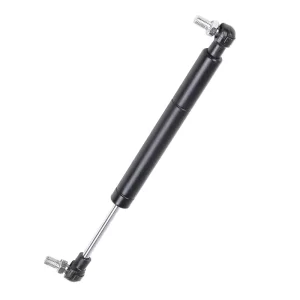
Several of these failures trace back to a missing specification rather than a missing component. That is why the RFQ table and the audit table matter more than the final unit price: they are the controls that keep these signatures from appearing after year one. For fleets that need firm low-speed steering control and tunable ride behavior on the same platform, adjustable hydraulic shock absorbers are usually evaluated next to fixed-valve units before the first pilot order.
Adjustable damping gives fleet buyers one valving platform for multiple load states, from unladen steering response to fully loaded seat duty. <Adjustable-Hydraulic-Shock-Absorbers> covers adjustable hydraulic damping configurations for mixed fleet duty.
Building a Multi-Year OEM Supply Agreement
A long-term agreement works when it locks the technical envelope, not just the price. Useful contract elements include a frozen specification annex, an annual capacity reservation clause, a change-notification protocol for fluid, seal, or coating substitutions, and an agreed sampling plan for incoming inspection. Export fleets should also confirm material compliance scope, including substance-of-very-high-concern declarations under REACH for EU-bound articles [5].
The most effective agreements separate the “what” from the “how.” The buyer controls what must be delivered: damping curves, dimensions, test evidence, and delivery windows. The supplier controls how: process design, tooling, batch control, and corrective action. Mixing those roles — asking the buyer to solve valving problems, or the supplier to guess at fleet priorities — is where programs drift.
Plan your fleet damping shock absorber program with engineering input. Send the application type, bore and stroke requirements, mounting style, target damping curve, annual volume, and your preferred qualification standard to info@yearbenshocks.com or call +86-523-86566899. With more than 200 damper models and an annual production capacity of 1.5 million units, Taizhou Yearben Shock Absorber Technology Co., Ltd. can structure a spec review, first-article test plan, and long-term supply proposal around your fleet’s duty cycle rather than a generic catalog line.
Frequently Asked Questions
What damper valving should a mixed truck and bus fleet specify?
A mixed fleet should define damping force curves at multiple piston velocities for the heaviest repeated duty condition, then validate a realistic tolerance band. A curve that fits only the average load will be wrong at both the light and heavy ends of the fleet.
How often should fleet damping shock absorbers be inspected or replaced?
Inspection depends on duty cycle and environment, but a practical rule is to check for oil weeping, rod scoring, and mounting wear at each major service interval, and to replace dampers in axle or seating positions as sets when force testing shows loss outside the supplier’s tolerance band.
Can one factory supply seat dampers, steering dampers, and suspension dampers together?
Yes — consolidating these families with a single qualified supplier simplifies batch documentation and freight. Verify that the factory maintains separate dyno programs for each family and serialized records for every lot before consolidating.
What is a realistic MOQ for custom fleet dampers?
Custom programs usually begin with an engineering sample stage, then a pilot batch, then full production. Both parties should agree on sample lead time, pilot quantity, and mass-production triggers in the framework agreement before tooling begins.
How do I verify batch-to-batch damping consistency?
Request serialized force-velocity test reports per production lot, confirm the supplier’s sampling plan, and bind a damping force tolerance band into the purchase order. Incoming inspection should re-test a defined sample against the same reference curve used at the factory [1].
What compliance documents should an export fleet damper order include?
Include the quality system certificate [2], any automotive QMS evidence [3], corrosion test records per the agreed salt-spray method [4], restricted-substance declarations under REACH where the destination requires them [5], and a traceability matrix for seals, fluids, and coatings.
References
[1] QC/T 545-1999, Bench Test Methods for Telescopic Shock Absorbers, Chinese Automotive Industry Standard.
[2] ISO 9001:2015, Quality Management Systems — Requirements, International Organization for Standardization.
[3] IATF 16949:2016, Automotive Quality Management System Standard, International Automotive Task Force.
[4] ISO 9227:2017, Corrosion Tests in Artificial Atmospheres — Salt Spray Tests, International Organization for Standardization.
[5] Regulation (EC) No 1907/2006 (REACH), Registration, Evaluation, Authorisation and Restriction of Chemicals, European Union.
If you’re interested, check out these related articles:
Adjustable-Shock-Absorber-For-Car
Custom shock absorbers for seat Φ41.5mm manufacturing
Remote-Reservoir-Shocks-Manufacturer
Utv-Shocks-For-Off-Road