ATV shock absorbers are not one damper with three different labels. A utility machine asks a shock to control weight at low shaft speeds, while a race build survives high speed strokes and rapid direction changes. Trail machines sit between those conditions, and that is where most specification errors begin. I have spent more than twenty years developing and customizing ATV shock absorbers at Yearben, and the selection logic I use with OEM buyers starts from load and shaft speed, not from spring color or catalog copy. Define the dominant load and the typical shaft speed first, and the spring, valving, bore size, and stroke fall into place after that.
ATV Shock Absorber Selection Starts with Load and Shaft Speed
A machine that carries a spray tank or a plow blade loads the rear damper differently from a race quad absorbing repeated square edge hits. The first spec I request is loaded axle weight, not dry weight. The second is terrain speed. Shaft speed determines whether the piston needs a digressive, linear, or progressive damping curve. Utility ATVs spend most of their life at low shaft speeds because the inputs are slow weight transfers and loaded body movements. Racing ATVs produce fast shaft speeds from jump landings and sharp impacts. Trail riding creates repeated mid speed cycles, which is why a durable seal and a stable damping curve matter more than peak numbers.
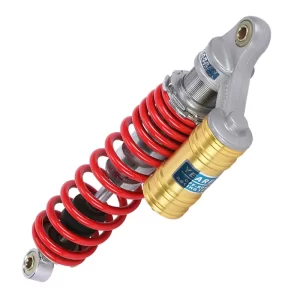
Utility and Trail ATV Shock Absorbers Need Different Spring Rates
Utility builds carry racks, hitches, and sometimes mounted equipment, so the spring rate cannot come from a sport model listing. Adding preload to a soft spring raises ride height but does not create load capacity. The damper then works through a shorter active stroke, and bottoming becomes frequent. Trail builds need a lower spring rate with a more controlled rebound. A trail machine fitted with a utility spring chatters over roots because the wheel cannot return to the ground quickly enough. In our ATV shock absorber production, I record free length, spring rate, and preload range before matching gas pressure to the damping curve. If a customer sends a rear rack with a 200 pound load, I specify a spring that holds ride height under that condition, not one that only fits the eye-to-eye length.
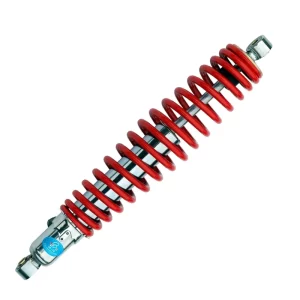
Racing ATV Shock Absorbers Are Valved for Fast Shaft Speeds
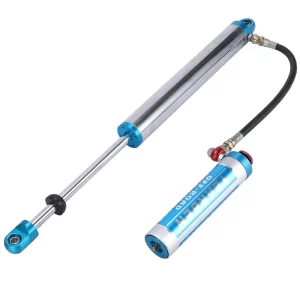
Race ATVs hammer the damper with short, sharp strokes, so the piston valving must move oil quickly without hydraulic lock. A utility shock on a race build overheats because it cannot release enough oil through the compression ports. I look for three things on a race ATV shock absorber: shim stack progression, gas charge stability, and shaft surface finish. Shim stack progression is not one number. The low speed section controls body movement under braking and throttle, while the high speed section opens under square edge impacts. Gas charge stability matters because nitrogen pressure stops the oil from cavitating when the shock cycles fast. In race oriented ATV shock absorbers, I specify a larger bore and a remote reservoir when the rider expects long sand washes or repeated jump landings. The reservoir adds oil volume and delays heat fade. If a buyer changes spring rate but ignores valving, the machine holds ride height and still skates through rough sections because the damper cannot react fast enough.
If your program combines a loaded utility chassis and a race build on the same platform, it is worth confirming the piston and shim stack before the BOM is frozen. Send the machine weight and terrain description to info@yearbenshocks.com and I will check which damper family matches both conditions.
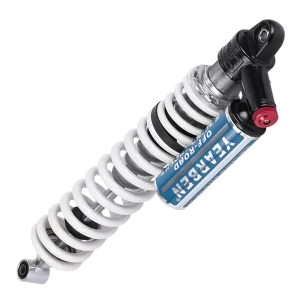
Bore Size, Stroke, and Reservoir Choice for ATV Shock Absorbers
Bore size sets the oil displacement per stroke. A larger bore carries more oil volume for heat rejection and opens a broader valving window, but it does not make the ride better by itself. Stroke must be measured on the vehicle, not copied from the old eye-to-eye length. Full extension to full compression with limit straps and bump stops installed is the only number that matters. Reservoir choice follows heat load and packaging, not appearance.
| Use case | Bore focus | Stroke requirement | Reservoir preference |
|---|---|---|---|
| Utility | 36 to 40 mm about heat tolerance and stable low speed control | Keep stock travel unless the load changes ride height | Internal gas cell or emulsion, remote only for heavy continuous load |
| Trail | 40 to 46 mm for mid speed control | Match stock travel; use long travel only with arm geometry changes | Piggyback where packaging allows, otherwise emulsion for cost control |
| Racing | 46 mm or larger for oil volume and valving range | Long travel only when the suspension geometry is built for droop and clearance | Remote reservoir for additional oil volume and cooling |
ATV Shock Absorber Specifications Are Worth Confirming Before the BOM
Most ATV shock absorber specification failures come from a part number without a load case. A buyer receives an eye-to-eye dimension, a spring rate, and a finish option, then the machine sits low or tops out after the first field run. That is not a spring problem alone; it is a missing load and speed definition. I would rather confirm the loaded axle weight, terrain type, and actual travel before sampling than ship a damper that matches the catalog but not the vehicle. Send your machine model, loaded axle weight, target travel, and quantity to info@yearbenshocks.com or call +86-523-86566899, and we will confirm the spring, valving, and reservoir configuration before production.
Common Questions About ATV Shock Absorber Specifications
Is a remote reservoir worth adding on a trail ATV shock absorber?
Only if the trail ride includes long high speed sections or enough rear weight to keep the damper working hard. A remote reservoir adds oil volume and cools the damper over continuous cycles, but most trail machines do not generate that heat load. The more useful upgrade is the correct spring rate and a rebound curve that keeps the tire on the ground after roots and ledge hits. If the shock fades on a long trail loop, then the reservoir becomes worth adding.
Is bottoming usually caused by a spring that is too soft?
Most bottoming complaints are not spring problems. A spring that raises ride height can still bottom if the compression valving is too soft or the shock is working through too short a stroke. The first check is whether the machine reaches the bump stop under normal loaded riding or only under hard hits. The second check is whether the damper still holds gas pressure. If the loaded height is correct but the shock still slams, valving or stroke is the next thing to change.
Should I order by eye-to-eye length or by wheel travel?
It depends on whether the suspension arms, limit straps, and bump stops are already fitted. If the vehicle is a stock replacement, match the original extended and compressed lengths and confirm the bottom out stop position. If the build uses longer arms or a different cage, measure full extension and full compression on the chassis, not from another catalog. The eye-to-eye length only tells half the story; the stroke and end fittings must match the actual suspension path.
What specification should I send first for a custom ATV shock absorber?
In the programs we have supported, I ask for loaded axle weight before the part number. Weight determines the spring rate and the low speed damping requirement, and it is the spec most buyers leave out. After that I need terrain type, target travel, eye-to-eye length, end fitting style, and annual quantity. Share your machine model, loaded axle weight, terrain type, and target travel, and we will confirm whether a stock or custom ATV shock absorber fits your program.
If you’re interested, check out these related articles:
Monotube-Shock-For-Off-Road
Customized Lawn Mower damper 24mm