
Adjustable dampers that hold up on a sand rail may beat a suspension seat to pieces if the clickers get carried over unchanged. The difference is not the amount of adjustment, it is the load curve behind each application. Off-road, seat, and racing dampers need different low-speed control, different rebound recovery, and different thermal limits. In the programs I review, the most reliable spec starts with the load input and works backward to valving. That approach avoids the common mistake of paying for more adjustability than the vehicle can actually feel. The sections below break down how to choose adjustable dampers for these three use cases.
How Do Adjustable Dampers Behave Under Off-Road, Seat, and Racing Loads?
Off-road loads arrive as high-speed shaft velocities from rocks, whoops, and square-edge hits. A damper tuned only for low-speed control will spike pressure and lose grip. Seat loads are opposite: the input is a human mass bouncing at low frequency, often below 2 m/s shaft velocity, and the damper has to control motion without locking the seat. Racing loads sit between the two, but they repeat for much longer and build heat quickly. In durability cycles we have run, an off-road damper body can climb steeply in a few minutes of hard desert running, while a seat damper in the same period stays near ambient. That gap is why adjustment ranges are not interchangeable. The first specification question is not how many clicks, but what shaft speed range dominates the duty cycle.
What Damping Adjustments Matter for Off-Road and Seat Applications?
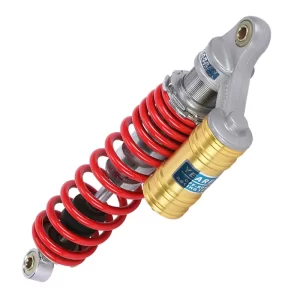
Compression adjustment controls how quickly the damper accepts a hit. On off-road vehicles, too much low-speed compression makes the suspension harsh over small chatter and drives tire load variation. Too little lets the vehicle wallow through whoops. Rebound adjustment controls how the spring energy is released. Off-road rebound that is too fast makes the vehicle pogo after a jump. Too slow packs the suspension down through repeated hits. Seat dampers need a different bias. The driver’s weight is usually fixed within a narrow band, so most seat valves prioritize low-speed damping and friction consistency over high-speed blow-off.
Why do seat dampers prioritize low-speed control?
Seat suspension sees low velocity inputs from road undulation and driver movement. High-speed circuits barely open. When a seat damper is too firm, the occupant feels vibration through the thighs and lower back. When too soft, the seat hits the end stop. The adjustability that matters is within the first few millimeters of stroke, not across the full range.
| Application | Dominant Shaft Velocity | Main Adjustment Goal | Common Result of Mistuning |
|---|---|---|---|
| Off-road | High, impact-driven | Low-speed compression control | Packing, harsh steering, or loss of traction |
| Seat | Low, mass-driven | Rebound and friction control | End-stop strikes or vibration transfer |
| Racing | Mixed, heat-soaked | Wide-range compression and rebound | Fade, inconsistent lap times |
In practice, the adjustment that is most often missed is rebound. Many tuners turn compression knobs until the vehicle feels firmer, then leave rebound at the factory midpoint. If your program mixes seat dampers and off-road units, it is worth confirming whether the same cartridge can cover both before you finalize the bill of materials. Send your load range and target shaft speeds to info@yearbenshocks.com.
Why Does Spring Rate Selection Change Between Racing and Off-Road Dampers?
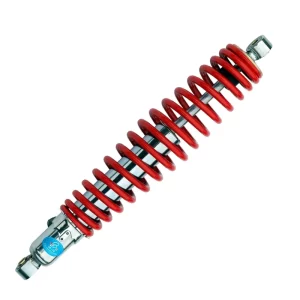
Spring rate sets the baseline position and bottom-out behavior. Racing vehicles run stiffer springs because aero, track surface, and driver control reward low body motion. Off-road vehicles use softer initial rates or dual-rate springs to keep tires on the ground over broken terrain. The same damper valving will feel different if the spring is wrong. A stiff spring on an off-road buggy makes the damper work too hard on small chatter. A soft spring on a racing truck lets the chassis roll into the bump zone too often.
How does preload interact with adjustability?
Preload shifts ride height and initial spring resistance. On adjustable coilovers, preload changes where the damper operates in its stroke, but it does not change damping force. I often see preload used as a poor substitute for spring rate. The correct sequence is spring rate first, ride height second, then damping clicks. Reversing that order sends misleading feedback into the driver’s hands.
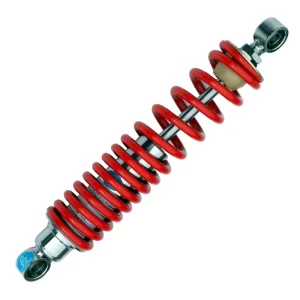
Our production line has built adjustable coilovers for buggies and ATVs with threaded preload collars. The first sample discussion is always whether the customer’s stated spring rate matches the loaded corner weight.
What Should OEM Buyers Specify Before Ordering Adjustable Dampers?
A clear inquiry reduces sample cycles. Buyers should specify extended and collapsed lengths, mounting type, spring rate or corner weight, adjustment type and number of positions, shaft diameter, body finish, and expected annual volume. If the product is a seat damper, include the seat mass range and travel. If off-road, identify the terrain type and vehicle weight. If racing, note the event duration and heat load. We keep over 200 models in production and run an annual capacity of about 1.5 million units, which means the catalog is broad enough to cover many platforms without a new drawing. But when the application is specialized, the drawing controls.
What drawing data prevents sample delays?
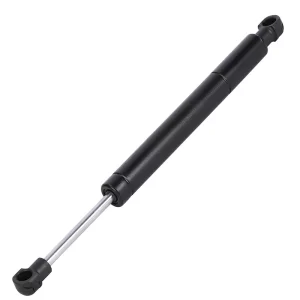
Send a 2D drawing with mount centers, body diameter, eyelet dimensions, and travel stops. If the damper includes a spring, state the spring ID and free length. Missing those details is the most common reason a sample gets delayed.
Which Adjustable Damper Specs Should You Send to Yearben?
A generic damper quote becomes a problem when three different applications sit under one vehicle program. The quote misses the load profile and forces late rework. Yearben starts from your duty cycle before locking valving. Send your target travel, spring rate or corner weight, adjustment type, and quantity to info@yearbenshocks.com or call +86-523-86566899. Include the vehicle platform and expected terrain or seat mass. The engineering team will return a sample plan before you commit to tooling.
What Do Buyers Ask About Adjustable Dampers Before Quoting?
What is the real difference between adjustable and fixed dampers?
An adjustable damper gives you a range of damping force around a fixed base curve. It does not turn a poorly valved damper into a good one. The adjustment changes the slope or position of the force curve, not the architecture of the piston or the quality of the seals. For an OEM buyer, the value is tuning consistency across a production batch and the option to dial in a platform without cutting new shims every time. A fixed damper costs less and works when the duty cycle is stable. An adjustable unit earns its cost when one part number must serve several vehicle weights or terrain types.
Do seat dampers need the same valving as off-road dampers?
A common mistake is to assume that a seat damper is just a short off-road damper. It is not. Seat dampers operate at lower shaft velocities and lower temperature, and their main job is controlling stored energy from the occupant and the seat foam. Off-road valving usually has more high-speed blow-off and a wider compression range. If you fit off-road valving into a seat, the first symptom is harshness at small inputs, followed by fatigue cracks around the mount. Seat applications should start with a low-speed tune and only add range if the vehicle has known high-frequency inputs.
Which adjustment range should a mixed off-road and racing build choose?
It depends on the dominant duty cycle. If the vehicle races more than it crawls, choose a wider compression range and a remote reservoir for heat control. If it runs mixed trails with occasional high-speed sections, a simpler piggyback clicker is easier to tune and cheaper to maintain. The mistake is not choosing a setting, it is buying a very wide adjustment range and then running it at one end of the dial. That adds complexity without adding control.
How does a buyer confirm durability before placing an OEM order?
In our sample process, durability starts with a defined cycle test at the target load, travel, and temperature. The test runs a known input profile until the damper shows fade, leakage, or end-cap loosening. That gives a repeatable pass/fail point before tooling is cut. Ask any supplier for the cycle test profile and the acceptance limit, not just a certificate. If the answer is vague, the durability claim is not yet proven. Share your load curve or part number with info@yearbenshocks.com and we will confirm which adjustment range and test plan fits your program.
If you’re interested, check out these related articles:
Off-Road-Coil-Over-Shocks-Manufacturer
Ride-on Mower Shock Absorbers 38mm, Shock Absorber Manufacturer