
4×4 coilover suspension selection for the Jeep Wrangler, Toyota Hilux, and Toyota Land Cruiser fails when spring rate, shock body diameter, and valving are treated as a catalog pick. I approach each platform from axle weight first, then duty cycle, then mounting geometry. A Wrangler runs lighter and likes more articulation. A Hilux carries variable bed loads. A Land Cruiser is heavier all the time and needs more thermal reserve. The correct specification is not a compromise. It is a measured match to the actual corner loads and the way the truck is driven.
What Should You Specify First on a 4×4 Coilover Suspension?
Start with the corner weights, not the vehicle badge. I ask for the front axle weight in full running trim, including bullbar, winch, second battery, and tray load for the Hilux. Then I ask for extended and collapsed lengths from the mounting eyes. These two dimensions control articulation travel and packaging. Spring inner diameter matters next because the coil has to sit on the lower spring seat without binding. Eyelet and pin diameters must match the chassis brackets. After that, I record whether the truck will run at low speed over rocks or at sustained speed on corrugated tracks. This data set determines spring rate and valve stack much more accurately than a year, make, and model alone.
Typical starting ranges I use for evaluation:
| Platform | Front corner weight range | Spring ID I usually start with | Shock body size | Dominant tuning concern |
|---|---|---|---|---|
| Jeep Wrangler | 1,200 to 1,500 lb per corner loaded | 2.5 in | 2.0 or 2.5 in | Low-speed compliance and articulation |
| Toyota Hilux | 1,000 to 1,400 lb per corner loaded | 2.5 in | 2.0 or 2.5 in | Payload variability and bullbar load |
| Toyota Land Cruiser | 1,600 to 2,000 lb per corner loaded | 2.5 or 3.0 in | 2.5 in | Thermal reserve and rebound control |
How Do Coilover Spring Rates Differ for Jeep, Hilux, and Cruiser?
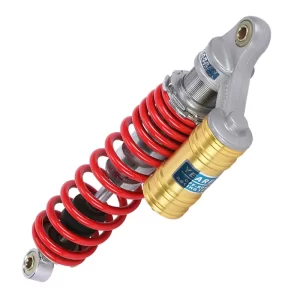
Spring rate is not a recommendation you can copy from one platform to another. It is the force required to compress the spring by a fixed distance, and it starts with the sprung mass over that corner. A Wrangler is lighter and runs a softer straight rate with a longer free length because the suspension needs to drop into holes without lifting the cab. A Hilux with a steel bullbar, winch, and full tray needs more initial rate or a dual-rate spring to control the extra inertia. A Land Cruiser is the heaviest of the three and responds best to a higher straight or dual-rate setup that resists squat under load. I have watched a Hilux with copied Wrangler rates sink more than 25 mm below the target ride height in the first week. The spring was not weak. It was specified for the wrong corner mass.
Why Does Shock Body Diameter Matter More on a Heavy Cruiser?
Shock body diameter controls oil volume and heat dissipation area. A larger body carries more fluid and converts less of each stroke into a sharp temperature rise. On a light Jeep Wrangler at trail speed, a 2.0-inch body can stay within a workable temperature range for most users. On a loaded Land Cruiser, the same shaft speed against the same valving creates a much larger heat load because the mass it is controlling is higher. If the body is too small, the oil thins, damping falls off, and the truck starts to float on corrugations. That is why I start most Land Cruiser builds at 2.5 inches or larger, especially when the truck carries front bar, winch, second battery, and underbody protection. The body diameter is not about appearance. It is the first line of thermal defense.
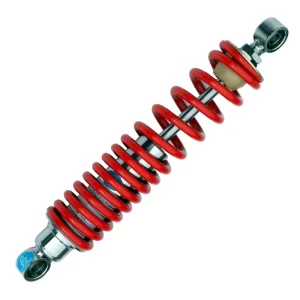
If your program involves a loaded Land Cruiser or a Hilux with a tray body and constant payload, confirm the shock body diameter and rebound tune before freezing the bill of materials. Send your corner weights and payload figures to info@yearbenshocks.com and we can check the valving window against the heat load.
When Does a Remote Reservoir Coilover Justify the Extra Cost?
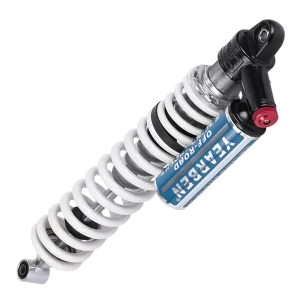
Remote reservoir coilovers add a separate chamber connected by a high-pressure hose. That chamber stores extra oil and gas, increases total fluid volume, and gives the shock more surface area to shed heat. The upgrade is worth it when the truck runs at sustained speed over rough ground, because remote reservoirs lower peak oil temperature and slow the point at which damping fades. Slow rock crawling rarely needs the extra capacity, but a loaded Land Cruiser on long outback tracks will. A Hilux that sees corrugated gravel roads at highway speed with constant tray load also benefits. If the truck spends most of its life under 50 km/h on technical trails, a smooth body or piggyback coilover usually does the job with less plumbing and fewer potential leak points.
How Do You Source a 4×4 Coilover Suspension Without Guessing on Spring Rate?
Guessing on spring rate creates the most expensive kind of rework: the truck sits wrong, the buyer adds spring spacers or revalves after delivery, and the supplier relationship starts with a defect that was actually a specification problem. The lower-friction path is to treat the coilover as an engineered assembly, not an off-the-shelf part. Send the factory a specification sheet with corner weights, extended and collapsed lengths, spring inner diameter, mount dimensions, and the exact use case. Include photos of the front and rear mounts. We use that data to propose a defined spring rate and valve stack, then supply a sample for fitment and ride validation before production. For a direct specification check, send your part number, two mount photos, and complete corner weights to info@yearbenshocks.com or call +86-523-86566899.
Common Questions About 4×4 Coilover Suspension for Truck Platforms
Is a 2.5-inch body coilover always the right choice for a Land Cruiser?
A 2.5-inch body is the right starting point for most loaded Land Cruiser platforms because it holds more oil than a 2.0-inch unit and keeps damping consistent longer. The exception is a stripped vehicle with no bullbar, no winch, and light cargo, where a 2.0-inch body can be tuned to ride more softly. Without knowing the actual corner weight, body size selection remains a guess.
Does a stiffer spring by itself stop bottoming on a Hilux?
The common mistake is assuming a stiffer spring alone prevents bottoming. It changes ride height and pitch control, but bottoming is also a function of compression damping and bump stop tuning. A heavy Hilux with proper spring rate can still crash through the stroke if the high-speed compression circuit is too soft. The fix is a matched combination of spring rate, valving, and final bump stop position.
How do I choose between a straight rate and a dual-rate spring for a Hilux?
It depends on whether the rear load is constant. If the Hilux runs with a permanent tray, water tank, or service body, a straight rate matched to the loaded weight gives predictable handling. If the load varies between empty weekday use and loaded weekend trips, a dual-rate setup handles both ranges without excessive ride height change. The transition point matters as much as the rates themselves.
What is the most overlooked measurement when ordering coilover suspension?
In the coilover projects I have reviewed, the most frequently missed data point is collapsed length. Extended length gets attention because it defines down travel. Collapsed length protects the shock from topping out internally when the suspension compresses. If it is not measured from the actual chassis at full bump, the coilover can bottom before the bump stop does, and the shaft or piston fails early. Share your part number and two mount photos with info@yearbenshocks.com, and we can check the collapsed length before you order.
If you’re interested, check out these related articles:
Triple-Bypass-Shock-For-Off-Road
Adjustable-Hydraulic-Shock-Absorbers