Most ATV shock absorber OEM orders from China fail in the specification stage, not in production. A buying team sends an eye-to-eye length, a spring rate, and a target price, then two months later receives dampers that fit the mounting points but ride differently from the approved sample. The source of that gap is usually valving and quality verification, not machining. I approach these programs as a suspension engineer first and a supplier second. That means locking the damping curve, spring preload, and test standard before comparing unit prices, because the unit price that ignores those three variables is not a real price.
What Specs Define an ATV Shock Absorber OEM Order?
ATV shock absorbers are not one part number. A workable OEM order starts with a specification sheet the factory can build against, not a competitor link. The minimum fields I use in a quote review are below.
| Specification | What to specify | Why it changes the quote |
|---|---|---|
| Mounted length | Eye-to-eye or pin-to-eye length in mm | Sets body and shaft dimensions |
| Travel | Stroke from rebound stop to full compression | Sets oil volume and seal location |
| Spring rate | N/mm or lbs/in at installed preload | Must match vehicle weight and linkage |
| Damping | Compression and rebound force at two or three shaft speeds | Controls ride feel and heat buildup |
| Reservoir type | Internal, piggyback, or remote reservoir | Changes gas volume and cost step |
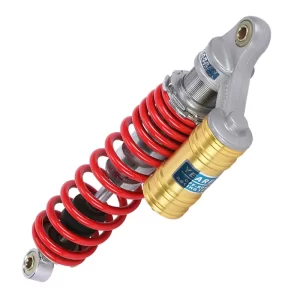
The damping curve is the part most buyers skip. A shock can have the correct eye-to-eye length and spring rate and still be wrong for a 450cc sport ATV because the rebound stack was borrowed from a utility platform. I ask for a force velocity table at low, medium, and high shaft speeds when the program involves anything beyond a like for like replacement. Yearben keeps more than 200 ATV and UTV shock absorber models with fixed preload and adjustable threaded preload options, so many programs can start from an existing platform rather than a blank drawing.
Why Do ATV Shock Absorber Damping and Spring Rates Have to Be Locked Early?
Shock absorber performance is defined before the first production part is welded. Once a piston and shim stack are approved, changing the damping target means re-shimming, re-testing, and often re-quoting the oil seal and piston machining. If the buyer leaves valving open to keep the starting price low, two things happen. The factory chooses a baseline curve that protects its cost position, and the sample approval cycle then becomes a negotiation instead of a verification.
What Goes Wrong When Valving Is Left Open
Buyers discover this during sample testing. A machine that rides well on a lightweight youth ATV may feel harsh or vague when the same shock is mounted on a heavy 500cc utility quad. The mechanism is not subtle. Compression and rebound forces that are too soft produce excessive shaft speed, heat, and foaming; forces that are too stiff send more load into the chassis. We correct the curve before clamping the price, not after.
Fixed Preload or Adjustable Threaded Preload
For OEM programs, fixed preload costs less and is easier to control across batches. Adjustable threaded preload costs more but lets one part number cover two rider weights or a standard and a winch equipped front end without carrying separate spring rates. I treat preload adjustment as a portfolio decision, not a performance decision. If the vehicle line has three trims with different curb weights, adjustable preload can cut the number of approved part numbers in half.
How Should You Compare Factory Capability and Trading Company Pricing?
A trading company can offer the same photos and a lower initial price because it carries none of the process risk. The issue is what happens when the sample fails. I have walked production lines where shim stacks were assembled without torque control, and the result appeared later as left to right damping variation on the same axle. The factory could not trace which operator built which shock, so the whole batch had to be reworked.
Three areas separate an OEM shock absorber factory from a middleman: piston rod chrome plating quality, nitrogen charging consistency, and damping force testing after assembly. A serious factory should be able to show batch records for each process, not only a final inspection certificate.
If your program includes several ATV models or a mix of fixed and adjustable damping, confirm the valving matrix before finalizing the BOM. Send your part numbers and terrain profile to info@yearbenshocks.com and I will check which platform data we already have on file.
What Quality Checks Prevent ATV Shock Absorber Field Failures?
Field failures are usually predictable from the inspection plan. The three checks I would not remove from a first production order are seal lip lubrication and dust lip orientation, nitrogen pressure retention after 48 hours, and damping force variation across a production sample of at least ten parts.
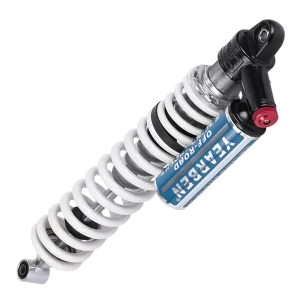
Oil leakage after 30 or 40 hours is normally a seal compatibility problem, not a body defect. If the seal material was chosen for a street temperature range, mud, dust, and heat cycling attack the lip quickly. We specify seal materials for the actual operating range and confirm the chrome layer on the piston rod has no porosity before assembly. For high-speed desert use, a remote or piggyback reservoir keeps gas pressure stable by adding oil volume and cooling surface.
What Should You Send for a Production-Ready OEM Quote?
The most expensive quoting mistake is sending one line, such as “ATV shock absorber, please quote,” and waiting for a number. A complete RFQ removes two or three sample loops. Send the existing part number, the vehicle model and year, installed length, travel, spring rate or vehicle weight, required damping adjustment, annual quantity, and any packaging or label requirements.
Once those fields are defined, the quotation can include the damping philosophy and validation steps, not just a unit cost. We review the specification, confirm whether an existing platform can be adapted, and return a quote that separates tooling, sample, and production pricing.
If your program is moving toward an OEM order and you want the specification locked before cost is finalized, send the drawing or sample, part number, and quantity to info@yearbenshocks.com or call +86-523-86566899. I will confirm the damping and test plan with the quotation so the number you receive is production ready.
What Else Do Buyers Ask About ATV Shock Absorber OEM Orders from China?
How long does an ATV shock absorber OEM order take?
A realistic OEM order takes eight to twelve weeks from locked specification to production release. The first two to four weeks usually go into drawing review, sample damping targets, and tooling confirmation. Prototype machining and valving trials take another three to four weeks. Production then follows after the customer signs off the sample and the packaging specification. If the order reuses an existing body, piston, and spring platform, the lead time can drop to four to six weeks because only the tuning and label need to change. Rush orders are possible, but I would rather compress lead time by freezing the specification than by shortening the test cycle.
Can a Chinese factory copy my existing ATV shock absorber?
Many buyers assume copying a sample is mostly a machining job. The harder part is reverse-engineering the valving and matching the original spring curve, especially when the reference part has a worn seal or a collapsed bushing. A factory can measure the external dimensions in a day; getting the internal damping behavior right requires a dyno baseline, oil volume calculation, and a sample test on the target vehicle. I ask for the sample, the vehicle model, and a note on what the current shock does well or poorly. That gives the engineering team a target curve instead of a guess.
What MOQ should I expect for a custom coilover ATV shock absorber?
It depends on whether the shock is an existing platform adaptation or a fully custom body and shaft set. For an existing ATV coilover shock absorber platform with changed spring rate, preload, or valving, MOQs can start in the 200 to 500 unit range depending on color, label, and packaging. A fully custom body, shaft, and reservoir tooling set usually moves the MOQ to 1,000 units or more. The supplier has to cover forging, machining, and seal development. Mixed model orders can reduce the per-model minimum if the factory can group the production schedule.
Which adjustment is worth paying for on an ATV shock absorber?
In the ATV programs I review, adjustable preload is the setting buyers change most in the field, and adjustable damping is the setting they specify most often without testing. If the vehicle carries different loads, threaded preload gives the rider a real adjustment they can understand. If the shock must work across rock crawling, trail riding, and dune running, dual-speed damping adjustment is the better spend, but the valving needs a defined range so the clicker does not become a warranty problem. If your team is still deciding between preload and damping adjustment, send your vehicle weight and terrain profile to info@yearbenshocks.com and we will recommend which adjustment is worth the cost.
If you’re interested, check out these related articles:
Monotube-Shock-For-Off-Road
Best-Off-Road-Shocks
Best-Off-Road-Coilover
Heavy Equipment Seat Shock Absorber 38mm
Triple-Bypass-Remote-Reservoir-Shock