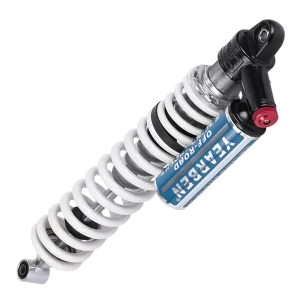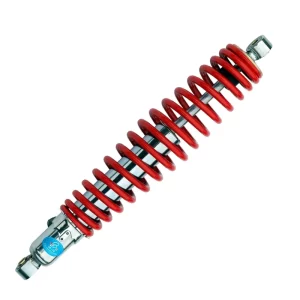
Deciding between a welded spring perch and a threaded spring perch on a coil over shock changes how the damper handles ride height, preload, and long-term load transfer. I treat the welded vs threaded spring perch choice as a specification decision, not a brand preference. Welded perches suit fixed-spec OEM programs with high cycle counts, while threaded perches serve tunable builds where ride height and preload must change in the field. The real failure point is usually not the attachment style but the quality control behind the weld or thread. That is where sourcing decisions are won or lost.
Why Does Spring Perch Design Change Coil Over Shock Performance?
A spring perch is the load transfer point between the coil spring and the shock body. On a coil over shock, vehicle corner weight or seat load travels through the spring, into the perch, then into the shock body and mounting hardware. A welded perch fixes that position permanently. A threaded perch moves along the shock body, so ride height and spring preload can be adjusted without changing the spring.
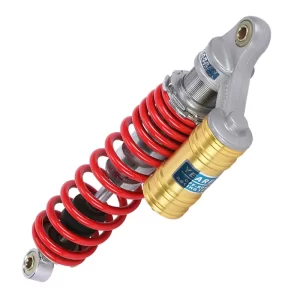
The choice influences more than adjustability. It changes stress concentration, seal and bearing load, and service behavior. A welded perch spreads load through a full circumferential weld ring. A threaded perch spreads load through thread engagement and the perch collar. Both can work, but they fail through different mechanisms when the design or build quality is marginal.
Which Spring Perch Handles Bending and Impact Loads Better?
A welded spring perch is stronger in bending when the weld is full penetration and the perch boss is fixtured during welding. The weld ring works as a continuous structural joint, so impact loads from rock strikes or hard landings spread over a larger area. A threaded perch depends on thread shear strength and the locking mechanism. If the locking collar is not torqued correctly, the perch can walk under repeated impact and change ride height.
| Factor | Welded Spring Perch | Threaded Spring Perch |
| Load path | Full weld ring, continuous joint | Thread shear plus collar lock |
| Field adjustment | None, ride height fixed | Ride height and preload adjustable |
| Common failure | Weld crack or distortion at heat-affected zone | Collar loosening or thread galling |
| Best use | Fixed-spec OEM, high-cycle platforms | Tunable builds, multi-vehicle fit |
| Production control | Fixture alignment, weld penetration | Thread tolerance, collar hardness |
We have seen threaded perches shift on off-road programs after a day of hard whoops when owners did not re-check preload collars. The thread itself rarely fails. The lockup loses position. Welded perches do not shift, but a poor weld can crack at the heat-affected zone near the shock body.
If your program runs a coil over shock with a threaded spring perch and the vehicle sees repeated impact loads, it is worth confirming the collar locking design and thread surface treatment before finalizing the BOM. That is not a catalog question. It depends on spring rate, travel, and operating terrain. Send your part number and load conditions to info@yearbenshocks.com and we can check the right perch configuration.
How Do Threaded Spring Perches Change Ride Height and Preload?
Threaded perches adjust two things that welded perches fix at assembly. Ride height changes by moving the perch up or down the shock body. Preload changes by compressing or releasing the spring against the upper mount. On a coil over shock for ATV, UTV, and go-kart applications, a small perch move can shift ride height without revalving the damper.
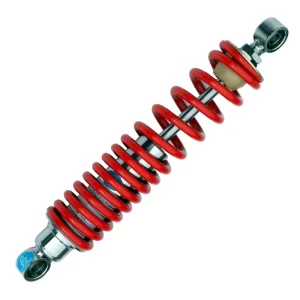
The tradeoff is repeatability. Threaded perches need clean threads, a hardened locking collar, and enough surface area to hold position. In the service work I have handled, most adjustable coil over shocks come in with the ring nuts either overtightened or not seated evenly. That uneven load tilts the spring and adds side load to the piston rod and seal.
For our adjustable threaded nitrogen charged coilover shocks, the collar surface is machined flat and the thread pitch is matched to the shock body before plating. That reduces the chance that the collar bites into the thread under load and locks in the wrong position.
What Manufacturing Checks Separate Durable Welded and Threaded Perches?
For welded perches, the first check is fit-up. If the perch boss does not contact the shock body evenly around the full circumference, the weld will have thicker and thinner sections. We specify a fixture that controls radial runout before welding. After welding, the shock body must stay straight inside the damping stroke. A body that warps from weld heat shortens seal life and creates binding.
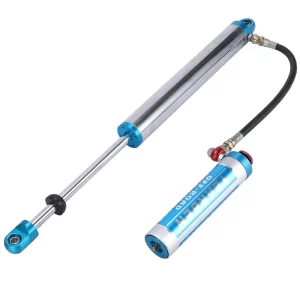
Threaded perches are easier to assemble but harder to keep consistent. Thread pitch, collar hardness, and surface finish determine whether the perch moves only when the operator wants it to move. We check thread engagement depth and collar flatness. A collar that seats on only part of the ring can deform the threads and make adjustment difficult after a few heat cycles.
How Should OEM Buyers Specify Welded or Threaded Spring Perches?
For a fixed platform with known spring rate and ride height, I recommend a welded spring perch. It removes a failure mode and simplifies assembly. For a platform that will be tuned across trims, body variants, or customer weight ranges, a threaded spring perch is the more practical choice because the same shock body can serve multiple settings.
The specification should not stop at perch type. Buyers should define spring seat diameter, perch material, weld standard or thread class, locking mechanism, and the torque value for threaded collars. Without those details, two factories can quote the same drawing and deliver parts that behave differently in service.
If your coil over shock program is at the point where perch type is being debated, the next step is to lock the operating load, travel, and adjustment requirement so the right design follows. Share your drawing, part number, and expected volume with info@yearbenshocks.com or call +86-523-86566899 and we can review welded and threaded options against your actual load case.
What Do Buyers Ask Before Selecting a Spring Perch?
Is a welded spring perch always stronger than a threaded spring perch?
Not always. A welded perch is stronger in bending when the weld is full penetration and aligned, but a poor weld with undercut or distortion can fail before a well-machined threaded perch. The real difference is that a welded perch has no adjustment path. If the ride height or spring preload requirement is fixed, the welded design removes a potential movement point. If the requirement may change during tuning, the threaded design is the better system-level choice. Both need correct assembly and inspection to hold spec in service.
Can a threaded spring perch be converted from fixed height later?
Thinking a fixed-height shock can be converted to threaded later usually underestimates the weld and machining work. A threaded perch needs a shock body machined for the thread and a matched spring seat diameter. Converting a welded perch is not practical because it means replacing the shock body or cutting and re-welding, which can distort the tube. If there is any chance the platform will need ride height changes after the first prototype, starting with a threaded spring perch saves rework and avoids cutting a finished damping tube. The thread specification still needs to match the spring rate and expected collar load.
Why do coil over shock perches crack near the weld?
It depends on where the crack starts. If the crack runs through the weld toe, the likely cause is poor fit-up or excessive heat input during welding. If the crack starts in the shock body beside the weld, distortion or lack of preheat may have changed the metal condition around the heat-affected zone. Cracks that appear after a short service life usually point to residual stress, not material weakness. The fix is not always a stronger weld. It is better control of fit-up, welding sequence, and cooling so the tube keeps its straightness and the weld does not become the failure point.
How do I specify perch position without a test vehicle?
In programs we have supported, the safest approach is to define the spring free length, installed length, and target ride height. From those values the perch position can be calculated and then confirmed on a prototype. The calculation only works if the spring rate, corner weight, and motion ratio are known. If any of those inputs is uncertain, the first article should carry a small perch adjustment range for validation. If your program has a non-standard spring or swing arm geometry, it is worth confirming the perch position on a prototype before committing to production. Send your spring data and travel curve to info@yearbenshocks.com and we can confirm the correct perch location.
If you’re interested, check out these related articles:
Heavy duty seat damper 35mm, Shock Absorber Manufacturer
Lawn mower steering damper 18mm
Gas Charged Dual Rate Coilover Shock Absorber
Utv-Shocks-For-Off-Road