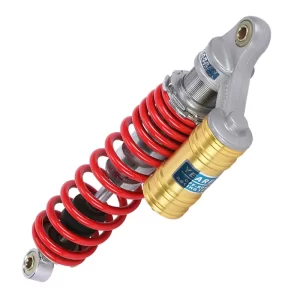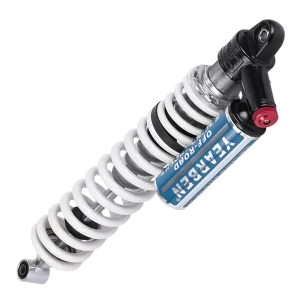
A seat hydraulic damper regulates the vertical motion of a vehicle seat, converting the kinetic energy of bumps and vibrations into heat through fluid resistance. When correctly specified, it keeps the operator stable and reduces fatigue on long shifts. But when the cylinder diameter, stroke, or damping curve does not match the application, the seat bottoms out, the driver feels every jolt, and the damper fails early. Understanding what goes into these components helps procurement teams and seat manufacturers avoid those problems before they reach the operator.
What Is a Seat Hydraulic Damper?
A seat hydraulic damper is a specialized shock absorber designed for seat suspension systems. Unlike chassis dampers that handle large road impacts, seat dampers focus on isolating high-frequency vibrations and smaller amplitude vertical movements that reach the operator through the seat frame. They typically mount between the seat base and the suspension mechanism, working alongside springs or air bellows to control both compression and rebound motion. The goal is not only comfort — a stable seat platform also helps the operator maintain precise control of pedals and steering, which has direct safety implications in construction equipment, agricultural tractors, long-haul trucks, and off-road vehicles. In NEV bus applications, seat dampers contribute to the overall perceived build quality and passenger comfort.
How Does a Hydraulic Seat Damper Work Internally?
Inside a hydraulic seat damper, a piston attached to a chrome-plated rod moves through a cylinder filled with hydraulic oil. When the seat moves downward, the piston pushes oil through small ports and valve stacks inside the piston assembly. The restriction of oil flow creates damping force proportional to the speed of the piston movement. During rebound, the oil flows back through separate valve circuits, controlling the return motion so the seat does not bounce back sharply.
This oil flow generates heat, which dissipates through the metal cylinder body. The consistency of damping depends on maintaining stable oil viscosity, which is why internal clearances between the piston and cylinder wall are held to tight tolerances during machining.
What Are the Core Components of a Seat Damper?
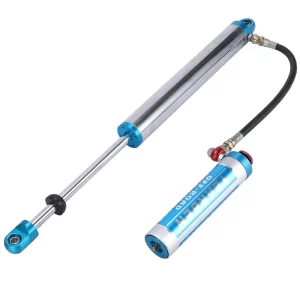
Every hydraulic seat damper contains four critical elements: the cylinder tube (available in diameters like 24 mm, 35 mm, 38 mm, or 41.5 mm depending on application), the piston and valve assembly that determines the damping curve, the rod and seal package that prevents oil leakage, and the mounting eyes or bushings that connect to the seat frame. The fluid specification also matters — some units use nitrogen gas pressurization to suppress oil foaming and maintain consistent performance during rapid cycling.
What Design Factors Make a Hydraulic Damper More Reliable?
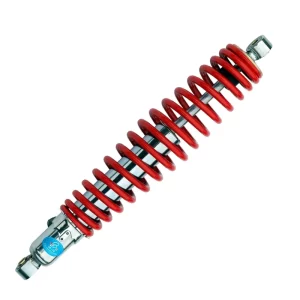
The reliability of a seat hydraulic damper is not decided by assembly alone. It starts with cylinder bore finish, rod straightness, and seal material selection, then carries into how the unit is tested before leaving the factory.
Cylinder diameter is the first variable. A larger bore (e.g., 41.5 mm vs. 35 mm) provides greater oil volume and heat capacity, which helps in heavy-duty applications like mining or construction where the damper must cycle continuously under high load. But diameter must match the expected weight range; oversizing a damper for a lightweight seat makes it overdamped and harsh.
Seal quality is the single biggest factor in service life. In our production inspections, we test seal assemblies under elevated pressure and temperature to catch early lip wear, because a seal that passes a static bench test can still leak after 50,000 cycles if the rod finish is inconsistent. We use hardened chrome-plated rods with a surface roughness specification held below Ra 0.2 µm to reduce seal abrasion.
Internal contamination from machining debris or assembly residue is a silent killer of hydraulic dampers. That is why every unit undergoes a controlled cleaning and fill process, followed by a pressure-cycling verification where damping force is measured on both compression and rebound strokes. If the force falls outside the tolerance band, the unit is rejected.
How Does Cylinder Diameter Affect Load Capacity?
The relationship between cylinder diameter and load capacity is mechanical: a larger piston area generates more damping force at a given velocity, assuming the same internal valving. This means a 41.5 mm damper can support a heavier seat-plus-operator combination without bottoming out compared to a 35 mm unit. The following table shows typical diameter ranges and recommended application classes:
| Cylinder Diameter (mm) | Typical Seat Application | Max Recommended Operator Weight (kg) | Damping Type |
|---|---|---|---|
| 24 | Light-duty turf equipment | Up to 110 | Fixed |
| 35 | General tractor seats | 80–140 | Fixed or adjustable |
| 38 | Heavy truck and bus seats | 100–170 | Adjustable |
| 41.5 | Construction and mining | 120–200 | Adjustable, with nitrogen assist |
Note: Values are approximate and depend on suspension geometry and lever ratio. Always confirm with the manufacturer using your specific seat design.
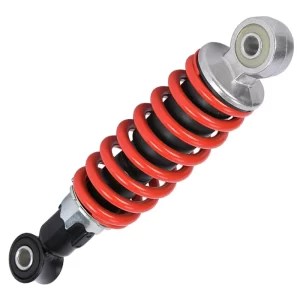
How Are Seat Dampers Customized for Different Vehicle Platforms?
Standard off-the-shelf dampers rarely fit every seat frame or deliver the correct damping curve for all vehicle types. Customization usually involves four parameters: cylinder diameter and overall length (stroke), mounting configuration (eyelet diameter, bushing type, and orientation), damping force curve (through valving adjustments), and the presence or absence of adjustability.
For agricultural tractors, the damping curve must accommodate bouncing at low frequencies with deep compression strokes. For a long-haul truck, the priority shifts to minimizing high-frequency road vibration. And for an electric bus, low noise and smooth return strokes become more important because there is no engine masking the damper’s operation.
Adjustable vs Fixed Damping: Which Configuration Should You Choose?
Fixed dampers are simpler, cost less per unit, and have fewer potential leak points because there is no external adjuster mechanism. They work well when the seat’s weight range is consistent across operators. However, in mixed-fleet applications where operator weights vary widely, an adjustable damper allows the end user to fine-tune the ride. This choice impacts long-term ROI: a seat assembly that rides poorly will generate premature complaints and returns, offsetting any upfront cost savings on the damper.
When we assist OEM seat manufacturers in selecting a configuration, we test prototype dampers on their specific suspension linkage because the linkage ratio transforms the linear damper stroke. The damping curve that worked on one seat frame may not transfer directly to another. If your program involves mixed weight ranges or multiple vehicle platforms, confirming damper compatibility across the fleet before finalizing the BOM saves significant rework. Reach out at info@yearbenshocks.com to discuss your application.
What Causes Hydraulic Seat Dampers to Fail Early?
Most early damper failures trace back to one of three root causes: oil leakage past the rod seal, internal wear that alters the damping curve, or physical damage from overtravel. Oil leakage shows up as a wet residue around the rod area and progressively reduces damping force as fluid volume drops. Internal wear, often caused by cavitation or contaminated oil, creates metal-to-metal contact between the piston and cylinder wall, generating debris that clogs valve ports.
A less obvious failure mode is damper fade from overheating. If the damper is undersized for the application, the oil temperature keeps rising on long continuous runs, causing the viscosity to drop and the damping to weaken. This is common in heavy equipment where the seat suspension works continuously over rough terrain.
Preventing these failures begins at the specification stage. Provide the damper manufacturer with the seat assembly’s total travel, lever ratio, and the weight range of intended operators. From there, the factory can confirm whether a given cylinder diameter and valving setup will stay within safe thermal limits. In our post-failure analysis work, dampers returned with rod seal leaks after 300–500 hours almost always had a rod hardness or chrome plating problem that a simple hardness test at incoming QC could have caught. Being able to trace every production batch to its raw material heat number matters more than the warranty length on paper.
How Can You Source a Reliable Seat Hydraulic Damper?
Procurement engineers and seat manufacturers who have gone through repeated damper replacements often reach the same conclusion: the lowest unit price rarely yields the lowest cost per operating hour. What matters is the supplier’s ability to provide documented batch-level quality data — chrome plating thickness measurements, seal life test logs, and damping force certification reports — not just an ISO certificate on the wall.
We ship seat dampers with a full QR-coded test record for each production lot, showing the measured damping force at multiple velocities before packaging. This gives receiving inspection teams confidence that the units arriving at the warehouse match the approved qualification samples.
If you are specifying a new seat damper for an OEM program or a fleet retrofit, the fastest path to a durable solution is to share your seat assembly’s travel, lever ratio, and target operator weight. From those three inputs, a single phone call can determine the correct cylinder diameter and valving configuration, and whether a nitrogen assist makes sense for your installation. Reach out at info@yearbenshocks.com or call +86-523-86566899 with your part number and quantity, and we will confirm the specification and lead time.
Common Questions About Seat Hydraulic Dampers
How do I know if my current seat damper is the wrong specification?
If the seat bottoms out on bumps with the operator in place, the damper is either too soft or has lost oil. If the ride feels harsh and transmits every small vibration, the damping may be too firm for the operator’s weight. A quick field test is to sit on the seat and perform a full stroke compression: the seat should move smoothly downward and return without bouncing. If it slams down or bounces up, the damper is not matched to the load.
Can a seat hydraulic damper be rebuilt, or is replacement the only option?
Most OEM seat dampers are sealed units designed for replacement rather than rebuilding. However, in high-volume fleet applications, some manufacturers offer rebuildable dampers with replaceable seals and oil. The cost calculation depends on labor rates and downtime. For most operators, replacing a failed damper with a correctly specified unit is the faster, lower-risk path. If you run a fleet with dedicated maintenance staff, ask your supplier about rebuildable options early in the sourcing discussion.
What is the difference between a seat damper and a standard shock absorber?
A standard chassis shock absorber is designed for large suspension movements and high-speed impacts, often with external reservoir for heat management. A seat damper operates at lower stroke speeds and smaller amplitudes, focusing on vibration isolation rather than impact absorption. The valving is tuned for comfort rather than vehicle dynamics, and the mounting points are smaller. Using a chassis shock on a seat suspension will result in overdamping, harsh ride, and potential structural damage to the seat frame.
How long should a hydraulic seat damper last in normal use?
Service life varies by duty cycle and environment, but a properly specified hydraulic seat damper in truck or bus seat service should exceed 5,000 operating hours before showing measurable degradation. In heavy construction or mining, with continuous high-amplitude cycling, 2,000–3,000 hours is a reasonable expectation. Units that fail below 500 hours almost always point to a specification mismatch or a manufacturing defect that batch-level testing can catch.
What information do I need to provide to get the right seat damper?
To receive an accurate specification and quotation, provide the following: the seat assembly’s total vertical travel distance, the installed length between mounting eyes, the eyelet inner diameter and bushing type, the max and min operator weight the seat will see, and the type of vehicle or equipment. With these data points, our engineering team can confirm the correct cylinder diameter, stroke, and damping curve. Share your requirements at info@yearbenshocks.com, and we will send a specification confirmation within one working day.
If you’re interested, check out these related articles:
Adjustable-Hydraulic-Shock-Absorbers
Truck-Seat-Damper-38MM-Shock-Absorber-Manufacturer