
Off-road, a monotube shock earns its advantage from two physical facts rather than from the label. Its oil and nitrogen stay separated by a floating piston, so the oil remains under pressure and resists foaming when the shaft moves fast. Its working cylinder is the outside wall of the shock, so the heat that damping generates crosses one metal layer before it reaches moving air. Most of what gets repeated about monotube design follows from those two facts, and the rest does not follow at all. A monotube can still be the wrong choice for a light trail vehicle, a tight packaging envelope, or a build where valving quality matters more than architecture.
How a Monotube Shock Separates Oil from Gas
One pressure tube does all the work. The piston and its shim stacks run inside it, oil fills the space around them, and a dividing piston separates that oil from a nitrogen charge held in the same tube. When the shaft pushes into the body, the volume the rod displaces has somewhere to go: the dividing piston moves against the gas, and the gas compresses. The gas has to stay on its side of the divider, which is why mounting orientation becomes a real constraint later in this article.
The pressure matters more than the label. Oil held under pressure keeps dissolved gas in solution and resists forming vapor pockets on the low-pressure face of the piston during fast rebound. When the piston moves quickly, pressure on one side drops, and oil without a positive charge can cavitate. A cavity collapses as the piston reverses, and for that moment the damping force is no longer the force the shim stack was tuned to produce.
The dividing piston is the part most buyers never see and the one that decides how the damper behaves after twenty minutes of hard use. <Monotube-Shock-For-Off-Road> covers monotube shock construction for off-road vehicles.
A twin-tube shock handles the same rod displacement differently. Oil pushed out of the working cylinder passes through a base valve into a reserve tube, and the gas in that reserve tube sits at low pressure or close to atmospheric. Oil returning to the working cylinder can carry air with it. Once the oil is aerated it becomes compressible, and compressible oil cannot generate a consistent force no matter how carefully the piston is valved.
Where Monotube and Twin-Tube Shocks Diverge Off-Road
The two architectures differ in ways a driver can feel, but the honest version is narrower than most spec sheets suggest. The table below separates the physical cause from the effect it produces, and from the conclusion the effect does not support.
| Difference | What causes it | What it changes off-road | Do not infer |
|---|---|---|---|
| Oil and gas contact | A dividing piston keeps them apart in a monotube; a twin-tube lets gas sit above the oil in a reserve tube | Monotube damping stays closer to the valved curve after repeated high-speed cycles | That every twin-tube foams; a pressurized twin-tube reduces the gap |
| Heat path | Monotube oil touches the outer wall directly; twin-tube heat crosses two walls and a gas space | Faster heat rejection on long fast sections | That a monotube cannot overheat; oil volume, speed and airflow still decide |
| Piston area | A monotube uses nearly the full body diameter; a twin-tube gives up diameter to two tube walls | More force per unit of pressure and less sensitivity to small pressure changes | That a bigger body always damps better; the shim stack sets the curve |
| Mounting angle | The gas pocket has to stay where the design expects it | Shaft-up installation is the normal layout for a monotube | That an inverted or remote-reservoir unit follows the same rule |
| Body damage | A single wall separates the piston from the outside world | A dent can close the bore and stop the piston | That a twin-tube is immune; it protects the working cylinder but still loses oil |
| Rebuild and service | Monotube units are commonly built to be opened and recharged | Service needs nitrogen charging equipment and a clean bench | That every monotube is rebuildable; confirm it before ordering |
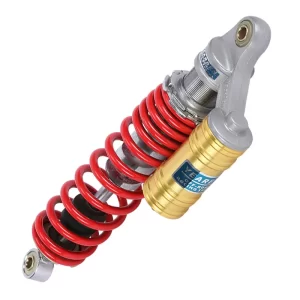
Two boundaries keep this table useful. Architecture is one variable among several, and valving, spring rate, usable travel, motion ratio and tire choice frequently outweigh the difference between the two types on the same vehicle. A well-valved twin-tube can outperform a poorly valved monotube over the same loop, so a buyer who shops by architecture alone is tuning the smaller of two effects. The table also describes typical construction. High-pressure twin-tubes, remote-reservoir monotubes and bypass designs each bend the pattern, which is why the construction of the specific unit matters more than its category.
Heat Capacity and Aeration Decide the Long Hard Runs
Damping converts suspension motion into heat in the oil, and the rate of that conversion rises with shaft speed and damping force. A desert section, a washboard road or a motocross track delivers both at once: the shaft moves fast and often, so the oil absorbs energy faster than the tube can shed it. As oil temperature climbs, viscosity falls, and the same shim stack produces less force for the same shaft speed. That is fade, and it is a heat problem before it is a valving problem.
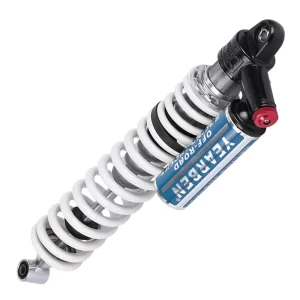
A monotube has the shorter heat path. The oil sits against the working cylinder, and the working cylinder is the outside of the shock, so heat crosses one metal wall before it reaches air. A twin-tube sends oil through the base valve into a reserve tube, where two walls and a gas space that conducts poorly stand between the oil and the air. The difference is small per cycle and large over a long run.
Oil volume matters as much as the path. A piggyback or remote reservoir adds fluid and surface area, which raises the energy the shock can absorb before the curve moves. On a long-travel build that gain is often larger than the gain from switching architecture, which is why reservoir sizing deserves as much attention as tube count.
Airflow decides how much of this reaches the driver. A shock tucked behind a panel on a slow rock crawl runs cooler than the same shock on a fast desert road, because the energy per minute is lower and more air moves past the tube. The monotube advantage is largest where speed and repetition combine, and smallest in technical low-speed driving where heat never builds.
One simple check separates a heat limit from a valving limit. Run the same loop twice back to back, note where the damping changes, then let the vehicle sit. If the behavior returns as the shocks cool, the limit is heat, and more oil volume or better airflow is the place to start. If the behavior is present from the first minute, valving or spring rate is the place to start.
The Tradeoffs a Monotube Shock Brings With It
Every advantage above has a cost, and the cost is paid in packaging, protection and service.
A monotube keeps the piston inside the same tube the outside world can hit. A dent that would only mark an outer reserve tube on a twin-tube can close the bore on a monotube and stop the piston, which turns a trail impact into a seized corner. Builds that expose the body to rocks need guards or a mounting position that tucks the body behind the axle line. Where neither is possible, a twin-tube or a protected remote reservoir is the more sensible route.
The gas charge sits at one end, and the design expects it to stay there. Most monotube units are installed shaft up so the divider stays at the top. Inverted and remote-reservoir designs exist, but each carries its own rule about orientation and bleeding, and a tilted installation can leave the divider running dry.
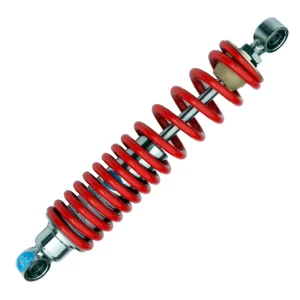
Higher gas pressure also pushes the rod seal harder against the shaft. The resulting friction is small in absolute terms and noticeable on sharp, small inputs, which is why comfort-focused applications often choose lower pressure or a different architecture. Seal design and shaft finish decide how much of that friction reaches the driver.
Service follows the same pattern. A rebuildable monotube needs nitrogen charging equipment and a clean bench, so field service is limited to what the owner can do with the tools on hand. A rebuild plan belongs in the purchase decision, not after the first leak. Cost and unsprung mass deserve the same honesty: a monotube with a reservoir carries more metal and fluid than a plain twin-tube, and that mass hangs on the unsprung side of the spring. Weigh the actual part instead of trusting a category claim.
The choice comes down to which condition dominates. Sustained speed, high energy and predictable behavior after heat are monotube territory. Tight packaging, low-speed work, strict cost targets and comfort on small bumps favor a twin-tube, and a pressurized twin-tube narrows the gap further.
Checks That Tell You the Shock Fits Your Build
- Record eye-to-eye length at ride height and at full droop. One number is not enough; the pair defines the travel the body has to cover without bottoming the shaft or topping out the piston.
- Measure the shaft remaining at full bump. If the shaft is nearly buried at normal ride height, the body is too long for the space or the bump stop is doing work the spring should do.
- State the corner weight as the vehicle runs, with fuel, passengers and cargo. Valving and spring rate are chosen against that figure, and an empty-vehicle number produces a shock that sits high and damps lightly once loaded.
- Sweep the suspension through full articulation and steering lock, and note every point where the tube, reservoir or hose comes within a finger’s width of a moving part. Those are the places where a rock or a flexing link will find the shock.
- Confirm the mounting orientation the design allows. Ask whether the unit is intended for shaft-up installation, whether it can be inverted, and whether the reservoir must sit above or below the body.
- Identify what the adjuster changes. Some adjusters move rebound only, some move compression only, and some move both together. Expecting a rebound adjuster to fix a harsh compression spike wastes a test day.
- Ask for the damping curve rather than the click count. A force against shaft velocity plot at low, mid and high speed shows where the valving sits and whether the adjuster moves the range you care about.
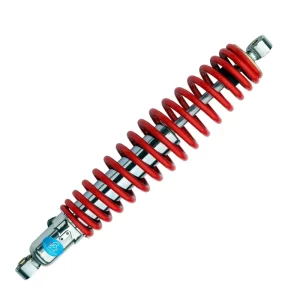
Each check changes a decision. A short shaft margin at bump points to a shorter body or a different mount before it points to more spring. A body with no clearance through articulation points to a remote reservoir or a rerouted mount, because a dented monotube is not a service item. An adjuster that moves rebound only tells you the compression side has to be right at the factory, which shifts the conversation from click settings to valving specifications.
A single adjuster is enough when the factory curve already matches the load, which is why the baseline matters as much as the click range. <Damping-Adjustable-Shock-Absorber> covers adjustable damping shock absorbers.
What to Put in a Monotube Shock Request
A request that lists only a vehicle model and a length will produce a generic unit. The fields below let a supplier valve against your load instead of guessing.
| Field | What to provide | Why it changes the unit |
|---|---|---|
| Vehicle and use | Model, loaded weight, terrain mix, typical speed | Sets the energy the oil must absorb and the travel the body should use |
| Mounting | Eye or stud, bolt diameter, eye-to-eye at ride height and droop, allowed orientation | Defines body length and where the divider sits |
| Travel budget | Shaft exposed at ride height, shaft remaining at bump | Fixes body length and the bump stop strategy |
| Spring and load | Spring rate, preload, corner weight with gear | Valving is chosen against sprung mass and spring frequency |
| Damping target | Adjuster type, baseline curve, wanted behavior at low and high speed | Separates a valving change from a hardware change |
| Service and evidence | Rebuild plan, charging equipment, test records, change notification | Decides whether the unit stays serviceable over its life |
Two fields get skipped most often. Corner weight with gear is the one that usually changes the recommendation, because a shock valved for an empty vehicle will sit high and damp lightly once the vehicle is loaded for a trip. Mounting orientation is the other, and it is the reason a unit that fits the length can still be the wrong purchase.
A custom build usually changes the mount and the length before it changes the damping target, and keeping that order is what keeps a project on schedule. <Custom-Shocks-And-Struts> covers custom shock and strut work.
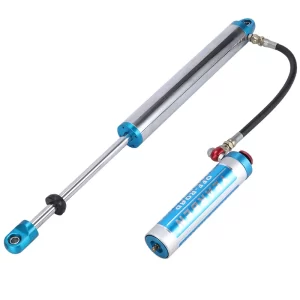
A supplier that builds several architectures can say which one fits the request instead of steering every buyer toward the same catalog page. Yearben builds monotube off-road shocks within a range that covers ATV, UTV, buggy and off-road vehicle applications, with more than 200 models and an annual capacity of 1.5 million units, so a recommendation can follow the vehicle rather than the stock list.
Send the Build Details Before You Choose a Body Size
The next step is a short message with four numbers and one description: corner weight with gear, eye-to-eye length at ride height, eye-to-eye at full droop, shaft remaining at bump, and the terrain you actually drive. With those, body length and valving range can be proposed together, and the monotube question becomes a decision instead of a preference.
Send them to info@yearbenshocks.com or call +86-523-86566899. Yearben’s engineers will check the fit against your vehicle, reply with the configuration that matches the load, and include the damping curve records for the unit they propose.
FAQ
Is a monotube shock always better off-road than a twin-tube?
No. A monotube holds its damping curve better when the oil is working hard, which matters on fast, repeated inputs. On low-speed technical terrain, in tight packaging, or where small-bump comfort and cost dominate, a twin-tube can be the better fit. A well-valved twin-tube also beats a badly valved monotube on the same vehicle, because the shim stack and spring rate set the curve the driver feels.
Why does a monotube shock fade less on long fast sections?
Its oil is under gas pressure and sits against the outer wall. The pressure suppresses the vapor pockets that form on the low-pressure face of a fast-moving piston, so the oil keeps producing the force the shim stack was tuned for. The single wall also gives heat one layer to cross instead of two, so energy leaves the oil faster. Both effects are gradual, which is why the difference shows up after a long run rather than in the first minute.
Can a monotube shock be mounted at an angle?
Usually not unless the design allows it. The gas charge has to stay at the top of the tube, so most monotube units are installed shaft up, and a heavily tilted installation can leave the divider running dry or trap gas where the piston needs oil. Inverted monotube designs and remote-reservoir layouts change the rule. Ask the supplier which orientation the specific unit is built for before designing a mount around it.
Does a bigger monotube body mean better damping?
Not by itself. A larger body adds oil volume and piston area, which helps heat capacity and force per unit of pressure, but the damping curve still comes from the shim stack, the piston and the gas pressure. A large body with a generic valve will feel worse than a smaller body valved to the load. Body size is worth changing when heat or force capacity is the limit, not as a default upgrade.
If you’re interested, check out these related articles:
Custom shock absorbers for seat Φ41.5mm manufacturing
Hydraulic-Shock-Absorber-24MM
Hydraulic-Steering-Damper
Best-Shocks-And-Springs-For-Trucks