
Coil suspension OEM work becomes repeatable when a buyer separates architecture-level specifications from the tuning variables that should change by model. The goal is not to force one spring rate or damping curve across every platform. It is to standardize mounting geometry, assembly methods, quality gates, and approval evidence while keeping ride tuning model-specific. That approach reduces drawing errors, makes first article approval faster, and gives production a stable reference for batch-to-batch inspection.
What to Standardize First in a Coil Suspension OEM Program
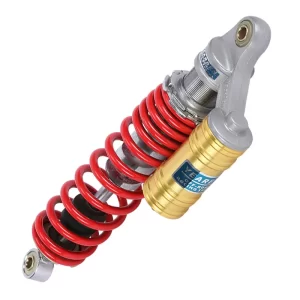
Start with the physical interface that connects the damper to the vehicle. Eyelet width, bearing inside diameter, bolt size, mounting angle, spring seat position, and reservoir fitting location are the most expensive details to change after tooling or bracket design is fixed. When those interfaces stay common across a model family, a buyer can reuse vehicle-side brackets, service parts, and assembly fixtures. The damping curve can still vary because the working piston, shim stack, gas charge, and spring package operate inside the shared envelope.
A useful rule is to freeze the geometry first and the performance response second. The extended length, compressed length, and stroke must match the suspension travel and clearance of each platform. If two models share the same mounting points but have different corner weights, the correct change is usually spring rate or valving, not a new body diameter or eyelet design. This boundary is important because mixing model-specific performance into the locked geometry can create dozens of near-identical parts that are hard to control in production.
Which Coil Suspension Parameters Should Be Model-Locked
Several parameters should be locked because they define whether the part fits and assembles safely. These include mounting width, bearing or bushing dimensions, spring inner diameter, shaft surface finish, seal package, and reservoir connection standard. Changing any of these late in a program tends to cascade into bracket changes, hose changes, or production fixture changes. For an OEM program, this group belongs in the drawing, the incoming inspection plan, and the first article report.
Other parameters are properly model-specific. Spring rate, preload setting, rebound and compression valving, clicker range where applicable, and the detail of the jounce or rebound stop depend on vehicle mass, motion ratio, use case, and target ride character. Packaging and heat load may also make the reservoir style model-specific. When packaging is tight or continuous load is high, the reservoir configuration often changes before the damping curve changes.
A shared coilover envelope still needs a defined damping characteristic for each application rather than one universal curve. <Coilover-Shock-Absorber> covers the main coilover shock absorber options a buyer should compare before freezing a part number.
How a Master Specification Table Reduces Variation
A master specification table helps an OEM buyer see where the platform is truly common and where it deliberately differs. The table below separates model-locked fields from model-specific fields. It works best when one table covers the whole platform family and every row points to the drawing or test report that controls that field.
| Specification block | Model-locked fields | Model-specific fields |
|---|---|---|
| Mounting interface | Bearing ID, eyelet width, bolt size | Mounting angle or bracket orientation |
| Operating envelope | Extended length, compressed length | Stroke allocation within the shared envelope |
| Spring package | Spring ID and seat form | Spring rate, preload, tender or helper spring setup |
| Damping hardware | Piston size, bore family, seal package | Shim stack, bleed, clicker range |
| Reservoir | Fitting and hose connection standard | Reservoir size, hose length, hose routing |
| Approval evidence | Test method, sample size, inspection points | Target damping curve and durability cycle count |
This table also makes supplier communication more precise. Instead of asking for a general quote, a buyer can send the table and state which columns are frozen for the program and which ones may vary by model. That is more useful than a long verbal description because it lets the factory check tooling, seals, springs, and test capacity against the actual range.
Standardize the Architecture, Keep the Tuning Model-Specific
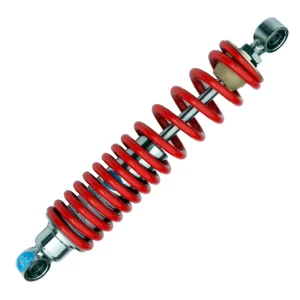
The strongest OEM programs use one or two damper architectures across several models and move the variation into springs, valving, and setting instructions. For a linear spring, the spring rate is the change in axial force divided by the change in deflection. The damper force curve is tuned separately through piston flow paths, shims, and bleed. Keeping those two functions separate lets the same body and seal package serve models with different ride weights, as long as the loads stay within the proven operating range.
This creates a real tradeoff. More shared parts reduce cost, simplify service stock, and make quality data more comparable. Too much sharing can force an undersized or oversized damper into an application where it is only marginally suitable. The decision should be based on whether the model family stays within the same pressure, shaft load, and thermal envelope. If two vehicles share mounting geometry but one routinely sees desert thermal loads and the other is a trail machine, they may need different oil volume, reservoir capacity, or seal material even when the main body is shared.
When a platform family spans different corner weights, preload adjustment becomes part of the tuning envelope rather than a reason to redesign the damper. <Fixed-Preload-Atv-Shock-Absorbers> covers fixed preload ATV shock absorbers used where the adjustment can be locked into the base specification.
First Article Approval Without Guessing
First article approval should prove two separate things. The first is that the part matches the drawing and the approved material, dimension, and assembly requirements. The second is that the produced damping curve matches the signed target and remains within the agreed tolerance band across the stroke. A sample that fits on the vehicle does not automatically prove that the valving is repeatable.
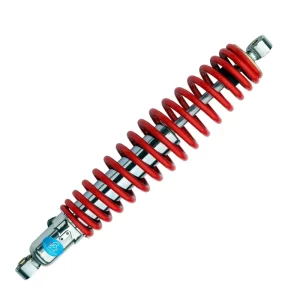
The approval package should include the drawing revision, dimensional layout, material and coating certificates, spring rate measurement, gas charge confirmation, and a force-velocity or force-displacement curve overlay against the approved reference. If the coil suspension is a complete coilover assembly, the package should also record preload, spring free length, and assembled length. Discrepancies should be resolved before more samples are built, not after the batch is in transit.
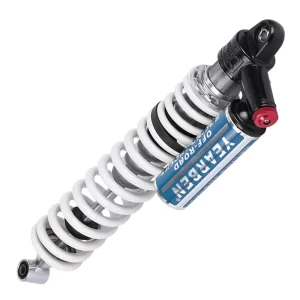
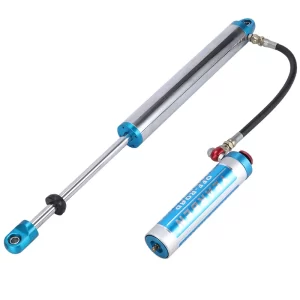
Packaging and heat load often decide whether a piggyback reservoir is the right architecture for the vehicle family. <Piggyback-2-0-Coilover-Shock> covers a piggyback 2.0 coilover configuration relevant to those packaging decisions.
When Model-Level Customization Is Still the Better Choice
Standardization should not be pushed into applications where the requirement is outside the original design envelope. A high-speed desert buggy, a utility ATV, and a heavy 4×4 platform may all need coil suspension, but their sprung mass, travel, motion ratio, operating speed, and cooling conditions differ enough that one architecture cannot serve all of them well. Forcing a common part in these cases can raise the overload risk, shorten seal life, or create an unsafe damping mismatch.
The better decision rule is to standardize where the load and packaging conditions overlap, and create a new architecture where a measured requirement exits the accepted envelope. A supplier can still support both groups from one manufacturing and quality system. The drawings, test procedures, inspection records, and revision control can stay consistent even when the body size or reservoir style changes.
Send the Right Coil Suspension OEM Data Set
For a faster and more accurate coil suspension OEM evaluation, send the platform list and the master specification table rather than only a part number or a general request. Include mounting geometry, extended and compressed length, spring ID, corner weight or axle load, motion ratio where known, target stroke, reservoir requirement, and any existing durability or damping targets. Yearben can then check the request against the right damper family and identify which fields can be standardized and which need model-level tuning.
Contact Yearben at info@yearbenshocks.com or +86-523-86566899 with the master specification table and the model list. A clear specification is the fastest way to turn a multi-model project into a stable production program.
FAQ
What is coil suspension OEM standardization?
It is the process of using shared mounting geometry, assembly rules, quality gates, and approval documents across a model family while allowing performance settings such as spring rate and valving to change where needed. The intent is to reduce part proliferation and production variation without forcing one ride tune onto different vehicles.
Which coil suspension specs must stay identical across models?
The highest-priority locked fields are usually bearing ID, eyelet width, bolt size, spring ID, extended length, compressed length, and the seal or reservoir connection standard. These affect fit, assembly, and tooling more than the ride tune, so they should be controlled at the drawing level and confirmed in first article inspection.
Can one coil suspension family cover both ATV and UTV platforms?
It can when the platforms operate within a similar sprung mass, travel, shaft load, and thermal load range. If the corner weights or motion ratios are far apart, the same spring and valving will not create the same response. In that case, the architecture may stay related, but spring rate, damping curve, and possibly reservoir volume should be model-specific.
What should buyers provide before a coil suspension OEM quote?
Buyers should provide the model list, mounting dimensions, extended and compressed length, spring ID, estimated corner weight or axle load, motion ratio if available, target stroke, reservoir preference, and any durability test requirement. A master specification table showing locked and variable fields is more useful than a general product inquiry.
If you’re interested, check out these related articles:
Fixed-Preload-Atv-Shock-Absorbers
2-0-Air-Shock
Ride-on Mower Shock Absorbers 38mm, Shock Absorber Manufacturer
Truck-Seat-Damper-38MM-Shock-Absorber-Manufacturer