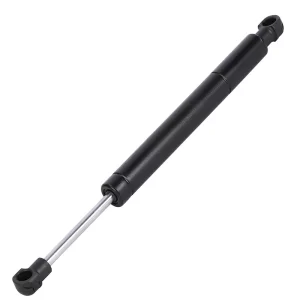
Off-road shock selection usually comes down to heat capacity, packaging, and where the damping adjustments happen. A standard monotube shock keeps the piston, oil, and gas charge in one body. A reservoir shock moves the gas charge and part of the oil into an external chamber to gain oil volume and cooling area. A bypass shock adds external tubes with one-way check valves that add position-sensitive damping as the shock compresses. The right choice is not simply price or brand. It depends on sustained speed, vehicle weight, available mount space, and how much tuning access the team actually needs.
Standard Off-Road Shocks: The Practical Baseline
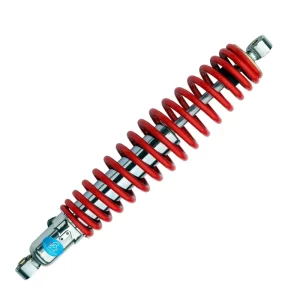
A standard off-road monotube shock keeps the working piston, oil, and gas charge inside one body. The design is compact, easier to package around control arms and coil springs, and usually lighter and less expensive than an external-reservoir or bypass alternative.
The limit is heat. When a heavier vehicle runs at high speed through rough terrain, the piston moves quickly through the oil for longer periods. The oil heats, and the gas charge can aerate or fade because there is less fluid volume to absorb and reject that heat. For a utility ATV, a light UTV on moderate trails, or a vehicle that operates in short intervals, that limit may never appear.
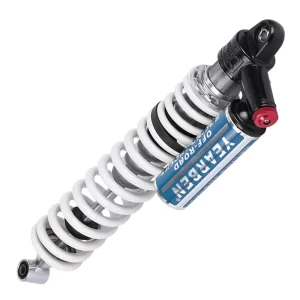
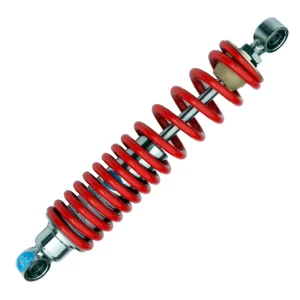
Standard shocks are often paired with separate coil springs or coilover sleeves, but the damper’s basic function stays the same. Packaging gets more difficult when the spring must sit over a larger body or when the mount has no room for a remote can.
Packaging often decides whether a standard-body damper can also carry the required spring. <Best-Off-Road-Coilover> covers coilover configurations that combine the spring and damper in one assembly.
Reservoir Shocks: More Oil and a Separate Gas Chamber
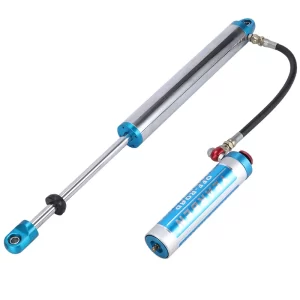
A reservoir shock adds an external fluid chamber and separates the gas charge from the main oil column. The nitrogen charge sits behind a floating piston or bladder instead of mixing with the oil as it does in an emulsion shock. That separation reduces aeration and keeps damping force more consistent as shaft speed and oil temperature rise.
The extra oil volume also gives the shock more thermal mass, so it takes longer to fade under repeated high-speed cycles. The trade-off is packaging and hardware. The remote can needs a mounting location, hose routing, and enough clearance through steering and suspension travel.
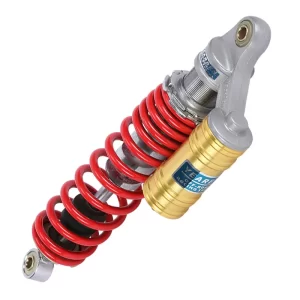
The separate reservoir is primarily a heat and gas-management device, not a badge of performance by itself. <Remote-Reservoir-Shocks-Manufacturer> covers remote reservoir configurations and the mounting options to consider.
Bypass Shocks: Position-Sensitive External Tuning
Bypass shocks add external tubes beside the main shock body. As the piston passes fixed ports, oil is forced through one-way check valves in those tubes. Because the ports are placed at specific shaft positions, the added damping arrives only in certain zones. A builder can control compression and rebound behavior without opening the shock and changing internal shims.
The main advantage is adjustability during testing or between runs. The drawbacks are size, cost, and setup complexity. Bypass tubes require careful routing around suspension links, axles, and body mounts, and the tuning is only as good as the port locations and valve settings.
Zone-based damping helps teams tune for specific travel points and vehicle attitudes rather than changing the whole curve. <Triple-Bypass-Shock-For-Off-Road> covers triple bypass layouts for off-road applications.
Reservoir vs Bypass vs Standard: Decision Table
| Shock type | Main benefit | Main limitation | Prefer when | Avoid when |
|---|---|---|---|---|
| Standard | Compact, light, lower cost | Less oil volume; fades sooner under sustained load | Light vehicles, moderate trail use, tight packaging | Heavy or high-speed sustained desert use without added cooling |
| Reservoir | More oil, separated gas charge, better heat consistency | Extra can, hose, and mounting clearance | Higher-speed trail, dune, endurance, or heavier builds | Ultra-tight packaging or budget-first mild use |
| Bypass | Externally adjustable zone damping | Large package, more complex tuning, higher cost | Race support, go-fast builds, terrain-specific tuning | A vehicle that will not be tuned or maintained to match the adjusters |
Matching Shock Type to Vehicle, Speed, and Terrain
Shock type should follow the operating pattern, not the marketing class. The important inputs are sustained speed, vehicle weight, available packaging, and who will tune the suspension after installation.
Light Utility and Trail Vehicles
Choose standard or piggyback reservoir when the main requirements are reliability, fit, and predictable ride over moderate terrain. The vehicle rarely works the oil hard enough to need external bypass tubes.
High-Speed Desert and Endurance Builds
Reservoir shocks are the practical floor. They help the shock stay consistent as heat builds. Add bypass only when the team can use zone adjustments and will spend time tuning.
Rock Crawling and Mixed-Use Builds
Packaging and shaft protection often matter more than peak cooling. A remote reservoir may help, but bypass tubes can create clearance problems on link and steering systems. Match the shock to the suspension arc before selecting the most adjustable option.
Packaging, Service, and Long-Term Consistency
When comparing factory supply options, look beyond the body style. The piston, seal package, shaft coating, bracket alignment, hose length, and nitrogen charge process affect service life more than whether a shock has an external reservoir or a bypass tube. A poorly matched reservoir hose can chafe or bind. A bypass tube that interferes with the suspension at full bump or droop creates immediate risk.
At Yearben, standard, reservoir, and bypass variants can be specified from one manufacturing process, which helps keep dimensions and quality checks consistent across an order. For OEM buyers, the practical step is to define the travel, spring package, mount positions, and damping targets before choosing the external hardware.
Specify the Right Off-Road Shock Package
Send the vehicle model or platform, target travel, sprung and unsprung weight range, ride height, spring configuration, and the terrain and speed range. That information is enough to compare standard, reservoir, and bypass options without guessing. Contact Yearben at info@yearbenshocks.com or +86-523-86566899 to start the shock package review.
FAQ
Are reservoir shocks automatically better than standard shocks?
No. The reservoir solves a specific problem: heat and gas separation under sustained or high-speed use. On a light vehicle with modest speeds, a standard shock can be lighter, simpler, and more than adequate. The right question is whether the operating pattern will exceed the thermal and packaging limits of the standard body.
Do I need bypass shocks for trail riding?
Usually not. Bypass shocks add useful zone tuning for vehicles that run hard enough for the suspension to move through specific positions at speed. Trail riders normally get more benefit from a well-valved standard or reservoir shock that fits the spring rate and vehicle weight.
What should I check before changing shock type?
Confirm that the mounting points, hose routing, and suspension travel can accept the new hardware. A reservoir needs a secure can mount and hose clearance. A bypass shock needs room for its tubes through the full bump and droop arc. Starting with the packaging envelope prevents a performance upgrade from becoming a clearance problem.
Which shock type is easiest to keep consistent across a product line?
For production consistency, the internal quality controls matter more than the external style. A factory that uses the same piston, seal, shaft, and nitrogen-fill process across standard, reservoir, and bypass variants is easier to audit. Confirm that the supplier can provide the same spring and bracket specifications rather than treating each external layout as a separate engineering process.
If you’re interested, check out these related articles:
Piggyback-2-0-Coilover-Shock
Twin-Tube-Hydraulic-Seat-Damper-28MM
Off-Road-Coilovers
Triple-Bypass-Shock-For-Off-Road
Best-Shocks-And-Springs-For-Trucks