
Damping shock absorbers are often chosen by a single stiffness number, but that number misses the real story. A shock with too much damping controls body movement yet transmits sharp impacts straight into the frame, while one with too little damping lets the suspension bottom out and wander. The correct damping force sits between those two failures, and it changes with sprung weight, shaft speed, and terrain. After twenty years of calibrating ATV, seat, and off-road suspension systems, I treat high and low damping as application variables rather than quality levels. The question that matters is what your vehicle’s weight and intended use actually demand.
High and Low Damping Produce Opposite Ride Outcomes
Damping is resistance to suspension motion, created when hydraulic oil is forced through piston valving inside the shock. High damping means the shock resists shaft movement with more force at a given speed. That resistance keeps sprung weight stable under braking and heavy loads, which is why loaded utility vehicles and high-speed desert trucks lean toward a firmer calibration. Low damping lets the shaft move more freely, so small stones and washboard surfaces stay mostly absorbed rather than transmitted to the chassis.
The failure modes are not symmetrical. Too much damping over sharp impacts can feel like a dead blow hammer through the steering and seat. Too little damping on a heavy platform lets the suspension fall through its travel, so the vehicle bottoms out, pitches harder under braking, and wallows after large bumps. Neither failure is purely a comfort problem; both raise loads on mounting points, bushings, and seals over time.
| Condition | High damping | Low damping |
|---|---|---|
| Body roll and pitch | Reduced | Increased |
| Sharp impact harshness | Higher | Lower |
| Bottom-out resistance | Strong | Weak |
| Slow-speed compliance | Stiffer feel | Softer feel |
| Heat build-up on rough runs | Higher | Lower |
In suspension work we rarely call one setting better. We call it better for a given unsprung weight, spring rate, and surface. A steering damper needs enough low-speed damping to stop kickback at the bar but not so much that the machine feels heavy on corner entry. A seat damper faces the opposite priority on a cab-over truck: it isolates vertical input instead of chasing body control. That split is what separates a real calibration from a catalog part number.

Damping Force Follows Shaft Speed, Not a Single Stiffness Number
A common misconception holds that a shock has one stiffness. It does not. Damping force rises with shaft speed, but the shape of that rise is set by the valving stack, not by a single number. At very low shaft speeds, oil moves through a small bleed orifice and the curve climbs gently, which is the range that controls body roll and sway. At high shaft speeds, the piston hits a sharp bump, the shim stack deflects, and a larger flow path opens, which keeps peak force from spiking into the frame.
How compression and rebound valving split damping force
Most high and low damping discussions hide a second variable: compression and rebound are almost never equal. Rebound damping is typically stiffer because the spring pushes the shaft back out on its own, while compression damping works against the spring and the upward-moving unsprung mass. If a shock rebounds too quickly, the vehicle pitches and wallows after bumps. If it rebounds too slowly, the wheel packs down over repeated hits and loses available travel. Calibration work starts with that split.
We set compression and rebound separately on adjustable units. On a fixed shock, the shim stack is clamped in place at assembly and the curve is verified on a dynamometer. That is why swapping springs without rechecking damping can produce a harsh ride even when the spring rate looks sensible: the damping curve was shaped for a different load. I have seen lightweight buggies fitted with dampers copied from a heavier platform. The result was a machine that skipped over braking bumps instead of gripping through them.
High-speed damping deserves separate attention in off-road use. A square-edge rock produces a very fast shaft velocity even at moderate vehicle speed. If the high-speed circuit is too firm, the impact spikes through the chassis. If it is too open, the shock blows through its travel and bottoms. Tuning that balance is where most of the difference lives between a catalog choice and a factory-calibrated build.

Matching Damping to Vehicle Weight and Terrain Reduces Bottoming
The damping level that works depends on sprung weight and payload first, terrain second. A lightweight ATV on a smooth trail can use lower damping and still stay controlled, while the same force curve on a fully loaded UTV will let the chassis pitch and bottom on moderate whoops. We start every custom project with the heaviest realistic load, not the dry weight, because most vehicles are specified dry and then operated loaded.
Where low damping works better than high damping
Low damping is not automatically inferior. It works better on slow, technical sections where a firm shock bounces the tire off the ground and reduces traction. It also suits lightweight platforms and low-speed equipment such as seat dampers and lawn mower steering systems, where the job is isolating continuous vibration rather than controlling large body motions. High damping becomes necessary when the platform is heavy, the speeds are high, or the operator needs precise roll control through corners.
If a program mixes loads, an ATV that carries a spray tank one day and runs empty the next is a clear example, fixed damping cannot cover both states. That is where a damping adjustable shock becomes practical: the base calibration stays repeatable while the clicker shifts the curve within a known band. If your program involves mixed loads or multi-surface operation, it is worth confirming the damping curve for both loaded and empty states before finalizing your bill of materials. Send your weight and terrain profile to info@yearbenshocks.com and we can check it against our calibration records.
Terrain also shifts the damping priority. Desert running favors more high-speed compression control because the surface is fast and square-edged. Rock crawling favors softer low-speed compression with controlled rebound so the axle can follow steps without bucking. The correct choice is not a stronger shock. It is a force curve matched to where the shaft spends most of its time moving.
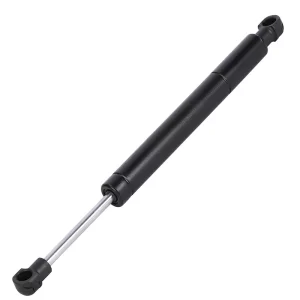
Fixed and Adjustable Damping Serve Different OEM Needs
Fixed damping is the right choice when vehicle weight, spring rate, and duty cycle are known and stable. The curve is tuned once during prototyping and then locked for production. That approach is simpler and cheaper to maintain, and an end user cannot mis-set it, which matters on fleet equipment and consumer machines. The trade-off is that it has no headroom for significant payload changes.
Adjustable damping exists because many platforms cannot be pinned to one load. A clicker changes bleed flow in discrete steps, while threaded preload adjustments change ride height and spring force. The practical value is not endless tuning. It is a repeatable way to shift between a soft setting for light loads and a firm setting for loaded work. We build both fixed and adjustable units and recommend adjustable only when the operating range genuinely varies.
Manufacturing consistency matters more than which type you choose. Over 200 models leave this facility, with annual capacity around 1.5 million units, and every batch of dampers is tested against the same force curve. For an OEM buyer, the test is whether the supplier can demonstrate a calibration process instead of just listing parts. Ask to see a sample curve, not a brochure claim.
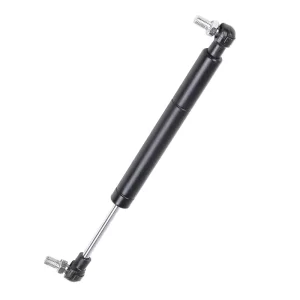
Confirm Damping Calibration Before You Commit to a Supplier
Most sourcing problems start with a generic question: how stiff? That question produces a generic answer. A better opening describes the vehicle’s heaviest load, travel, typical speed, and the failure you are trying to correct, whether that is bottoming, harshness, or wallow. A supplier that starts there can work toward a force curve. A supplier that only quotes a part number is guessing.
Before you commit, request a damping curve for your weight and travel, and ask how the supplier validates batch consistency. Then send your platform details, including vehicle weight, spring rate, travel range, and terrain, to info@yearbenshocks.com or call +86-523-86566899. We will confirm the right damping band or tell you plainly when a different configuration fits better.
Buyers Ask These Questions Before Choosing Damping
Does more damping always mean more vehicle control?
No. Control improves with damping only up to the point where the tire stays in contact with the surface. Beyond that point, extra damping hammers the chassis, reduces traction on sharp edges, and makes the vehicle feel harsh without adding stability. On a heavy platform, more low-speed damping does tighten roll and pitch, so the answer depends on whether the problem is body motion or traction loss. Identify the failure first and the damping direction becomes obvious.
Which damping level suits a lightweight ATV compared with a loaded UTV?
It depends on payload and speed. A lightweight ATV on a smooth trail can run lower damping and still stay composed, while the same curve on a loaded UTV will let the rear squat and bottom through whoops. For a UTV that carries variable cargo, an adjustable damper gives two useful states instead of one compromise. When the machine runs mostly empty, lower damping preserves small-bump compliance. Load it up and add damping to hold ride height stable.
Can high and low damping be switched on the same shock?
Only on an adjustable unit. A fixed shock has its compression and rebound curve set by the shim stack and bleed orifice at assembly, so there is nothing to switch without internal rework. Adjustable shocks offer clickers that move low-speed damping in steps, which shifts the usable band rather than turning a soft shock into a stiff one. That band is wide enough for real payload changes when the base calibration was correct from the start.
What should I ask a supplier about damping before ordering?
In programs we calibrate, I always start the same way: show me the measured force curve for my vehicle weight and travel, and explain how the supplier holds that curve across batches. A curve tells you where the shock is firm, where it opens up, and whether it matches the failure you are chasing. If a supplier cannot produce one, any high performance damping claim is just a description. Share your vehicle’s weight, travel, and terrain profile at info@yearbenshocks.com and I will confirm which damping band fits before you commit.
If you’re interested, check out these related articles:
Best-Off-Road-Shocks
Ride-on Mower Shock Absorbers 38mm, Shock Absorber Manufacturer
Damping-Adjustable-Shock-Absorber