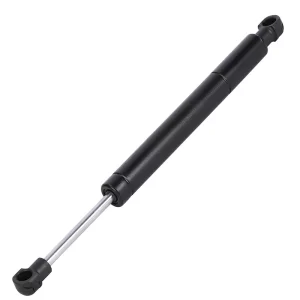
Most sourcing conversations I handle start with the same question: should we specify a coilover or a monotube shock absorber? The question mixes two design levels. A coilover is a spring and damper packaged as one assembly, while a monotube describes the damper’s internal construction. Many off-road coilovers are monotube internally, so treating them as opposing options leads to wrong part numbers, mismatched spring rates, and returns. What follows separates packaging from damping architecture, shows where each configuration fits, and gives you the supplier questions that prevent ordering errors.

What Actually Separates a Coilover from a Monotube Shock?
A coilover is not the opposite of a monotube. A coilover is a packaging choice: the coil spring sits around the damper body, usually on a threaded spring perch, and the spring and damper install as one unit. A monotube is an internal architecture: one steel body holds the piston, damping oil, and a nitrogen charge kept behind a dividing piston. A coilover can use monotube or twin-tube internals, which is why asking for one without the other produces incomplete specs. The coilover vs monotube shock absorber question becomes simpler once you confirm whether the spring and body length have been matched to the suspension layout.
| Factor | Coilover Packaging | Monotube Architecture |
|---|---|---|
| Spring integration | Coil spring is mounted on the damper | Spring may be separate or absent |
| Adjustment focus | Threaded preload for ride height and spring tension | Piston valving and nitrogen pressure |
| Heat consistency | Depends on internal damper design | Usually more stable because the gas stays separated from oil |
| Common fitment | Off-road, ATV, UTV, go-kart, seat suspension conversions | High-cycle seat and steering dampers, motorsport and utility shocks |
| Specification risk | Spring rate and perch thread mismatch | Bore finish, gas charge, and dividing piston quality |
Which Vehicle Programs Favor a Coilover Shock Absorber?
A coilover makes the strongest case when the vehicle needs to ride at more than one height or carry variable loads. We see this in ATV and UTV programs where the same platform is sold as a utility model and as a long-travel trail build. The threaded perch lets the assembler compensate for a small change in corner weight without sourcing a different spring immediately. For an off-road coilover shock, the preload adjustment can be handled during final assembly instead of requiring a new spring for every customer option. I ask buyers two questions first: Do you need to change springs without removing the shock? And do you expect to tune ride height in the field? If the answer to either is yes, a coilover assembly is worth the added cost over a bare shock.
When Does a Monotube Shock Absorber Fit Better?
A monotube is usually the better call when the spring is already handled elsewhere or packaging is too tight for an external spring. Truck and equipment seats, lawn mower steering systems, and hydraulic dampers often need controlled damping without ride-height adjustment. The separating piston keeps the nitrogen charge from mixing with the oil, which reduces aeration during continuous cycling. That stabilizes damping force when the damper gets hot. In a coilover, the same monotube architecture can be specified for high-speed desert or racing use. Without the coil, a monotube shock for off road remains a cleaner packaging solution for confined mount points. We build both forms because the right choice follows the suspension linkage, not the damper name.
How Do Spring Rate, Travel, and Damping Get Specified Correctly?
After more than twenty years of suspension work, I see the same mismatch repeatedly: extended length, collapsed length, and sprung mass are not captured together, so the damper and spring fight each other. The first numbers we ask for are extended length, collapsed length, and sprung mass at each corner. These define the travel window and the force the spring must carry before damping starts.
How do you match spring rate to sprung mass?
Spring rate is expressed in pounds per inch or newtons per millimeter. For a single corner of an ATV or UTV, divide the corner sprung weight by the suspension travel you want at rest, then adjust that result for the motion ratio if the shock is not mounted at the wheel centerline. A shock mounted at an angle or partway along an arm needs a higher spring rate because mechanical advantage changes. I always ask for the motion ratio instead of assuming one-to-one installation.
What travel number matters at full droop?
Extended length is the number I check before spring rate. If the shock tops out too early, the spring unloads sharply and the vehicle loses stability in ruts. Collapsed length matters just as much at full bump. Measure both eye-to-eye dimensions with the suspension at full droop and full compression, not from a catalog drawing. We have corrected several projects where the customer bought the right spring but the wrong body length, which no valve setting can fix.
If your program involves dual-rate springs or a long-travel link change, it is worth confirming the valve knee point and nitrogen pressure before finalizing the bill of materials; send your corner weights and motion ratio to info@yearbenshocks.com.

What Should You Send Your Shock Absorber Supplier Before Ordering?
Generic drawings cause avoidable back-and-forth. Send your part number, vehicle model, extended and collapsed lengths, mount width, shaft diameter, spring rate, and intended use. If you have an existing sample, include a video of the failure or ride condition whenever possible. Those details give engineering a starting point for valving and gas charge. At TaiZhou Yearben, spec review happens before quotation, not after the ship date, because spring variations hide inside platform families.
If your current source sends a shock without asking these questions, that is a signal the part may be selected from a stock list rather than matched to the load. Send your part number, corner weights, and eye-to-eye lengths to info@yearbenshocks.com or call +86-523-86566899. We will confirm the closest stock platform or map a custom monotube or coilover build before you approve the sample.

What Do Buyers Ask About Coilover and Monotube Selection?
Can I use a coilover shock absorber on a stock ATV?
Yes in many cases, but only if the eye-to-eye length, spring rate, and mount width match the stock frame. A coilover does not create more travel by itself; it combines the spring and damper so the assembly fits a specific suspension layout. The mistake I see most often is buying a shock with the right appearance but the wrong collapsed length. Before ordering, measure the existing unit with the ATV at full droop and full bump.
Why do monotube shocks cost more than twin-tube designs?
The cost comes from tolerances, not branding. A monotube needs a fine bore finish and a separating piston that moves without leaking nitrogen into the oil. If the tube finish is rough, seal wear shortens service life. Production rejects rise when bore roundness or chrome thickness is not controlled. That tolerance burden is why a monotube cannot hide machining problems the way a lower-pressure design sometimes can.
Does a remote reservoir count as a coilover?
No. A remote reservoir is an external chamber that adds oil volume and cooling area, and it can be used with coilover or non-coilover shocks. The reservoir matters when sustained heat is the expected failure mode. The spring is a separate design layer. A remote reservoir coilover combines both functions, but the reservoir does not determine spring rate or perch adjustment.
Which shock type lasts longer under heat?
In continuous high-speed running, a properly charged monotube usually retains damping longer than a low-pressure twin-tube because the nitrogen stays separated from the oil and the damping remains more predictable. The real limit is operating temperature and oil degradation. If your program runs high shaft speeds in high ambient heat, request the maximum operating temperature and gas charge in the quotation. Share your shaft speed, ambient temperature, and travel data with info@yearbenshocks.com and we will confirm the valving and fluid specification before sampling.
If you’re interested, check out these related articles:
Adjustable-Shock-Absorber-For-Car
Adjustable-Gas-Shock-Absorbers
Off-Road-Coilover-Shocks