
Seat hydraulic damper noise often starts before the seat loses obvious damping force. A light rattle on rough pavement, a squeak when the suspension kneels, or a metallic knock when the driver changes position usually points to internal aeration, seal wear, or a mount that moves under load. My position after twenty years of damper development is direct: oil top-ups and seal-only repairs rarely eliminate a noise complaint for long. The durable fix is correcting the mounting condition or replacing the damper with a unit matched to the seat’s stroke and damping curve. This article follows the failure chain, diagnosis, and replacement decision.
Noise Mechanisms Inside a Seat Hydraulic Damper
A seat hydraulic damper controls vertical motion by forcing oil through fixed or tunable orifices. The damping force comes from fluid resistance, so any air pocket or internal leak changes the pressure curve and creates noise. With the damper upright, the gas or free oil space stays above the working oil. If the shaft seal leaks slowly, air enters. The piston then moves through a mix of oil and gas, producing a soft rattle or a sharp knock when the seat reaches end of travel. During an intake stroke, oil that cannot refill the compression chamber falls below vapor pressure. The resulting cavitation collapses at the valve plate and sounds like a short buzz or tick. I listen for this first when a seat damper is noisy only at low speeds because cavitation usually disappears when the oil warms and the gas goes back into solution.
What Does Cavitation Sound Like in a Seat Damper?
Cavitation sounds like a fast metallic tick or a thin rattle, not a dull knock. It appears on the compression stroke when the seat moves downward quickly and the piston is ingesting oil. On a truck seat, the sound often comes from the upper mount area and gets softer after the cab warms. A dull knock at bottoming is usually wear, not cavitation. That distinction matters because a cavitating damper can sometimes be returned to service with a lower-aeration fluid while a worn damper cannot. On a bench, cavitation shows as foam in the oil pulled from the body. In service, you can confirm it by changing the oil to a grade with lower foaming tendency and rechecking the noise.
Why Loose Mounts Sound Like Internal Wear
Loose seat damper mounts reproduce almost every internal noise pattern. The upper and lower eyes carry small polyurethane or rubber bushes. When those bushes compress or the bolt shank is undersize, the eye moves a few tenths of a millimeter under load and clicks. The shock travels through the damper body, so the driver hears it as an internal knock. Before opening any damper, check the mounting bolt torque and bush condition. I have replaced noisy units that were structurally sound but had mount holes worn oval. The fix was a new eye bush and a correctly sized bolt, not a damper rebuild. If the eye bore measures more than 0.2 mm beyond drawing tolerance, the mount is the likely noise source.

Diagnosing Seat Damper Noise by Frequency and Load
Diagnosing noise by frequency and load separates hydraulic problems from mounting problems. A low frequency rattle under 10 Hz on rough road usually follows the seat suspension travel and points to too little rebound damping or a loose top mount. A high frequency squeak near 100 Hz often comes from seal friction at the rod or a dry bush. A single knock during acceleration or braking is typically free play in the eye or piston. To isolate the damper, disconnect one end and stroke it by hand. A good hydraulic seat damper moves with uniform resistance in both directions and returns without metal to metal sound. If it moves freely for part of the stroke then catches, the piston is cutting into a scored bore surface.
| Symptom | Load Condition | Likely Source | First Check |
|---|---|---|---|
| Thin rattle at low speed | Cold start, small inputs | Oil aeration or cavitation | Foaming and oil condition |
| Knock at seat bottoming | Full compression | Worn piston seal or guide | Rod play and oil leak |
| Squeak during return | Rapid extension | Rod seal friction | Rod scoring and bush condition |
| Click on acceleration | Direction change | Loose mount eye | Bolt torque and eye bore |
| Buzz that fades warm | Sustained vibration | Gas charge loss | Force curve at low speed |
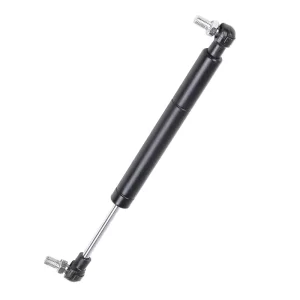
How to Tell Gas Pressure Loss from Oil Aeration
Gas pressure loss and oil aeration produce similar noise but different damping behavior. A twin-tube seat damper with lost gas pressure often extends slowly on its own or sags under seat load, with a dull knock on the rebound stroke. An aerated damper still holds position but ticks or rattles and recovers after a short rest. On the bench, pressure loss appears on a force-velocity curve as a drop at low piston speed. Aeration shows as foamy oil after stroking the unit rapidly. I ask service teams to run the seat through ten full strokes and then listen. If the noise quietens, trapped air is the cause. If it stays constant or worsens, the seal or bore has mechanical wear.
If your seat damper uses a 38 mm or 41.5 mm cylinder and the noise appears only with heavier drivers, the whole damping curve needs review before you order parts. Send the extended and compressed lengths, the mounting eye diameter, and the driver weight range to info@yearbenshocks.com. We will confirm whether the issue is aeration, a mismatched valve stack, or a mount tolerance problem.
Repair Options That Last Longer Than a Seal Swap
Seal replacement is the first fix most workshops try, and it works only when the piston rod is clean and the seal is the actual failure point. If the rod shows chrome wear, radial scoring, or more than 0.1 mm of pitting at the sealing line, a new seal fails again within weeks. The same applies to oil top-ups. Adding oil to a damper with a leaking shaft seal restores motion for a short time, but the air path remains open and the noise returns. I treat a nitrogen or free-gas charge leak the same way. A damper that has lost its gas charge cannot keep oil drawn into the compression chamber under rapid movement. It will cavitate again regardless of oil level.
The repair path that holds up in service starts with the piston rod. If the rod is clean and the bore is not scored, we replace the seal, hone the tube if needed, refill with the correct viscosity oil, and verify the force curve. If the rod is scored or the piston band shows uneven contact, replacement costs less than a rebuild. A scored rod tears the new seal during installation, even when the visible mark is thin. I have seen seat dampers fail again within 300 operating hours because a light scratch across the sealing lip was left in place. The same rule applies to the mount. New dampers installed into oval eye bores still click because the attachment is loose.
OEM Specifications That Prevent Noisy Dampers
Most repeat seat damper noise complaints come from a specification copied from an old part without checking the mount and travel envelope. The key values are the damping force at low and high piston speed, the cylinder diameter, the stroke, and the center distance between mounting holes. A damper with too little rebound damping lets the seat top out and knock. Too much compression damping pushes noise into the cab and makes the driver feel road texture. Yearben builds seat dampers in 24 mm, 35 mm, 38 mm, and 41.5 mm cylinder diameters so the damping curve can be matched to the seat frame and driver weight range, not just the mounting hole. Specify the fully extended and compressed center distances at the drawing stage. If the damper is ordered to the wrong free length, the seat reaches its mechanical limit before the damper does and the knock becomes worse.

Replacement Seat Damper Specifications That Stop Repeat Noise
A replacement damper repeats the noise when it is sourced only by center distance and cylinder diameter. The damping curve, oil type, shaft hardness, and bush material have to match the operating angle and load path of the seat. Before ordering, we ask for four data points: the center distance at full extension and full compression, the bolt and eye inner diameter, the seat’s vertical stroke, and the heaviest driver range the fleet needs to cover. Sending those four values lets us compare the noise condition against a production part or build a sample damper for bench testing. Yearben has more than 200 damper and shock models and an annual production capacity of 1.5 million units, so the sample comes from an active production line rather than a one off shop. Email the mounting data to info@yearbenshocks.com or call +86-523-86566899. We will confirm the replacement damping curve and lead time before you lock the bill of materials.
Common Questions About Seat Hydraulic Damper Noise
What causes a seat hydraulic damper to knock?
A knock usually comes from air mixing with oil in the working chamber, a worn piston seal, or a loose mount that strikes at the end of travel. Air lets the piston travel too far before hydraulic force builds, so the damper hits the end cap or rebound stop. A worn piston seal produces a similar knock under load because the piston bypasses oil and loses pressure. The first check is to stroke the damper by hand with the mounts disconnected. If the knock disappears, the mount is the source. If it stays, the damper needs a tear-down.
Can I fix a noisy seat damper by adding oil?
Many fleets assume a noisy damper is low on oil, so topping it up will quiet it. That works only if the noise came from a low oil level behind a good seal and rod. If air entered through a shaft seal or a gas charge leak, the added oil simply becomes aerated again. The noise may fade for a few days and return after the cab sees rough road. A more useful test is to replace the oil with a fluid of the same viscosity grade and lower foaming tendency, then measure the force curve before reinstalling. If the curve is outside the drawing band, topping up does not fix the root cause.
Why does seat damper noise change when the weather is cold or wet?
It depends on temperature and moisture. Cold weather thickens the oil, so cavitation and low speed seal squeak get louder until the cab warms. Water on the eye bush or rod temporarily lubricates a seal and makes the squeak disappear, which misleads diagnosis. If the noise changes with temperature but not with driver weight, look at oil viscosity and gas charge. If it changes with rain or after washing, inspect the rod seal and eye bushes. The damper should be tested at the temperature range the vehicle actually operates in, especially for cold-region fleets.
How do I know whether to rebuild or replace a noisy seat damper?
In seat damper programs I have worked on, replacement is the safer call when the rod is scored, the eye bore is oval, or the unit has more than 1 mm of radial play at the mounting eye. A clean rod and a smooth bore can be resealed if the original damping curve is still available. If the curve is unknown, rebuilding from a worn sample repeats the noise because the shop is guessing at valve settings. I would replace any unit with worn chrome and order a production sample with the same force curve. Send the extended and compressed lengths and the driver weight range to info@yearbenshocks.com and we will confirm a replacement that matches the seat’s travel.
If you’re interested, check out these related articles:
Triple-Bypass-Remote-Reservoir-Shock
Piggyback-2-0-Coilover-Shock
Remote-Reservoir-Shocks-Manufacturer
