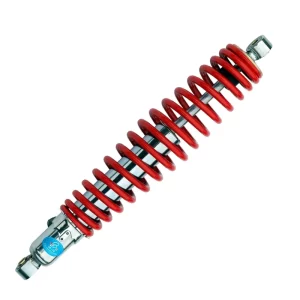
Sourcing coilovers and standard shocks from a single coilover shock factory cuts the administrative burden of managing multiple suppliers while enforcing uniform production standards. Over two decades of suspension engineering, I have watched procurement teams juggle separate weld specs, seal life expectations, and nitrogen charge requirements across different vendors, often resulting in inconsistent field performance. A factory that controls its own machining, plating, assembly, and test cycles can repeat that quality whether the product is a piggyback coilover or a hydraulic seat damper. This guide walks through the manufacturing indicators, audit points, and procurement process that separate a genuinely dual-capable factory from one that subcontracts half the work, so you can consolidate your supply base without sacrificing product integrity.
Why Consolidate Coilover and Shock Sourcing
When a buyer splits orders between a coilover specialist and a separate standard shock factory, hidden costs stack quickly. Freight invoices multiply because shipments depart from different ports on different schedules. Quality documentation formats vary, forcing extra internal review. Engineering change requests bounce between unconnected teams. I have seen a program that sourced front coilovers from one plant and rear dampers from another end up with mismatched nitrogen fill pressures simply because the two test departments used different acceptance tolerances.
Consolidating under one roof eliminates these seams. A single factory uses the same ERP system, the same incoming steel batch traceability, and the same dyno test protocol for every outgoing unit. That uniformity translates directly into lower defect rates and faster problem resolution. When our team at Yearben handles both a threaded-body coilover shock absorber and a simple hydraulic damper for the same client, we apply identical weld inspection criteria and identical plating thickness checks. There is no second-class line for lower-margin products.
Logistics simplification is an immediate gain. Container consolidation alone often recovers enough to cover sample freight or expedited audit travel. But the larger value is strategic: one supplier relationship means one technical contact, one quality agreement, and one improvement roadmap.
What Defines a Capable Coilover Shock Factory
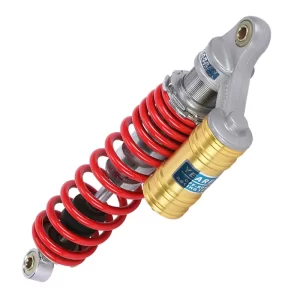
A factory that calls itself a coilover and shock manufacturer must demonstrate physical control over the processes that matter most. Over the years I have developed three non-negotiable checks during a first audit: in-house welding, on-site nitrogen charging, and a properly instrumented test bench.
The difference between in-house and outsourced manufacturing shows up quickly. If the factory owns its CNC machining centers and does its own welding, you can inspect those workstations directly and ask for setup sheets. If the factory outsources body welding or piston rod grinding, you are auditing a middleman, and your quality leverage disappears the moment you leave the gate. At Yearben, for example, we machine cylinder bodies and piston rods on-site, so the same bore finish spec that seals a 2.5-inch off-road coilover also applies to a 24mm seat damper cylinder.
Certifications provide a baseline but tell only part of the story. ISO 9001 confirms a documented quality system, and IATF 16949 adds process-control rigor. What I look for beyond the certificate is how the factory handles its non-certified product lines. A well-run plant applies the same traceability and first-article inspection to a standard gas shock that it applies to a high-end triple-bypass unit. If the answer is “those processes are only for our premium lines,” treat that as a red flag.
| Capability Indicator | In-House Signal | Outsourcing Warning |
|---|---|---|
| Body welding and machining | Operator training records, fixture maintenance logs | Subcontractor invoices with no incoming inspection |
| Nitrogen charging station | Fill pressure charts tied to work order numbers | Pre-charged shocks received from another plant |
| Dyno / cycle test bench | Real-time force-velocity graphs on file per batch | Only sample-level test results, no batch data |
| Chrome plating control | Own tank line with thickness and crack-pattern checks | “We use the same plater as brand X” |
Evaluating Production Quality for Coilovers and Standard Shocks
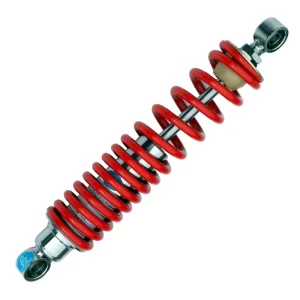
Most sourcing articles treat coilover quality as a separate topic from standard shock quality. In practice, they share the same failure chain: poor bore finish eats the lip seal, chrome micro-cracks allow corrosion, and inconsistent nitrogen fill shifts the damping knee. A factory that gets these fundamentals right on one product family can repeat them across others because the process is the same.
Chrome plating quality is one of the most telling indicators. We measure both thickness and crack pattern under magnification on every incoming rod batch, and we reject rods that show any crack density above the control limit. That same rod spec feeds both our piggyback coilover assemblies and our simple twin-tube hydraulic dampers. If a factory cannot show you plating certification records by supplier lot, you cannot assume the rod will survive a 100,000-cycle durability test.
Cycle testing provides the hard evidence that process control is real. Each production lot at our facility undergoes a mandatory dyno sweep and a representative batch goes through a full 100,000-cycle endurance run. I have seen buyers accept sample-level test reports, only to discover later that production batch units were never run through the same protocol. Ask the factory whether every work order has an associated dyno file. If the answer is no, you are buying based on a prototype, not a production system.
Material consistency is equally important. Coil spring wire diameter tolerance and housing steel grade must be traceable to the heat number. For clients running both coilover shock absorbers and non-spring shocks in the same vehicle platform, we verify that the same steel batch feeds both production lines, eliminating the possibility of a material-driven stiffness mismatch.
Managing the OEM Procurement Process
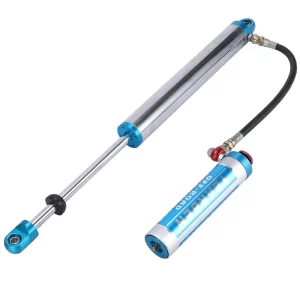
A well-structured OEM purchase starts long before the first purchase order. When I work with a new client, I walk them through a three-step path: spec confirmation, prototype approval, and production batch qualification. Each step has its own decision gates, and skipping any one of them creates the kind of field problem that returns as a costly recall.
Minimum order quantities vary by model complexity. A simple non-adjustable shock with standard valving often starts at 100 units, while a fully custom coilover with threaded preload, reservoir, and dual-rate spring can require a 200-unit opening order to justify setup and fixturing. Ask the factory to break down the MOQ by part complexity rather than giving a blanket number.
If your program involves custom valving or an unusual motion ratio, it is worth confirming the damper curve before you finalize the bill of materials. Send us your target force numbers and we will run a dyno simulation and share the graph before you commit to tooling. Email: info@yearbenshocks.com
Sample approval should include at minimum a dyno overlay comparing the sample to the target curve, a weld cross-section showing proper penetration, and a nitrogen pressure check after the sample has rested 24 hours. Most miss the nitrogen check, but a slow bleed that drops pressure by 5% in a day is invisible on a fresh dyno graph and only shows up in the field. Our standard sample approval package includes all three and we archive the results by serial number.
Lead times for a new program typically range from 45 to 75 days depending on current factory load and component availability. Shipping consolidation becomes much easier when off-road shocks and standard dampers can share a container without mixing priorities.
Building a Long-Term Supply Partnership
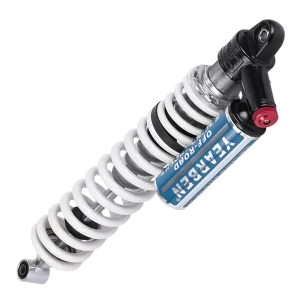
A single-factory partnership changes how engineering teams work. When our technical staff knows a customer’s entire product line, we can spot part-number proliferation before it happens. There have been cases where a client was about to create a new SKU for a slightly different mounting length, and we were able to show that an existing tool could be adjusted to cover the range, saving both the tooling cost and the inventory complexity.
Warranty handling is another area where consolidation pays off. Instead of negotiating root-cause responsibility between two suppliers, you have one point of contact and one failure analysis process. We maintain a returns-log analysis that feeds back into design reviews every quarter, so recurring issues get systematically engineered out.
Managing multiple shock suppliers often leads to version mismatches and delivery delays that erode profit. Consolidating with one factory that understands both your coilover and damper requirements simplifies reordering, speeds up engineering changes, and builds a reliability record you can count on. To discuss your next project or request a production line walkthrough, email us at info@yearbenshocks.com or call +86-523-86566899.
Common Questions About Sourcing Coilovers and Shocks from One Factory
Can a Single Factory Really Build Coilovers and Standard Shocks to the Same Standard?
Yes, if the core manufacturing processes are shared. Bore honing, plating, seal assembly, gas charging, and final dyno testing are common for both product types. A factory that manages these steps under one roof with the same trained operators and the same calibrated instruments can deliver equivalent quality across product lines. The risk appears only when one of those steps is subcontracted and incoming inspection is weak.
What MOQ Should I Expect for Custom Coilovers?
It depends on the level of customization. A standard-dimension shock with a unique valving card often opens at 100 units. If the design requires a new body forging, new spring seats, and a dedicated dyno tune, expect 200 to 250 units minimum. Discuss volumes early and ask the factory to separate tooling-related MOQ from recurring production MOQ.
How Do I Verify a Factory’s Quality Claims During an On-Site Visit?
Move past the conference room and stay on the production floor. Watch how operators handle piston rods: bare hands or gloves? Ask to see the nitrogen charging log for the last three work orders. Call up a random dyno file from last week and check that it matches the work order. A factory that hesitates on any of these needs a deeper look.
Will Lead Times Be Longer If One Factory Makes Multiple Product Types?
Not necessarily. A well-organized plant schedules work orders by common operations, not by product name. The same personnel who build adjustable shock absorbers can switch to standard shocks if the setup time is minimal. Bottlenecks occur when one workstation, often plating or welding, is overloaded. During your audit, ask to see the capacity utilization of the constraint workstation.
What If a Quality Issue Spans Multiple Orders from the Same Factory?
Then traceability is what saves you. Because all orders share the same lot traceability system, a single root-cause investigation can cover all affected batches. We have corrected plating line parameters once and resolved a seal-swell problem across three simultaneous programs because the process log pointed to the same tank. If you are evaluating a supplier, ask for a real example of a cross-order corrective action. Then share your requirements and we will confirm compliance documentation availability.
If you’re interested, check out these related articles:
Steering-Damper-18MM
Hydraulic-Shock-Absorber-24MM
Lawn-Mower-Damper-Shock-Absorber
Lawn mower steering damper 18mm