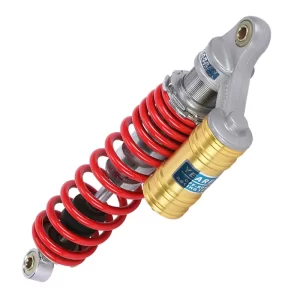
Shocks vs struts is a distinction that matters far more for passenger cars than for off-road vehicles, because the engineering and procurement reality for specialty equipment points overwhelmingly toward the shock absorber as the foundation of suspension performance. In twenty years of designing and manufacturing dampers for ATVs, UTVs, lawn mowers, and heavy equipment, I have never seen a strut on an off-road production line. The real question for builders and OEM buyers is not whether to use a shock or a strut, but which type of shock absorber, built to which manufacturing standard, will deliver the required travel, heat management, and service life.
What Is the Difference Between a Shock Absorber and a Strut?
A shock absorber is a damping device designed to control the oscillation of a spring after a bump. It converts kinetic energy into heat through hydraulic fluid passing through valves, but it is not load-bearing. A strut, on the other hand, is a structural suspension component that combines a shock absorber with a coil spring and serves as a steering pivot point in MacPherson-style designs. The strut housing carries vehicle weight and must withstand lateral forces. In most off-road vehicles, the suspension architecture uses separate control arms, coil springs, and a dedicated shock absorber, so there is no structural need for a strut. This design choice gives off-road platforms greater articulation, easier serviceability, and the freedom to swap shock types without affecting alignment geometry.
Why Are Struts Rarely Used in Off-Road Vehicles?
Off-road suspension systems prioritize long travel, high ground clearance, and component durability under impact loads. A strut assembly, by combining damping, spring location, and steering geometry into one unit, introduces a single failure point and limits suspension travel due to packaging constraints. Body-on-frame trucks, solid-axle 4x4s, and independent double-wishbone ATVs all use shocks rather than struts because the shock can be mounted in a position that optimizes leverage ratio and cooling, separate from the camber change influence of a strut. In our factory, we have developed shock absorbers for everything from 250cc ATVs to 800cc UTVs and commercial lawn mowers, and not once has a customer requested a strut design for these applications. The modularity of a standalone shock also means that OEMs can tune damping characteristics without redesigning the entire suspension knuckle.
What Types of Shock Absorbers Perform Best for ATVs and UTVs?
Coilover Shocks for Variable Spring Rates
Coilover shocks integrate a coil spring around the damper body, allowing preload adjustment to set ride height and spring rate. For ATVs and UTVs that carry varying loads or traverse mixed terrain, a dual-rate coilover setup provides a compliant initial stroke while resisting bottoming on hard hits. Our adjustable threaded shock bodies let riders fine-tune preload without removing the shock.
Reservoir Shocks for Heat Management
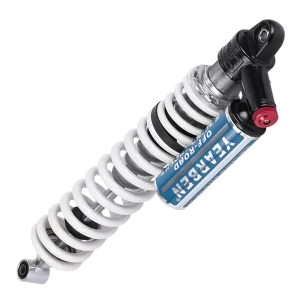
Intense off-road use generates fluid heat that can cause damping fade. A piggyback or remote reservoir shock increases fluid capacity and separates the gas charge from the oil, maintaining consistent damping under sustained loads. Remote reservoirs, connected via a high-pressure hose, offer the greatest heat dissipation and are the go-to for desert racing and long-distance overlanding. We typically recommend remote configurations when continuous oil temperatures exceed 180°C in testing.
Bypass Shocks for Position-Sensitive Damping
For high-speed desert running, bypass shocks add external tubes that redirect fluid flow at specific travel positions, creating multiple damping zones. A triple-bypass shock can be tuned for plush initial travel, firm mid-stroke support, and progressive bottom-out resistance. These shocks require meticulous valving and weld integrity, which we validate with dyno cycles before shipment.
| Shock Type | Cooling Efficiency | Complexity | Typical Application |
|---|---|---|---|
| Emulsion Coilover | Moderate | Low | Trail riding, light utility |
| Piggyback | High | Medium | Racing, aggressive trail |
| Remote Reservoir | Highest | High | Desert racing, long-distance |
| Bypass | Highest | Very High | Trophy truck, Dakar |
If your program involves continuous high-speed runs in sand or desert conditions, it is worth confirming the heat dissipation capacity of the shock’s reservoir design before finalizing your BOM — contact us at info@yearbenshocks.com to discuss your application’s thermal load.
How Do Manufacturing Standards Affect Off-Road Shock Quality?
Bore Finish and Seal Life
The inner surface finish of the shock body cylinder directly influences seal longevity. A poorly honed bore causes friction and heat, accelerating seal wear. In our production line, we use a multi-stage honing process to achieve a surface roughness that extends seal life by up to 30% over standard finishes, based on internal lifecycle testing.
Nitrogen Charging and Damping Consistency
Gas-charged shocks use nitrogen pressure to minimize oil cavitation and maintain consistent damping. An improper fill level or leakage leads to erratic performance. We pressure-test every shock before packaging to confirm the nitrogen charge holds within specification.
Cycle Testing and Fatigue Life
A shock that performs well on the dyno for 1,000 cycles may fail at 10,000. We fatigue-test samples from each batch to the equivalent of a full racing season, monitoring damping force degradation. This data feeds back into our valving and seal material choices, ensuring that production units match the durability of tested prototypes.
What Should You Look for When Sourcing Shock Absorbers?
Understanding MOQ and OEM Customization
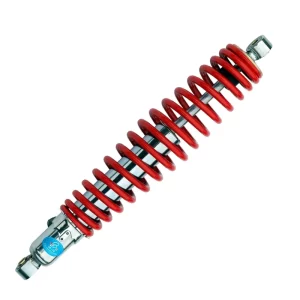
Minimum order quantities vary widely among factories. A supplier focused on retail channels may demand high MOQs, while a manufacturer with in-house engineering can offer lower MOQs for custom tunes and lengths. We produce over 200 models with an annual capacity of 1.5 million units, accommodating both small-batch custom orders and high-volume production.
Factory Audit Checklist
When evaluating a shock absorber factory, look for in-house honing and chrome plating, a dedicated nitrogen charging station, a shock dyno for quality control, and certification to ISO 9001. These capabilities distinguish a serious OEM from a trading company. We welcome on-site audits and provide full process documentation.
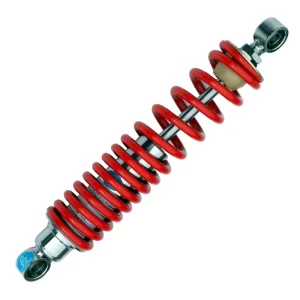
For procurement teams and builders, specifying the right shock absorber for an off-road or specialty vehicle program starts with a clear technical brief. Instead of debating shocks vs struts, the real decision is which shock design and quality level will deliver the required service life. At Yearben, we manufacture ATV, UTV, lawn mower, and seat dampers with over 200 models and 1.5 million annual capacity. Send your part number, travel specs, and quantity to info@yearbenshocks.com or call +86-523-86566899 for a customized quote.
Common Questions About Shock Absorbers and Suspension
Do any off-road vehicles use struts?
Some light-duty SUVs and crossovers use MacPherson strut front suspension, but purpose-built off-road platforms—solid-axle 4x4s, ATVs, UTVs, and heavy equipment—avoid struts entirely. The structural integration of a strut limits suspension travel, complicates lift modifications, and makes damper replacement a more involved job. In contrast, double-wishbone or multi-link setups with standalone shocks allow higher articulation and easier service. For anyone building a dedicated off-road rig, starting with a non-strut suspension architecture provides far more flexibility in shock selection and tuning.
What is a coilover shock and how is it different from a strut?
A coilover shock is a damper with a coil spring mounted concentrically around it, typically used in a double-wishbone or multi-link suspension. It is not a structural steering member; the vehicle’s weight is carried by control arms and linkages, not the coilover itself. A strut, by comparison, replaces the upper control arm and serves as a kingpin axis, carrying both suspension and steering loads. The key practical difference is that replacing a coilover does not require a wheel alignment as it does with a strut, and coilovers can be easily swapped or revalved without altering steering geometry.
How often do off-road shocks need rebuilding?
Rebuild intervals depend heavily on usage. For recreational trail riding, a quality shock may go 15,000–20,000 miles before damping force degrades noticeably. In desert racing, shocks can require service after a single season, sometimes sooner if oil temperatures consistently exceed 200°C. Early signs include fluid seepage at the seal head, inconsistent damping adjustment, or bottoming resistance that softens over a ride. Factory cycle testing gives a reliable baseline—our production batches are tested to the equivalent of 50,000 cycles at race-pace temperatures to validate service intervals before a design is released.
Why choose a remote reservoir shock over a standard emulsion shock?
Remote reservoir shocks separate the gas charge from the damping oil, increasing total fluid volume and providing a dedicated cooling path through the reservoir and hose assembly. This prevents oil aeration and maintains consistent damping during prolonged high-speed runs where emulsion shocks might fade. If your vehicle sees extended desert runs, high ambient temperatures, or sustained high-load operation, the thermal advantage of a remote reservoir is measurable. Share your typical terrain and run duration with us at info@yearbenshocks.com and we will recommend whether a remote, piggyback, or emulsion configuration best fits your performance window.
If you’re interested, check out these related articles:
Lawn mower steering damper 18mm
Ride-on Mower Shock Absorbers 38mm, Shock Absorber Manufacturer
Adjustable-Shock-Absorber-For-Car