
A gas shock absorber nitrogen charge is a factory-set gas spring inside the damper, not a universal pressure number. It affects cavitation, oil aeration, seal load, and the force the damper produces at a given shaft speed. Two dampers with the same body size can need different charge pressures because oil volume, rod diameter, reservoir type, valving, and intended load all change the result. That is why the useful question is not “what pressure should a gas shock have?” but “what target pressure, at what temperature, with what gas volume, verified by what method?” This guide treats the charge as a released specification that a buyer can audit, not a number copied from a catalog.
What a Gas Shock Absorber Nitrogen Charge Actually Does
The oil in a damper has to stay under pressure. When the rod moves into the body, it displaces oil; the gas chamber gives that oil somewhere to go and keeps the oil column from pulling a vacuum behind the piston. If pressure drops too low, the oil can cavitate, the damper can fade, and the force curve becomes inconsistent. The nitrogen charge also adds a gas spring force. In a monotube, that force acts on the floating piston and then on the oil; in an emulsion or reservoir damper, it acts on the oil or on a separator. The result is a damper that resists aeration and produces a more repeatable force at the wheel or seat.
The charge is not the main tuning tool for ride quality. Damping force comes from oil being pushed through the piston and shim stack. Gas pressure sets the baseline pressure in the oil and the gas spring rate, but it cannot correct a shim stack that is too stiff, an oil that foams, or a seal that drags. A buyer who treats charge pressure as a single performance knob will chase the wrong variable. A factory that treats it as part of a released specification will test the damper as a system.
Off-road use puts a damper through repeated short strokes, so gas charge and oil control have to work together. <Best-Off-Road-Shocks> covers off-road shock options for that duty.
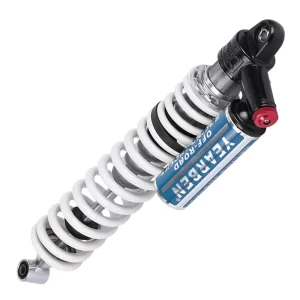
A gas charge also changes seal load. Higher pressure presses the rod seal and wiper against the chrome. That can raise friction, wear, and heat. Lower pressure reduces seal load but leaves less margin against cavitation. The right value is a balance set by the damper design, not the highest pressure the seal can survive. That is why a charge specification should state the gas volume and the expected operating range, not only a pressure.
Why Factories Charge with Nitrogen Instead of Air
Dry nitrogen is the usual factory fill because it is chemically slow to react in this service and carries little moisture. Shop air is a mixture that includes oxygen and water vapor. Oxygen can accelerate oil oxidation and elastomer aging; moisture can corrode steel parts and change lubricity. A filter and dryer on a shop compressor can reduce those risks, but the dew point and oil carryover still vary with compressor condition. For a damper that may sit on a shelf or run for years, that variation is a quality problem.
Nitrogen also gives the factory a known supply. A regulated nitrogen cylinder or generator can be checked against a specification, and the change-out record can be tied to a production lot. That matters when a customer asks why one batch feels different from another. If the gas supply changes, the charge record should show it.
The gas does not make the damper a “nitrogen shock” in any special sense. It is a dry, stable pressure medium. The performance still comes from the hydraulic design. A factory that markets nitrogen as a performance feature without controlling gas volume, oil fill, and leak rate is describing a component, not a process.
How the Factory Sets the Charge Without Guessing
A defensible charge starts with a released damper specification. The drawing or specification sheet should define the target pressure at a reference temperature, the allowable tolerance, the gas volume or gas chamber design, the oil fill, the rod diameter, the seal system, and the verification method. Without those inputs, a pressure number is only a guess. The factory should also know the intended load and duty cycle. A seat damper, a lawn mower steering damper, and an off-road coilover do not see the same stroke, heat, or contamination.
The production sequence is usually:
- Confirm the damper model, drawing revision, and gas chamber type.
- Fill the specified oil and remove entrained air by vacuum or by an approved settling method.
- Set the floating piston depth or reservoir oil level that fixes the gas volume.
- Purge the gas side with dry nitrogen to remove trapped air.
- Charge through a regulated rig to the target pressure at the recorded temperature.
- Allow the damper to stabilize, then recheck pressure and leak-test the valve, seal, and body joints.
- Cycle the damper on a dyno or an agreed stroke test and compare the force trace with the master sample.
- Record the pressure, temperature, gauge ID, oil batch, and serial or lot number.
This sequence matters because each step can mimic a charge fault. If the oil is aerated, the damper may feel soft even when the gas pressure is correct. If the floating piston is set too shallow, the gas volume is wrong and the pressure will rise too fast near full stroke. If the gas side is not purged, the reading may include air and moisture. A factory that skips the purge and relies on a final gauge reading is not controlling the fill.
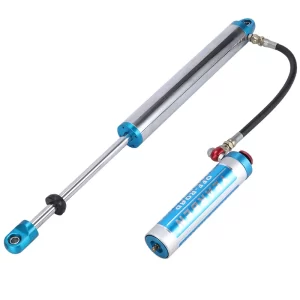
For a piggyback or remote reservoir, the gas volume is set by the canister and the oil level, not only by the pressure at the fill valve. <Piggyback-2-0-Coilover-Shock> covers the piggyback coilover format for that layout.
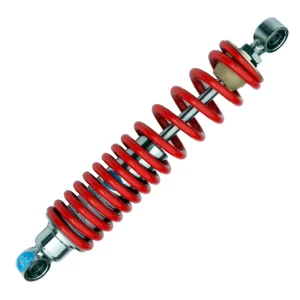
The charge rig itself needs control. The regulator should be sized for the fill pressure, the hose should be short and clean, and the gauge should be calibrated against a known reference. A gauge that is accurate at low pressure may drift at high pressure, so the calibration range should cover the working range. The operator should record the gauge ID, not only the reading. If a batch is challenged later, the gauge record is part of the evidence.
Where Charge Pressure Goes Wrong by Damper Type
The same pressure number means different things in different damper architectures. A monotube, an emulsion damper, a piggyback reservoir, and an air shock do not use gas in the same way. The table below sets the boundary.
| Damper type | Where the gas sits | What the charge controls | Do not infer |
|---|---|---|---|
| Monotube with floating piston | Gas chamber behind the floating piston | Oil pressure, cavitation margin, gas spring force | That the same pressure fits a different gas volume or rod diameter |
| Emulsion damper | Gas mixed with the oil | Some pressure bias and aeration control | That a gauge reading proves the oil is de-aerated |
| Piggyback reservoir | Gas in a chamber on the piggyback canister | Gas volume, pressure rise under stroke, some cooling | That the canister pressure is the same as the pressure at the piston |
| Remote reservoir | Gas in a remote canister, separated by a piston or bladder | Gas volume, oil capacity, heat management | That a long hose or a low reservoir mount has no effect on the reading |
| Air shock | Air or nitrogen in the main spring chamber | Spring rate and ride height | That an air spring charge is a substitute for damper valving |
This table is not a tuning chart. It is a boundary check. A monotube with a small gas chamber will gain pressure faster near full stroke than a damper with a larger reservoir. That can make the small-chamber damper feel harsh even when both are charged to the same gauge reading. An emulsion damper can show a stable pressure at the valve while the oil still foams under work. A remote reservoir can hold pressure at the canister and still have a restriction in the hose or a trapped air pocket at the damper.
The charge also interacts with oil level. Too much oil leaves too little gas volume, so pressure rises quickly and the damper can hydraulic-lock near full stroke. Too little oil leaves a large gas volume, so the gas spring is softer and the damper may not suppress cavitation. The correct oil level is part of the charge specification. A factory that adjusts oil level to make the gauge read a target pressure has changed the damper, not corrected it.
A typical clicker or adjuster changes bleed or valve opening, not the nitrogen preload. <Damping-Adjustable-Shock-Absorber> covers adjustable damping hardware for builds that need that separate adjustment.
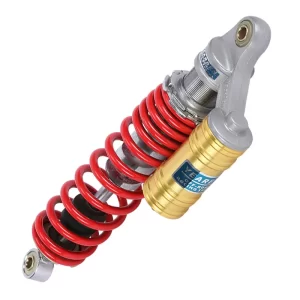
That separation matters during troubleshooting. If a driver turns the clicker and the damper does not change, the problem may be a seized adjuster, a blocked bleed path, or a gas charge that is too low to keep the oil stable. If the damper is harsh at every clicker setting, the gas charge or gas volume may be too high, or the shim stack may be too stiff. The clicker is not a repair for either condition.
What to Put in the RFQ Before a Factory Quotes
A gas shock absorber quote is only useful when the charge requirement is part of the drawing. If the RFQ says “nitrogen charged” without the target, temperature basis, and gas volume, the factory has to guess or quote a generic unit. That is how buyers end up comparing two prices for two different dampers. The RFQ should ask for the same fields the release record will use.
| RFQ field | What to request | Why it matters |
|---|---|---|
| Target pressure and tolerance | Pressure at a stated reference temperature, with an upper and lower limit | A single pressure without a tolerance cannot be inspected |
| Reference temperature | The temperature at which the factory measures and records the charge | A cold reading and a hot reading are different specifications |
| Gas volume and reservoir type | Monotube, emulsion, piggyback, or remote; gas chamber volume or oil level | The same pressure with a different gas volume behaves differently under stroke |
| Oil fill and bleed method | Oil grade, fill volume, vacuum or settling method | Trapped air mimics a low charge and causes inconsistent damping |
| Verification method | Gauge calibration, stabilization interval, leak test, dyno or stroke check | A fill-port reading does not prove the damper holds pressure after cycling |
| Documentation | Serial or lot, pressure and temperature record, test result | Gives the buyer a traceable release record and a baseline for warranty claims |
A weak RFQ line is easy to spot. It asks for a feeling, not a released value.
Reject this RFQ line: “Nitrogen charged to the usual pressure.”
Replace it with: “Charge to the drawing pressure at the stated reference temperature, with the specified gas volume and reservoir type; record gauge calibration, stabilization method, leak test, and serial number.”
The second line gives the factory something to inspect. It also gives the buyer something to compare when a sample arrives. If the supplier cannot state the reference temperature or the gas volume, the price is not comparable, even if the unit looks the same from the outside.
Custom work needs one more field: the intended load and duty. A damper for a utility ATV, a rock crawler, a truck seat, and a lawn mower deck may share a body size but not a charge target. The factory should ask for the application, the sprung mass or seat load, the stroke, and the expected speed range. If those inputs are missing, the supplier can only build to a generic baseline. That baseline may be safe, but it is not a custom release.
How to Verify the Charge Before Shipment
Verification should start with the record, not the gauge. The release document should show the drawing revision, target pressure, reference temperature, tolerance, gas volume, oil fill, gauge ID, and serial or lot. If the record is missing any of those fields, the reading is not traceable. A buyer can ask for a sample record before placing an order and compare it with the first shipment.
The incoming check should cover:
- Match the serial or lot to the release record and the drawing revision.
- Confirm the pressure was measured at the stated reference temperature and with a calibrated gauge.
- Check the leak test at the fill valve, rod seal, body crimp or weld, and reservoir hose joints.
- Compare the dyno or stroke trace with the master sample at the agreed points, not only by feel.
- Inspect gas volume indicators: floating piston depth, reservoir oil level, and hose routing.
- Retain a sample or a recorded trace for the lot, so a later claim has a baseline.
A gauge reading at the fill port is not proof that the damper will hold pressure after cycling. The damper should be checked after the stabilization interval and after a representative stroke test. If pressure drops, the leak path may be at the valve core, the seal, the crimp, or the hose. The factory should identify the path, not simply add gas and ship.
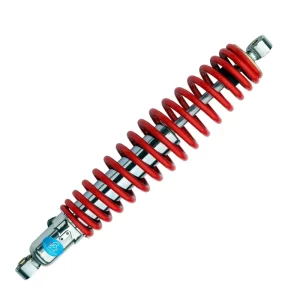
Temperature is a common source of a false alarm. A damper charged in a cool room and checked after a dyno run will read higher because the gas is warmer. That is expected. The comparison is only valid when both readings are corrected to the same reference or taken at the same recorded temperature. A buyer who rejects a shipment on a hot reading without checking the temperature basis may reject a good part. A factory that reports pressure without temperature is giving an incomplete result.
Common Nitrogen Charge Mistakes Buyers Catch Late
The expensive mistakes usually appear after the first trail ride or the first warranty claim, not on the receiving dock. These are the ones worth checking before approval.
- Treating one pressure as universal. A pressure that suits a large-reservoir off-road damper may overcharge a small monotube with the same body length.
- Using shop air because nitrogen is not available. The damper may work at first, but moisture and oxygen remain in the gas chamber.
- Charging before the oil is de-aerated. The gauge can read correct while the damper feels soft or inconsistent.
- Comparing readings at different temperatures. A hot reading is not directly comparable with a cold one.
- Skipping the leak test after cycling. A valve that seals cold may leak after the damper reaches operating temperature.
- Using the clicker to fix a charge problem. Adjustable damping and gas preload are separate variables.
- Forgetting the gas volume. A correct pressure with the wrong floating piston depth or oil level is still the wrong fill.
A buyer does not need to set the charge personally. The buyer needs to know which inputs make the charge meaningful and which records prove it was set. That is the difference between accepting a damper because it holds a gauge reading and accepting a damper because the released specification, the fill, and the test record agree.
Send the Damper Spec Before the Charge Is Set
A gas shock absorber charge cannot be quoted responsibly from a body size alone. Send the damper type, target pressure and tolerance, reference temperature, gas volume or reservoir type, oil fill and bleed method, intended load, stroke, test method, and annual volume. If the drawing is still open, say which of those values are fixed and which need engineering review. Contact Chen Yibo at info@yearbenshocks.com or +86-523-86566899. Taizhou Yearben Shock Absorber Technology Co., Ltd. can review the released specification and the factory test record together, so the quote matches the part that will be inspected.
FAQ
Does a gas shock absorber need nitrogen or can it use air?
Dry nitrogen is the better factory fill for most hydraulic dampers. Air carries moisture and oxygen. Moisture can corrode steel parts and change lubricity; oxygen can accelerate oil oxidation and elastomer aging. Nitrogen is dry and chemically slow to react in this service. The gas still has to be dry and the system still has to be purged. A shop compressor with a filter is not a substitute for a regulated nitrogen supply with a documented change-out record.
What pressure should a gas shock absorber be charged to?
There is no single pressure that fits every gas shock absorber. The target comes from the damper drawing: gas volume, oil fill, rod diameter, reservoir type, valving, seal system, and intended load. A supplier who quotes one pressure for all bodies is probably guessing. Ask for the pressure at a stated reference temperature, the tolerance, the gas volume, and the verification method. Then compare that released specification with the test record, not with a number from a forum.
Why does the charge pressure change after installation?
Gas pressure rises with temperature and changes as the gas volume changes with shaft travel. A damper charged on a cold press and checked after a hard run will show a different reading even when it holds the same gas mass. That is normal. The problem starts when a cold reading is compared with a hot reading, or when a low reading is blamed on leakage without checking temperature and gas volume first. Record pressure and temperature together.
Does adjustable damping change the nitrogen charge?
Usually no. A clicker or adjuster changes bleed, shim preload, or valve opening, while the nitrogen charge sets the gas pressure and gas spring. They are separate adjustments. Turning the clicker will not repair a low charge, and raising the charge will not fix a valving problem. If a damper has both adjustments, the release record should state the baseline charge and the baseline clicker position so a test can be repeated.
If you’re interested, check out these related articles: