
Monotube vs twin-tube shocks is usually framed as a quality contest, and that framing hides the decision a buyer actually has to make. Both designs damp the same axle. They differ in where the oil and gas sit, how quickly heat leaves the working fluid, and what happens to damping force when the damper is worked hard for a long stretch. A monotube keeps oil and nitrogen in one pressure vessel, which holds force steadier under sustained load. A twin-tube splits the oil between an inner working cylinder and an outer reservoir, which keeps cost and packaging manageable. Which one fits depends on duty cycle, heat load and mounting space, not on the label on the box.
How the two designs actually differ inside
A twin-tube damper uses two concentric cylinders. The piston runs inside the inner working cylinder, and a base valve at the bottom meters oil moving between that cylinder and the outer reservoir. The outer chamber also holds a gas volume that takes up the space the shaft displaces as it enters the body. A monotube damper uses a single pressure vessel. The piston separates oil from a nitrogen charge held at higher pressure, normally through a floating piston or a separating bladder, so gas and oil stay apart in operation. Some low-cost monotubes skip the separator and run as emulsion units, which gives up the separation advantage and should be judged as a different product.
Three consequences follow from the layout, and each one changes behaviour on the vehicle.
Piston area. For a similar outside diameter, a monotube can carry a larger piston because it does not need to fit a reservoir annulus inside the same envelope. A larger piston displaces more oil per millimetre of shaft travel, so the damper can reach a target force at lower internal pressure. Lower pressure usually reduces seal friction and hysteresis between the compression and rebound strokes.
Heat path. Damping turns motion into heat in the oil. In a monotube that heat crosses one cylinder wall into the air. In a twin-tube it crosses the working cylinder, the reservoir oil and the outer wall. At the same energy input the monotube generally runs cooler, which matters once a vehicle holds a rough surface for minutes rather than seconds.
Cavitation threshold. A high gas charge raises the pressure at which oil can vaporise on the rebound side. That keeps force available at high shaft speeds. A twin-tube with a low reservoir charge can lose force at the start of a fast rebound stroke, which the driver feels as a soft or vague first movement.
None of this settles the argument on its own. It explains why one architecture responds to a change in use and the other does not.
| Comparison point | Monotube behaviour | Twin-tube behaviour | What the difference does not prove |
|---|---|---|---|
| Internal layout | One pressure vessel, piston separates oil from high-pressure nitrogen | Inner working cylinder plus outer reservoir with a base valve | That either unit is better assembled, since build quality is a separate question |
| Heat path to air | One cylinder wall | Working wall, reservoir oil, outer wall | How fast a specific damper cools, because wall thickness and airflow decide that |
| Cavitation resistance | High gas charge raises the threshold | Depends on the reservoir charge and oil condition | That a twin-tube will fade on every rough road |
| Body strength | The tube is the pressure boundary, so a dent can release the charge | The outer tube is not the primary pressure boundary | That a monotube is fragile in normal use, because guards and mounting decide the risk |
| Mounting freedom | Can often be run inverted to cut unsprung mass | Usually installed upright | That inverted mounting suits every chassis |
| Cost per unit | Higher machining and gas-fill content | Lower at comparable volume | That the cheaper part is the wrong part for your duty cycle |
Those rows describe architecture, not a product. A well-valved twin-tube can outperform a poorly valved monotube on the same vehicle, because the shim stack sets the force curve and the tube count only sets the ceiling.
Where monotube shocks earn their cost off road
Sustained rough running is where the single-tube layout separates itself. A loaded 4×4 crossing thirty kilometres of washboard, or a UTV holding speed through dunes, puts continuous energy into the oil. The monotube’s single-wall heat path and its larger oil column slow the temperature rise, and the separated gas charge keeps the oil from foaming. The practical result is that force stays closer to the bench curve late in the run, so the vehicle does not start floating or packing down after the first hard section.
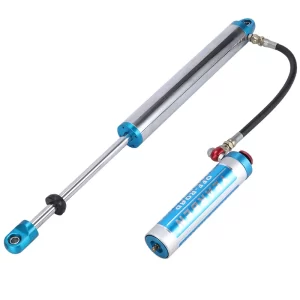
A damper that keeps its oil cooler holds its force later into a long rough section, and added oil volume is one route to that. <Remote-Reservoir-Shocks-Manufacturer> covers remote reservoir shock construction for off-road use.
Mounting freedom is the second advantage. Because the monotube works in any orientation, it can be fitted inverted with the body attached to the chassis and the shaft moving with the axle. That moves mass off the unsprung side of the spring, which helps light ATV and UTV corners where every kilogram shows up in wheel control. A twin-tube does not offer the same freedom, since its reservoir needs a consistent gas position.
Cavitation behaviour is the third. With a high charge, the damper keeps generating force at the shaft speeds a rough road produces, so the first part of a rebound stroke stays controlled instead of falling away. That is what most drivers mean when they say a shock feels planted at speed.
The costs are real. Higher gas pressure pushes the seal against the shaft, and the resulting friction can be felt on small, sharp bumps where the damper barely moves. The body is a pressure vessel, so a rock strike that would dent a reservoir wall can end the charge in a monotube. Rebuilds need a gas fill and a pressure check, which not every workshop can do. On a light machine used at low speed, the extra control can read as harshness rather than composure.
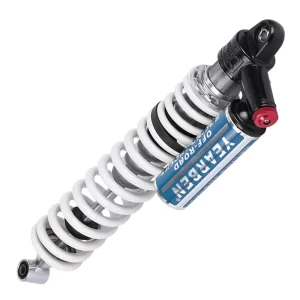
Force that stays predictable at high shaft speed is the practical reason builders move to a single-tube layout. <Monotube-Shock-For-Off-Road> covers monotube shocks built for off-road applications.
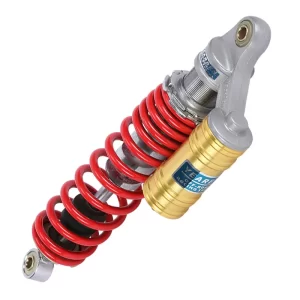
Where twin-tube shocks still win
Cost is the first reason, and it is not a small one. A twin-tube replaces the gas fill and floating piston with a base valve and a stamped outer tube. At fleet volume that difference decides the purchase, and for vehicles working on graded roads and sealed surfaces the twin-tube delivers the control the duty asks for.
Small-input comfort is the second. Lower gas pressure means less seal drag on the shaft, so the damper responds to shallow bumps and expansion joints. On light passenger platforms, seat-suspended cabs and comfort-focused builds, that shows up as a quieter, less busy ride. A monotube can be tuned to ride well, but the tuner works with less margin before friction becomes visible.
Packaging and service are the third. The reservoir surrounds the working cylinder instead of extending the body, which helps where the available shaft length is fixed by the chassis. Many twin-tubes are sealed units built for straightforward replacement, while a monotube rebuild involves a gas charge and a pressure verification step.
The limits are equally clear. On long rough sections the twin-tube’s heat path and shared gas volume work against it, and aerated oil loses force. If the reservoir charge is low, or has been lost through a slow leak, the damper can drop force at the start of a fast rebound stroke. Neither failure is a design flaw in a vehicle that never sees that duty. Both become visible the first time the same vehicle is used hard.
Matching the design to your vehicle and duty cycle
The architecture question becomes practical once the duty is described in terms of surface, speed, duration and load. Two vehicles with the same tyre size and the same travel can need different dampers because one holds speed on broken ground and the other does not.
| Duty cycle | First choice | Do not choose it when |
|---|---|---|
| Sustained high-speed rough running, dunes, race stages | Monotube, with a reservoir on long runs | Rock strike risk is high and no guard can be fitted, because the tube carries the gas charge |
| Loaded overlanding at moderate speed over long days | Monotube, or a reservoir twin-tube | The chassis has no room for a longer body and the mount cannot be reworked |
| Daily-driven 4×4 on gravel and occasional towing | Twin-tube | The vehicle regularly runs near maximum load on washboard and fade appears within one trip |
| Inverted mounting to cut unsprung mass | Monotube | The lower mount and spring hardware cannot carry the inverted load path |
| High-volume fleet replacement on sealed or graded roads | Twin-tube | Nobody checks gas charge at service, which turns a low charge into inconsistent damping |
If two rows apply, follow the one with the higher sustained speed and heat input. That is the condition that separates the two designs in practice; the other rows mostly affect cost and installation work.
Matching the damper to the vehicle is easier when the shortlist already reflects the terrain. <Best-Off-Road-Shocks> covers off-road shock options for builds of this kind.
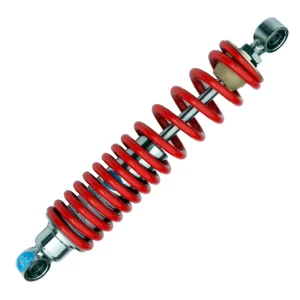
What a spec sheet will not tell you
Labels repeat across suppliers. A 2.0 inch monotube from one factory and a 2.0 inch monotube from another can carry the same description and produce different force at the same shaft speed. The same holds for a 2.5 inch body, for the phrase gas charged, and for any adjustable clicker count. None of these describe the curve the vehicle will feel.
Ask for records that separate a measured result from a claim:
A force curve measured at stated shaft velocities on a stated rig. That record supports how the tested build behaves at those velocities. It does not describe the next unit off the line, and it does not transfer to a different shim stack.
Gas charge pressure, and the method used to verify it after assembly. That supports a statement about the internal state of the build. It says nothing about ride quality without the valve data beside it.
Seal type and bore finish, each with its measurement method. A finish figure without its method cannot be compared across suppliers, and a smoother bore is not automatically better if the seal was matched to a different surface.
The origin of the curve. A plot from a sample build, a nominal computer model and a copied competitor graph look identical on a quotation. Ask which one you are being shown.
The boundary matters as much as the data. A dyno plot proves what that damper did on that rig on that day. It does not prove the unit will suit your axle load, and it does not prove a category of shock is safer or more durable than another.
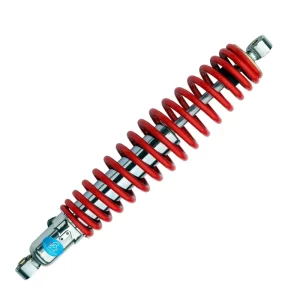
Sourcing questions that decide the outcome
Most sourcing failures start with an incomplete brief rather than a bad factory. The supplier can only valve what the request describes, so the request has to carry the numbers that set the force curve and the checks that confirm it.
- Corner weights, sprung and unsprung mass, and the payload range the vehicle actually carries.
- Mount type, extended and collapsed length, usable travel, and bump stop clearance.
- Surface, typical speed, run duration and ambient temperature range.
- Target damping at defined shaft velocities, and the gas charge pressure you want verified.
- Seal and bore finish specifications with their measurement methods, plus fluid type.
- Volume, MOQ, packaging, and whether the valve stack stays exclusive to your programme.
Yearben builds monotube and twin-tube units for ATV, UTV, buggy, lawn mower and off-road vehicle applications, with more than 200 models and an annual production capacity of 1.5 million units, which makes an apples-to-apples comparison of both architectures on the same rig practical rather than theoretical.
Send your axle data and we will match the damper
Tell us the corner weights, mount type, extended and collapsed length, usable travel, surface and speed, run duration, target damping at defined shaft velocities, and the test record you expect per batch. With those fields we can recommend a monotube or a twin-tube and give the reason, without treating one body diameter as the whole specification.
Email info@yearbenshocks.com or call +86-523-86566899. Taizhou yearben shock absorber Technology Co., Ltd. works from drawings and duty descriptions rather than catalogue part numbers, so the recommendation follows your vehicle instead of the nearest listing.
FAQ
Are monotube shocks always better off road?
No. Architecture sets the ceiling on heat tolerance and cavitation resistance, and valving decides what the driver feels inside that ceiling. On sustained high-speed rough ground the monotube advantage grows because force holds later into the run. On a light vehicle at low speed, the higher gas charge can add friction that reads as harshness on small bumps. Judge the damper by the duty it will see, then confirm the force curve at the velocities that duty produces.
Why do twin-tube shocks fade on long washboard sections?
Two mechanisms work together. Damping heat thins the oil, so force drops for a given valve opening, and the shared reservoir lets gas churn into the oil, which makes the fluid compressible and further reduces force. A twin-tube with a healthy charge and fresh oil manages this on short sections. Once a vehicle holds speed for several minutes, oil temperature and aeration both climb, and the drop becomes noticeable as floating or packing down.
Can I swap twin-tube shocks for monotubes on a stock vehicle?
Only after checking four items. Confirm the extended and collapsed lengths fit the existing mounts, confirm the spring and bump stop still work with the new gas pressure, confirm the body clears the arms and tyres through full travel, and confirm the supplier will give you a force curve at your shaft velocities. Ride quality often changes toward firmer small-bump response, which suits some drivers and not others. Where the vehicle is under warranty, check the terms before changing the damper type.
Does a larger shock body mean better damping?
No. Body diameter adds oil volume and heat capacity, and in a monotube it allows a larger piston, which raises force per unit of internal pressure. The force curve still comes from the shim stack and the piston design. A larger body with a mismatched stack can produce worse control than a smaller body that was valved for the load. Compare curves at defined velocities before comparing diameters.
If you’re interested, check out these related articles:
Triple-Bypass-Shock-For-Off-Road
Adjustable-Shock-Absorber-For-Car
Heavy duty seat damper 35mm, Shock Absorber Manufacturer
Ride-on Mower Shock Absorbers 38mm, Shock Absorber Manufacturer