
Offroad shocks usually wear out long before they break, and the cause is rarely a single defective part. A damper specified around road loads spends its offroad life at higher shaft speeds, higher oil temperatures, and far greater contamination exposure than its design case assumed, so its internal margins are consumed in a different order. Whichever margin runs out first sets the replacement interval, and on most vehicles that is oil condition or seal lip wear rather than the piston or the body. Identifying which wear path is active on your vehicle is what separates a repair that lasts from a repeat failure.
What Shock Wear Looks Like Before Failure
Damping force comes from oil being pushed through a controlled restriction. Anything that changes the oil’s viscosity, the gas volume behind it, or the geometry of that restriction changes the force the damper produces. Wear is the gradual movement of those three variables away from the values the valving was built around.
In practice, wear appears as a sequence rather than a single event. A damper that felt controlled when new starts to feel vague over repetitive bumps, then loses composure after a long rough section, then begins to weep oil. Each stage corresponds to a different internal condition, and treating them as one problem is why a replacement sometimes does not fix the complaint.
The useful distinction is between wear that consumes the oil and wear that consumes the sealing interface. Oil-side wear changes damping gradually and predictably. Seal-side wear changes it abruptly once grit passes the wiper, and the shaft damage that follows is what makes a rebuild uneconomical.
Heat Is the Fastest Way to Consume Damper Life
A shock converts suspension motion into heat, and it does so in a part with little surface area and no active cooling. On a long washboard section or a fast desert track, the oil reaches temperatures well above ambient, and every one of those degrees changes how the damper behaves.
The mechanism is straightforward. Hydraulic oil thins as it heats, so the same orifice passes more oil per stroke and damping force drops. That is the fade a driver feels as the third or fourth consecutive whoop section goes soft. Gas pressure rises at the same time, which pushes the separator or emulsion further and changes how much stroke is available before the damper bottoms internally.
Heat also attacks the seals directly. Elastomer lip materials harden and take a permanent set when they spend enough time above their intended range, and a hardened lip stops following the shaft. Once that happens, oil film escapes, grit enters, and the wear rate climbs sharply.
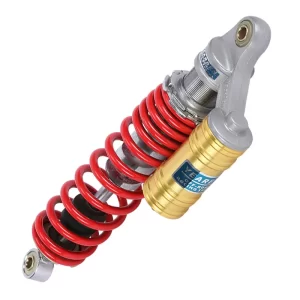
Heat management and oil volume decide how long a coilover keeps its damping on a long run, which is why the reservoir and the body are specified together. <Off-Road-Coil-Over-Shocks-Manufacturer> covers off-road coilover shock manufacturing.
Why a Reservoir Helps but Does Not Cure Wear
A remote or piggyback reservoir adds oil volume and surface area, which raises the heat capacity of the system and slows the temperature rise. It does not change the fact that the oil eventually reaches a steady state, and it does not filter contamination. A reservoir buys time on a fast section. It does not correct valving that is wrong for the vehicle or geometry that binds at droop.
Where Fade Becomes Permanent
Temporary fade recovers when the damper cools. Permanent loss does not. If damping force is still low after a cool-down period, the oil has sheared, the gas charge has escaped, or the piston band and bore have worn clearance into the assembly. Those are three different repairs, and only one of them is solved by adding oil.
Why Offroad Duty Cycles Wear Shocks Faster Than Road Miles
Mileage is the wrong unit for shock life. A damper cares about cycles and shaft velocity, and an offroad vehicle accumulates far more of both per kilometre than a road car. A rock crawl at walking pace produces large, slow strokes at high force. A desert run produces small, very fast strokes at high heat. Neither shows up as distance on the odometer.
Shaft speed matters because damping force rises with velocity through the orifice. Doubling shaft speed does not double the force in a digressive damper, but it does increase the energy converted to heat per unit of travel, and it increases the pressure differential across the seal. That differential is what pushes oil past the lip and what drives grit into the wiper.
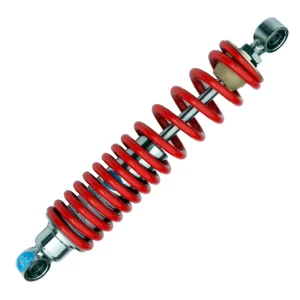
Contamination is the second multiplier. Offroad environments deliver dust, silt, and water in a form that road use does not. A wiper that keeps road spray out will still pass fine silt if the shaft is not kept clean, and once abrasive particles sit against the lip, the shaft surface is machined away a few microns at a time.
Five Wear Paths and How to Confirm Each
The table below separates wear paths that are commonly confused with one another. Each row lists what the evidence looks like, how to confirm it, and what the confirmation does not establish. The last column matters as much as the others, because a plausible cause is not a confirmed one.
| Wear path | Typical evidence | How to confirm | What it does not prove |
|---|---|---|---|
| Oil degradation | Damping drops after a sustained rough section, then partly recovers when cool | Compare damping hot against cold on the same section | That the damper is undersized for the vehicle |
| Gas charge loss | Inconsistent force, aeration or foam found at service | Check charge pressure and look for emulsion in the oil | That the seal lip has failed |
| Wiper and lip wear | Dust build-up sitting on an oil film along the shaft | Inspect the shaft under the wiper and feel for a ridge | That the shaft coating is out of specification |
| Shaft surface damage | Pitting, scoring, or flaking chrome at the seal track | Measure shaft diameter across the seal track | That the body bore has worn |
| Mount and alignment load | Torn bushings, polished mount faces, worn bolts | Check alignment through full droop and full bump | That the spring rate is correct |
Two cautions apply to the whole table. A worn shaft and a worn bore usually appear together, so confirming one does not close the diagnosis. And a damper that passes every check can still be wrong for the application, because suitability is a specification question rather than a condition question.
Setup Errors That Shorten Service Life
A correctly built shock can be destroyed by installation. The most common cause is a ride height that puts the damper outside its intended stroke. Raising preload to gain clearance at the fender compresses the spring and reduces droop travel, and the damper then tops out under articulation instead of sharing the load with the bump stop.
Preload, Ride Height, and Bump Stop Gap
Set preload to establish the intended ride height with the vehicle loaded as it will run, then check the bump stop gap. If the gap is small enough that the stop is already in contact at static height, the spring is carrying load the damper was not valved for. If the gap is large and the damper bottoms internally before the stop engages, the shock absorbs an impact it was never designed to take.
Binding and Misalignment
A damper that binds through its travel loads the shaft in bending rather than in pure compression. That shows up as a polished patch on one side of the shaft, accelerated lip wear on the loaded side, and a rod that feels notchy when moved by hand. Check for binding at full droop with the spring removed, and confirm the mount allows the eye to rotate freely through the full articulation range.
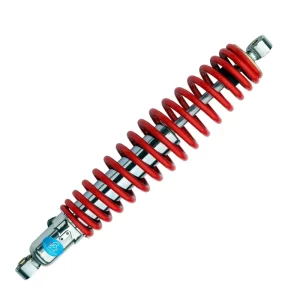
Adjustment range only helps when the base valving and the installed geometry are already correct. <Adjustable-Shock-Absorber> covers adjustable shock absorber options for vehicles that need damping tuned to load and terrain.
How to Check a Worn Shock Before Replacing It
Work through the checks in order, because each one changes what the next one means. Record the results, since a comparison against the same measurement after a rebuild is the only reliable way to know whether the repair worked.
- Measure ride height at all four corners with the vehicle at its running load. A corner that has dropped is a spring or preload problem, not a damper problem.
- Inspect each shaft for an oil film and for grit trapped against the wiper. A dry shaft with dust on it is normal. A wet shaft with dust stuck to it is not.
- Check bump stop contact and the gap at static height. Contact at rest means the damper is already outside its intended stroke.
- Run a repeatable rough section and note where damping fades. Fade that recovers after a cool-down points to oil temperature. Fade that does not recover points to gas loss or internal wear.
- Check every mount and bushing through full articulation with the spring removed. Any binding or play changes the load path into the shaft.
- Have the gas charge checked at service before condemning the damper. A low charge produces the same complaint as a worn piston band and costs far less to correct.
Specification Choices That Change Wear Rate
When replacement is the answer, the specification decides how long the next set lasts. Body diameter and oil volume set heat capacity. Shaft coating and surface finish set how well the seal survives contamination. Piston design and valving set how much of the available travel is used before the damper bottoms.
The most common specification error is choosing a damper for its travel figure alone. A long travel shock fitted to a vehicle that cannot use the travel spends its life at the extremes of the stroke, where the internal stops and the gas spring do the work. Matching travel to the suspension’s actual articulation, then choosing the body and reservoir that can manage the heat that articulation generates, produces a longer service interval than any single headline number.
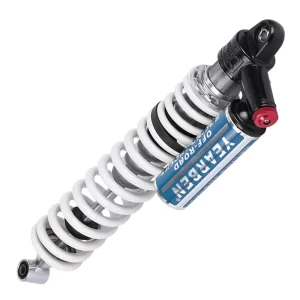
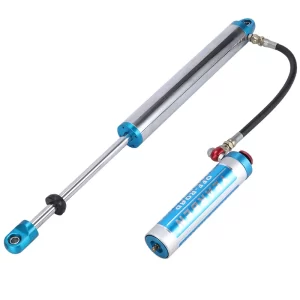
Travel, body size, and valving are specified together because each one changes the load the other two see. <Best-Off-Road-Shocks> covers off road shock selection as a category.
Send the Failure Details Before You Order Replacement Shocks
Replacement shocks only solve the problem when the specification matches the duty cycle that caused the failure. Send the platform and model, the current eye-to-eye length, the stroke you are running, spring rate and preload, intended use, the observed failure mode with the hours or distance behind it, and the service interval you are targeting. Yearben works from that list to match a damper configuration to the application. Email info@yearbenshocks.com or call +86-523-86566899.
FAQ
How long should offroad shocks last?
There is no honest mileage figure. Life depends on cycle count, shaft speed, oil temperature, and contamination, so a rock crawler and a desert truck accumulate wear at completely different rates over the same distance. A better approach is to track behaviour against a baseline: note the section where fade first appears, then compare it after each service. When fade starts appearing earlier than it used to, the damper has lost margin regardless of what the odometer reads.
Can a worn offroad shock be rebuilt instead of replaced?
It depends on what wore. Oil, gas charge, and seals are serviceable items, and a rebuild restores them. Shaft scoring, chrome flaking at the seal track, and bore wear are not, because the damaged surface is the sealing and guidance interface itself. Inspect the shaft before committing. If the chrome is intact and the diameter at the seal track is within specification, a rebuild is usually the better value. If the surface is damaged, a rebuild returns a damper that will leak again.
Does a remote reservoir make shocks last longer?
It raises heat capacity, so the oil reaches a given temperature more slowly and fade arrives later on a sustained rough section. That is a real gain on fast terrain. It does not filter contamination, correct valving, or fix geometry that binds at droop, so a reservoir cannot rescue a damper that is wrong for the application. Treat it as additional margin rather than as a solution to a wear problem.
Why did my new shocks fail in one season?
The usual cause is installation rather than the part. Ride height set outside the intended stroke, preload used to gain clearance, binding at full droop, and a bump stop already in contact at static height all load the shaft in ways the valving never sees on a bench. Check the shaft for a polished patch on one side, and confirm free rotation at the mounts before ordering another set.
Should all four shocks be replaced at once?
Not automatically. Replace as an axle pair when the two dampers on that axle have seen the same duty, because mismatched damping across an axle changes how the vehicle behaves in a turn and under braking. If one corner failed early because of a setup problem, replacing all four spreads the cost without fixing the cause. Confirm the wear path first, then decide the scope.
If you’re interested, check out these related articles:
2-0-Air-Shock
Heavy duty seat damper 35mm, Shock Absorber Manufacturer