
A suspension coilover manufacturer becomes an OEM partner the moment you sign a specification, not the moment you place the first order. Price is the easiest line to compare and the least useful one. What decides whether a program ships on schedule is narrower: whether the contract fixes what will be measured, who approves the first acceptable unit, and what the factory must do before it changes a seal supplier, a shim thickness or a spring rate. This guide follows those questions in the order a buyer meets them, from the records a factory can actually produce to the tradeoffs behind MOQ, tooling and exclusivity.
What an OEM coilover contract has to define
An OEM contract is not a purchase order with a longer appendix. It fixes identity, measurement, approval and change, and each part answers a different failure.
Ownership and tooling
Ownership is the item buyers most often leave in an email thread. The contract should state who owns the drawing, who owns the tooling behind the spring perch, the eyelet forging die or the shaft, and what happens to that tooling when the program ends or moves. A factory that cannot produce a tooling register has already answered the question. Nobody wrote it down, so the physical hardware decides the outcome later.
Measured values and methods
A coilover is a stack of interacting parameters: eye to eye length, stroke, spring rate, preload, damping force at a given velocity, gas charge pressure, and the finish on the shaft that the seal runs against. Naming those parameters is not a specification. A specification says how each is measured, on which equipment, at which temperature, on how many units, with which tolerance. Without that, two shipments can both be “in spec” and behave differently on the same vehicle.
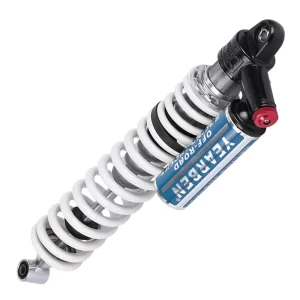
Configuration names do part of that work, but they do not replace the measurement method. <Coilover-Shock-Absorber> covers coilover shock absorber configurations.
Approval and change control
Approval defines who signs the sample, against which record, and whether that signature authorizes mass production or only the next stage. Change control defines the notification window, the threshold that triggers re-validation, and the documents the factory must resend when a sub-supplier or a process changes. Both are cheap to write and expensive to improvise.
Price sits outside this list because a quotation is only comparable once those items exist. Two factories quoting the same drawing differ in what each intends to measure, and that difference is where the money goes later.
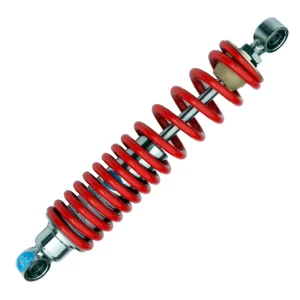
Why OEM coilover projects stall before the first shipment
Programs rarely stall because a factory cannot build a coilover. They stall because both sides iterate against different definitions of done.
The most common version starts with a subjective report. The buyer rides the prototype and says the rear is harsh at low speed. The factory adds shim thickness. The next sample is softer everywhere, including at high speed where the original was correct. Three rounds later the schedule is gone and nobody can say which change produced which result.
A second version involves a moving reference. A dimension is reported from a different datum each time, or eye to eye length is measured at ride height in one report and fully extended in the next. The numbers look like progress and the parts do not fit.
The discipline that keeps these programs moving is one variable per round, recorded on the sample label. Change the shim stack, hold the spring and the gas charge, and write down what changed. The label is not paperwork for its own sake. It is the only way an engineer, a test rider and a factory valving technician can agree, months later, what the unit in the box represents.
The same discipline applies to how the sample is built. A prototype with a hand-finished shaft and a production-intent seal pack tests two things at once. If it leaks, the seal is blamed and the hand finish is forgotten.
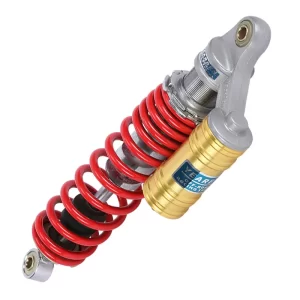
The documents a suspension coilover factory should put on the table
Documents are evidence, and evidence has a boundary. Each record below supports a specific claim and stops there. A buyer who reads it as a broader endorsement will approve a unit the paperwork never described.
| Record | How it is produced | What it can support | What it does not establish |
|---|---|---|---|
| Drawing with datum scheme | Buyer and factory agree on reference points and measurement method | What the part should be, and where each dimension is measured from | That a delivered unit matches it |
| Dynamometer curve report | Sample run on a shock dyno at named velocities and oil temperature | Damping behavior of the tested units under those conditions | Durability, or behavior outside the tested temperature |
| Material and finish certificate | Mill certificate for shaft or tube, plating thickness measurement | The grade and coating of the batch the certificate names | That the certificate belongs to the parts in your carton |
| First article inspection report | Every drawing dimension measured on named serial numbers | Conformance of those specific units at the time of measurement | Capability across the lot or future lots |
| Cycle or leak test report | Agreed test plan run on production-intent units | Survival under the stated test conditions | Field life on a vehicle the test did not represent |
The last row is where most warranty disputes begin. A bench cycle test at a fixed stroke and frequency answers a question about that stroke and frequency. A buyer who treats it as a durability promise ends up arguing about a claim the document never made.
Ask for the record that matches the decision in front of you, and ask what conditions produced it. A dyno sheet without test velocity and oil temperature is a picture, not evidence.
Which coilover specifications belong in the contract
Six groups carry most of the risk. Write each as a value plus a method, never as a value alone.
| Parameter | What to write | Why it changes the outcome |
|---|---|---|
| Length and travel | Eye to eye at a named reference, extended and compressed limits, usable stroke, measurement method | Equal nominal lengths can differ in usable stroke and bottom out at different points |
| Mounting interfaces | Eye, clevis, stud or spherical bearing, bore and width, bolt size, joint load | A mounting change reworks the lower assembly and usually the spring seat with it |
| Spring rate and preload | Rate with tolerance, free length, fixed or threaded perch | Rate tolerance and preload drift move ride height, which is what the customer notices first |
| Damping and adjustment | Force at named velocities, adjustment range, detent count, left to right matching | An adjuster that moves the curve unevenly turns a tuning feature into a complaint |
| Gas charge and reservoir | Charge medium, pressure with tolerance, fill temperature reference, reservoir type | Charge pressure and oil volume set how the damper behaves as it heats |
| Shaft finish and corrosion protection | Plating type and thickness, roughness, body and spring coating, test condition | Seal life follows shaft finish more than seal brand, and finish is the first item a cost cut touches |
Body diameter belongs in the same table even though it reads as a name rather than a tolerance. A 2.0 inch body and a 2.5 inch body hold different oil volumes, and oil volume is what decides how quickly a damper loses control on a long rough section.
Damping is the hardest row to write, because firm and planted are not values. The workable version names test velocities, the force expected at each, the oil temperature during the run, and the acceptable spread between units in one lot. That converts a feel argument into a pass or fail, which is the only form a factory can be held to.
Adjustment adds a second layer. A clicker that changes force evenly across its range on every unit is a tuning tool. One that moves the curve differently between units is a source of inconsistency that no vehicle setup can fix.
Adjustment ranges are worth less than the consistency behind them. <Adjustable-Shock-Absorber> covers adjustable shock absorber options.
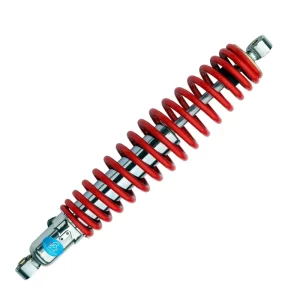
What to ask in a coilover RFQ and how to phrase it
An RFQ that asks for a price on an adjective returns a price on an adjective. The fix is to write the line the way you want it answered.
Reject this line: “2.0 inch coilover, off road use, good quality, send best price.”
Replace it with: “Coilover to the attached drawing, eye to eye and stroke as dimensioned with the datum scheme shown, 2.0 inch body, shaft diameter per drawing, spring rate with tolerance and free length stated, fixed preload, damping targets at three named velocities, shaft finish with plating thickness and roughness limits, corrosion test condition named, first article report with dyno curves from three units of the same lot, packaging and labeling as specified.”
The commercial fields belong in the same document, because they decide whether the specification is achievable at your volume:
- Tooling cost and who owns the tool
- MOQ per part number, and whether MOQ applies per spring rate or per program
- Sample quantity, sample lead time and production lead time
- Change notification window and the re-validation trigger
- Warranty terms and who pays return freight on a failed unit
- Exclusivity scope, if you want one
- Documentation language and the format of test reports
A quotation that answers the technical list and skips the commercial list is not a quotation yet. It is a starting position.
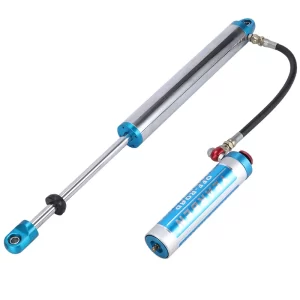
How to audit a suspension coilover manufacturer
An audit is a set of observations, not a questionnaire. The useful checks are physical and can be made in one afternoon.
- Watch a dynamometer run and read the calibration record. Note which velocity steps are used and whether the oil temperature is logged.
- Look at oil handling: filtration, degassing and how fill volume is controlled. Air left in the oil shows up as unstable low-speed force.
- Ask how gas pressure is set and verified per unit. A gauge on the charging line is not a record for each damper.
- Inspect shaft and bore finishing: instruments, roughness records, and whether plating is in-house or subcontracted with incoming inspection.
- Review welding and leak testing: the process, operator qualification, and how a leak is detected after welding and after assembly.
- Check torque control on assembly: calibrated tools, records, and how a missed fastener is caught before packing.
- Follow traceability from a finished unit back to its oil batch, seal batch and dyno record, and look at where nonconforming units physically sit.
Two answers should raise concern. The first is a dyno curve with no test condition written on it. The second is a plating line described as a partner’s line with no incoming inspection record. Neither is fatal by itself. Both are unfalsifiable, which is worse than a known weakness.
Capacity and catalog size answer a different question from the one an audit asks. <4X4-Shock-Absorber-Supplier> covers 4×4 shock absorber supply options.
Sample approval, first article and the limits of a bench test
Approval works better as three gates than as one signature, because each gate answers a different question and each can fail on its own.
The first gate is fit and function. The sample goes on the vehicle or a fixture, dimensions are checked against the drawing, the adjuster moves through its range, and the dyno curve is compared with the target. This gate rejects a design that cannot work.
The second gate is production validation. Units come off production tooling and production processes, an inspection report lists serial numbers and every drawing dimension, dyno curves from several units in one lot show the spread, spring rate and gas charge are verified, a leak test follows thermal cycling, and corrosion testing runs to the condition named in the contract. This gate rejects a process that cannot repeat.
The third gate is field release. The units run on the buyer’s platform for the duration and terrain written into the plan, with a defined stop condition if a set number of issues appears. This gate rejects a specification that does not survive real use. A bench pass says something about the tested units under the tested conditions. It says nothing about a heavier vehicle, a different spring rate or a hotter market, and buyers who skip this gate tend to learn the difference in the field, one container at a time.
Sample retention belongs in the same conversation as sample approval. A factory with a wide catalog, Yearben among others with more than 200 models and an annual capacity of about 1.5 million units, will often hold a valving library it can reuse. The contract should state whether your program may draw on that library or must stay on its own shim stack, because the answer decides how easily a replacement unit can be built to the same feel two years from now.
MOQ, tooling and exclusivity, the tradeoffs buyers misjudge
Most sourcing arguments about price are really arguments about which route the buyer chose without naming it. The routes differ in what they fix and what they leave open.
| Sourcing route | Choose when | Do not choose when | What you give up |
|---|---|---|---|
| Catalog unit with your label | A proven unit and a short lead time matter more than a unique feel | Your mounting or stroke cannot be matched | Damping becomes a selection rather than a design |
| Existing tooling, custom valving and spring | The mounting matches and only rate, valving and finish differ | Your travel or body size falls outside the tooling | Dimensional freedom, because the housing stays fixed |
| New tooling, full OEM | Volume supports amortization and the specification genuinely differs | Volume is small or the design is still moving | Tooling spend, longer validation, higher MOQ |
| Exclusive program | The specification is your differentiator and volume is committed | You are still comparing suppliers | Flexibility, and often a higher unit price |
Tooling behaves like a fixed number spread across units. Double the volume and the per-unit share halves. Halve the volume and the same tool becomes an obstacle that neither side wants to carry. That arithmetic explains why a very low MOQ on new tooling deserves a question. The factory is either absorbing a risk it will recover elsewhere or planning to spread your tool across other customers.
Exclusivity needs the same treatment. It is a restriction the factory sells, so it should be written as one: which markets, which part numbers, for how long, and what happens if volume falls below the agreed level. An exclusivity clause with no volume floor is a promise with no consequence attached, and it will be read that way when a competitor’s similar unit appears.
Send the specification before the price
The useful first step is not a price request. It is a specification pack a factory can answer without guessing, and a set of questions that lets you compare the answers.
Send the vehicle platform, mounting type, eye to eye length and stroke, body diameter, shaft diameter, spring rate and preload arrangement, damping targets with the velocities you test at, adjuster type if any, reservoir type, finish and corrosion test condition, expected annual volume per part number, and the markets you sell into. Add the drawing and the datum scheme, because a dimension without a reference point invites a second round.
Yearben Shock Absorber Technology answers at info@yearbenshocks.com and +86-523-86566899. The reply worth reading separates what existing tooling already fixes from what still needs your decision, and names the validation steps before either side talks about unit price.
FAQ
What should an OEM coilover contract include?
It should include four things beyond price: ownership of drawings and tooling, a specification that states how each parameter is measured and with what tolerance, the person or record that authorizes production, and a change notification rule with a re-validation threshold. Commercial terms sit on top of those four. A contract missing any of them leaves a decision to be made later by whoever holds the hardware or the shipping schedule.
How many samples should I approve before production?
Approval is less about a count than about which questions the samples answer. One unit proves fit. Several units from the same production lot prove that the process repeats, and the spread between their dyno curves is the number to read. A field unit proves the specification suits the vehicle. Approving a single prototype as if it covered all three is the mistake, not approving too few.
Is a private label coilover the same as an OEM coilover?
No. Private label changes the marking and packaging on a unit the factory already designed. OEM work changes who owns the specification and who carries the validation burden. In private label, the factory’s existing valving is the baseline. In OEM work, the buyer’s targets are the baseline, and the contract has to say how those targets are measured, approved and protected from silent change.
How can I check valving without my own dynamometer?
Require dyno reports that state velocity, oil temperature and the number of units tested, then compare the spread rather than a single curve. Send one unit from the lot to an independent laboratory and compare its curve with the factory’s report; a repeatable match tells you the report describes real parts. If a factory cannot state the test conditions, the curve cannot be checked by anyone.
Who should own the tooling?
The party that pays for it should own it, and the contract should say so in writing with a register listing each tool, its location and its condition. Buyers who fund tooling but never ask for the register often find that retrieval, repair and transfer costs fall on them anyway when the program moves. Ownership without documentation is a claim, not an asset.
If you’re interested, check out these related articles:
Remote-Reservoir-Shocks-Manufacturer
Best-Off-Road-Shocks
Piggyback-2-0-Coilover-Shock